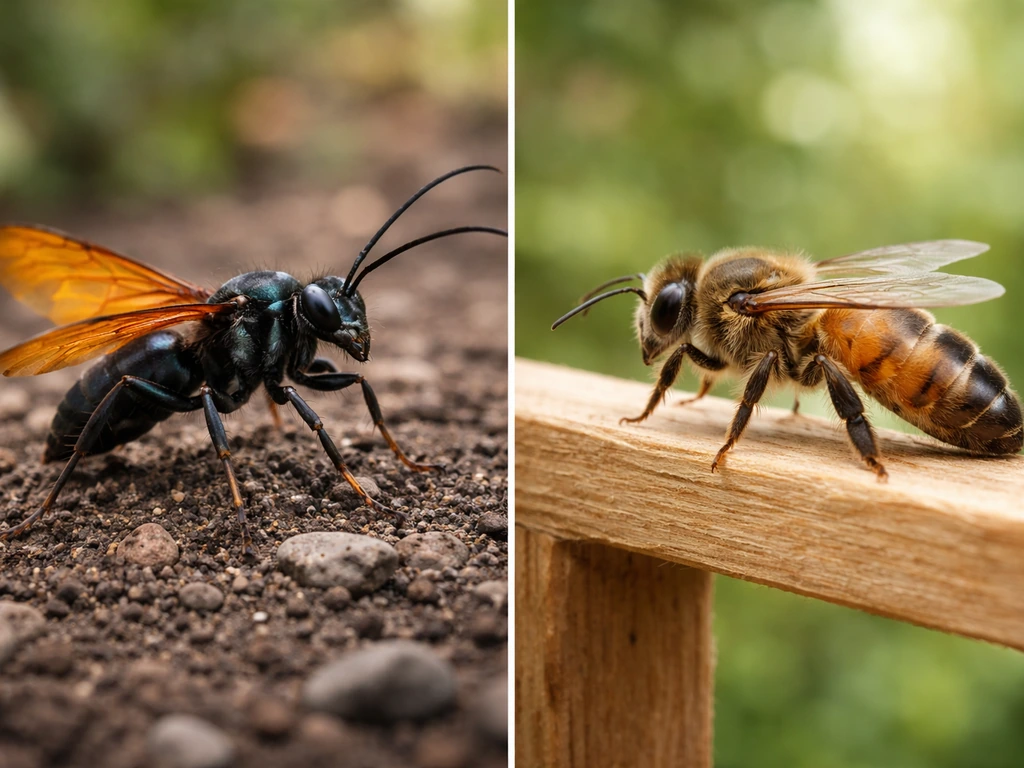
For most mid-to-hardcore players, the Bee is the better starting pick in Grow A Garden because it feeds directly into the permanent Honey Garden loop, is far cheaper to acquire, and pollination output is what actually drives Sheckle income from the Honey Compressor. For a similar 'new vs old' comparison in the community, see amber vs old amber grow a garden. The Wasp is genuinely useful, not a trap, but it earns its place as a secondary support pet rather than a farm anchor. If you only have one egg slot to fill and you are building toward the Honey Compressor economy, hatch a Bee Egg first. If you already have at least one Bee-type pet running and you want to round out your ability cooldown cycling, the Wasp becomes a strong second choice.
Which Is Better: Bee or Wasp in Grow A Garden, Verdict Tips

Raise the Bee first, here is why
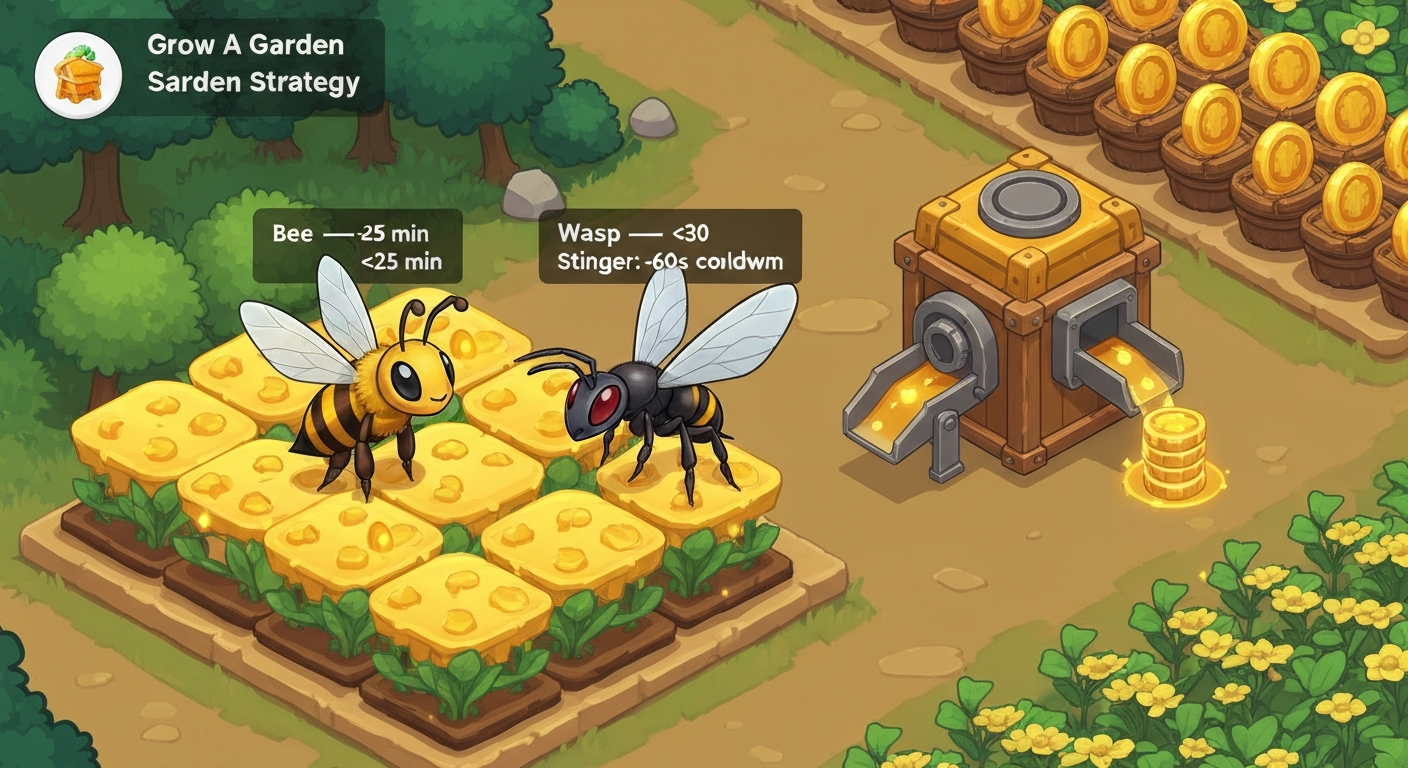
The whole Honey Garden system, which became permanent on June 6, 2026, runs on Pollinated fruit. Your Bee applies the Pollinated mutation to nearby crops on roughly a 25-minute cycle, and Pollinated crops carry a ×3 Sheckle multiplier when you feed them into the Honey Compressor (30 kg per submission). That loop, plant, pollinate, compress, earn Honey Coins, is the core economic engine for bee-type builds. Without at least one pollinator pet, the Honey Compressor sits idle. The Wasp also pollinates (on about a 30-minute cadence), so it technically works in this role, but it is a Rare egg hatch with a more expensive crafting requirement. You will almost always have a Bee or Honey Bee before you have a Wasp, which makes the acquisition question largely settled by the time you are deciding between the two.
Head-to-head: what each creature does well and where it falls short
The Bee is the reliable, affordable pollination engine. Its egg is purchasable from the Honey Shop for 18 Honey or 129 Robux, and it has historically appeared in the Pet Egg Shop for 30,000,000 Sheckles. The PC Gamer guide 'How to get bees in Grow a Garden and what they do | PC Gamer' lists the Bee Egg as purchasable for 18 Honey or 129 Robux and notes past Pet Egg Shop availability at 30,000,000 Sheckles. It has a hunger pool of 25,000 and a straightforward single ability: pollinate crops near it on a ~25-minute timer. No complications, no secondary mechanic to manage. What it lacks is any combat or cooldown utility whatsoever, it contributes nothing in dungeon runs or boss fights beyond passively being present.
The Wasp brings two things the Bee does not. First, it still pollinates, just on a slightly slower ~30-minute cycle with a slightly larger hunger pool of 28,000. Second, it has the Stinger ability, which periodically advances the longest active cooldown on any of your running pet abilities by 60 seconds on roughly a 10-minute cadence. That is a real, tangible benefit in multi-pet builds: if your Queen Bee or another high-impact pet is sitting on a long cooldown, the Wasp is silently shaving time off of it. The downside is that getting a Wasp is harder. It hatches from an Anti Bee Egg at a 55% rate, and that egg requires crafting from 1 Bee Egg plus 25 Honey at the Bizzy Bear Station.
Stats and abilities side by side
| Attribute | Bee | Wasp |
|---|---|---|
| Rarity | Common | Rare |
| Hunger Pool | 25,000 | 28,000 |
| Pollination Cycle | ~25 minutes | ~30 minutes |
| Pollination Multiplier (Honey Compressor) | ×3 on Pollinated crops | ×3 on Pollinated crops |
| Secondary Ability | None | Stinger: advances longest pet cooldown by 60s (~10-min cadence) |
| Hatch Source | Bee Egg | Anti Bee Egg |
| Hatch Chance | 65% from Bee Egg | 55% from Anti Bee Egg |
| Egg Hatch Time | 4 hours 10 minutes | 4 hours 10 minutes (30s with premium skip) |
| Egg Acquisition Cost | 18 Honey / 129 Robux / 30M Sheckles (Pet Egg Shop) | 1 Bee Egg + 25 Honey (craft at Bizzy Bear Station) |
| Combat / Dungeon Utility | None | Indirect (cooldown cycling) |
| Honey Garden Compatibility | Full | Full |
What each pet actually does in your farm
Farming and the Honey Compressor loop
Both pets support the same core farming loop: crops get Pollinated, you harvest them, you load 30 kg at a time into the Honey Compressor, and Honey Coins come out. The ×3 multiplier on Pollinated crops is what makes this loop worth running. The Bee's ~25-minute cycle edges out the Wasp's ~30-minute cycle here, meaning over an hour of active farming the Bee pollinates approximately 2.4 times versus the Wasp's 2 times. That adds up across a full session. If your only goal is maximizing pollination throughput for the Compressor, the Bee wins cleanly.
Events and swarm participation
Swarm events trigger approximately every hour and run for about 10 minutes, during which nearby plants have an elevated chance to gain the Pollinated mutation. Having any pollinator pet active during a swarm window stacks well with the event's passive pollination boost. Neither Bee nor Wasp has a particular advantage here, though having the Wasp's Stinger ability syncing during a swarm window to advance a Queen Bee or Honey Bee cooldown can produce a double-pollination spike that the base Bee cannot replicate.
Dungeons and the Wasp King
The Wasp Dungeon runs up to 100 waves, with Wasp King boss appearances confirmed at waves 10, 50, 90, and 100. The Wasp King has 1,000 HP and drops a chest with a 3.44% chance of yielding the Mythical Prince Wasp. The base Bee has zero value in this context, it is a passive farming pet with no combat contribution. The Wasp's Stinger ability, by cycling cooldowns faster on your combat-relevant pets, does provide indirect dungeon value if you are running a mixed-ability lineup. Checkpoints appear every 5 waves, so the Stinger's ~10-minute cooldown advance cadence aligns reasonably with checkpoint pacing.
Breeding use cases
Neither the Bee nor the Wasp is a primary breeding target in the traditional sense, their value comes from their active abilities, not from being used as breeding fodder. That said, the Bee is the gateway creature for the entire bee-type ecosystem. You need Bee Eggs to craft Anti Bee Eggs, and you need Anti Bee Eggs to chase Wasp hatches. Treating spare Bee pets as part of your Honey currency generation (via the Honey Compressor loop) to fund more Bee Egg purchases is the practical breeding chain here rather than creature-to-creature pairing.
Breeding efficiency, incubation and recommended paths
Both the Bee Egg and Anti Bee Egg share the same 4-hour 10-minute standard hatch time, which drops to 30 seconds with the premium skip option. For players building toward a Wasp, the most efficient path is to hatch Bee Eggs until you accumulate enough Honey (via your Compressor loop) to craft Anti Bee Eggs. Each Anti Bee Egg costs 1 Bee Egg plus 25 Honey at the Bizzy Bear Station. At a 55% Wasp hatch rate, you should expect to craft and hatch roughly 2 Anti Bee Eggs per Wasp on average. The other 45% of Anti Bee Egg outcomes include creatures with their own value, so hatches are rarely wasted, but budget for 2 to 3 crafts before reliably landing a Wasp.
For the Honey Bee (25% chance from a standard Bee Egg), which pollinates more frequently than either the base Bee or the Wasp, the straightforward path is simply hammering Bee Egg hatches. Given the 65% base Bee rate, 25% Honey Bee, 5% Bear Bee, 4% Petal Bee, and 1% Queen Bee, a run of 10 Bee Egg hatches statistically yields about 2 to 3 Honey Bees. Queen Bee at 1% is a long-tail target, expect to hatch 50 to 100 Bee Eggs for a reasonable shot at one.
Where to get eggs and what they will cost you
The Bee Egg is the more accessible of the two by a wide margin. During active Bizzy Bees event periods it was available from the Honey Shop for 18 Honey or 129 Robux. Outside the event it appeared in the Pet Egg Shop for 30,000,000 Sheckles. Since the Bizzy Bees systems became permanent as of June 6, 2026, the Honey Shop route remains the most efficient way to acquire Bee Eggs for players who are already running the Honey Compressor loop, you are essentially reinvesting your Honey Coins into more eggs, which is a self-sustaining cycle once you have at least one pollinator pet operational.
The Anti Bee Egg has no direct shop purchase option. It is exclusively crafted at the Bizzy Bear Station using 1 Bee Egg plus 25 Honey. This means your Wasp acquisition cost is denominated in both egg hatch resources and Honey Coins, making it inherently a mid-game or later target once your Honey generation is stable. Players who try to rush a Wasp before establishing a reliable Honey income stream will find the 25 Honey per craft expensive early on.
Swarm events and how long they actually last
There are two distinct swarm mechanics worth separating here. The map-wide Pollination swarm event triggers approximately once per hour and lasts around 10 minutes. During this window, plants across the map have an elevated chance of gaining the Pollinated mutation independently of your pet's cycle. This is your most valuable pollination window, and being online with an active pollinator pet during it stacks the event's ambient effect with your pet's own cycle.
Separately, the Wasp Dungeon's Wasp Swarm spawns enemies around the map approximately every 10 minutes as part of the dungeon-mode wave structure. These are combat encounters rather than pollination events. Wasp King boss waves (10, 50, 90, 100) are the dungeon's primary reward gates, dropping chests with a 3.44% shot at the Mythical Prince Wasp. Confusing these two swarm types is a common mistake, the hourly Pollination swarm benefits any pollinator pet, while the in-dungeon Wasp Swarm requires active combat participation.
Queen Bee, Honey Bee, feeding and special care
What to feed your bee-type pets
All bee-type pets in Grow A Garden require regular feeding to maintain their active ability cycles. Standard feeding mechanics apply: keep hunger pools topped up to prevent the pollination cycle from pausing. The Bee's hunger pool sits at 25,000 and the Wasp's at 28,000, the Wasp will run slightly longer between feedings on the same food input, but the difference is marginal enough that identical feeding schedules work for both. More detailed feeding recommendations for the Queen Bee specifically, including Royal Jelly interactions, are worth consulting separately given that the Queen Bee has unique daily quest and currency mechanics that differ substantially from the base Bee. For specifics on what to feed a Queen Bee in Grow A Garden, consult our guide on what to feed Queen Bee Grow A Garden what to feed Queen Bee in Grow A Garden.
Queen Bee handling
The Queen Bee, sitting at a 1% drop rate from Bee Eggs, operates differently from both the Bee and the Wasp. It features unique daily quests, Royal Jelly currency interactions, and stronger hive and offspring-related effects. If you land a Queen Bee, treat it as a distinct high-value asset rather than a simple pollination upgrade. For visuals and handling tips, see how to draw Queen Bee in Grow A Garden. Its management layer (daily quests, Royal Jelly) means it demands more active attention than a set-and-forget Bee or Wasp. For players chasing it, the Tarantula Hawk vs. Queen Bee matchup is a relevant comparison for deciding where it sits in your overall pet roster priority.
How to draw the Queen Bee (practical reference steps)
- Start with the head: draw a large hexagonal shape (slightly wider than tall) with rounded corners for the face.
- Add a crown on top of the hexagon, using three small triangular points with a thin band across the base.
- Draw the body below the head as a wider, rounder oval, then add alternating yellow and black horizontal bands across it.
- Attach two pairs of wings on each side of the upper body — upper wings should be larger and teardrop-shaped, lower wings smaller and angled slightly downward.
- Add two antennae extending from the top of the head with small circular tips.
- Draw large, expressive circular eyes on the face with small highlights inside each eye.
- Add the stinger at the bottom of the body as a pointed triangular protrusion.
- Outline in black and fill with yellow and black bands; the crown can be colored gold to distinguish it from standard Bee coloring.
Tier placement and meta priorities for 2026
In the current meta, with Bizzy Bees systems permanent as of June 2026, bee-type pets occupy a dedicated economy tier rather than competing directly with combat-focused creatures. Among bee-types specifically, the rough priority order is: Honey Bee (faster pollination cycle than base Bee, same egg pool) > Queen Bee (highest ceiling, highest management requirement, 1% pull) > Wasp (Rare tier, dual utility, requires Honey investment to craft) > base Bee (reliable, cheap, essential starting point). The base Bee is not low tier, it is the foundation everything else is built on. Calling it outclassed by the Wasp misses the point: you will not have a Wasp without first running Bees to generate the Honey needed to craft Anti Bee Eggs. For a quick side-by-side comparison of Bee and Wasp roles across similar games, see grow a garden vs bee swarm simulator.
| Creature | Tier | Best For | Priority |
|---|---|---|---|
| Honey Bee | Uncommon / High | Faster Compressor cycling | Get early, from Bee Egg pool at 25% |
| Queen Bee | Transcendent / S-tier ceiling | Max Honey output + daily quests + Royal Jelly | Long-term chase target (1% from Bee Egg) |
| Wasp | Rare / A-tier support | Cooldown cycling in multi-pet builds + pollination | Mid-game addition after Bee income is stable |
| Base Bee | Common / B-tier utility | Honey Compressor foundation, Honey generation | Raise first, always |
Related matchups worth knowing
The Honey Bee vs. For other matchup guides, see the Cockatrice vs Phoenix comparison for Grow A Garden which covers their relative combat roles and utility. base Bee comparison is the most immediately relevant sibling decision once you are hatching Bee Eggs, a Honey Bee from the same egg pool pollinates faster and is worth prioritizing over a second base Bee if you already have one running. For a focused bee vs honey bee Grow A Garden comparison with side-by-side stats and build advice, see the dedicated guide. The Tarantula Hawk vs. Queen Bee matchup is the relevant comparison for players who have graduated past the base bee tier and are deciding between a high-combat specialized pet and the Queen Bee's Honey economy dominance. For a detailed Tarantula Hawk vs Queen Bee matchup in Grow A Garden, see our dedicated comparison. Tarantula Hawk leans combat and event-wave utility; Queen Bee leans pure Honey economy with more setup required. For players asking whether to pursue the Wasp specifically, the anti-Bee Egg crafting path means your Wasp acquisition is directly funded by successful Bee-loop operation, making it naturally a second priority rather than a competing first choice.
Farm builds and rotations that actually work
Short-term: establish the Honey loop (days 1 to 5)
Hatch your first Bee Egg as soon as you have 18 Honey or the Sheckle equivalent. Deploy the Bee pet and let it work the 25-minute pollination cycle. As soon as crops hit Pollinated status, harvest them and immediately load 30 kg into the Honey Compressor. Use the resulting Honey Coins to purchase more Bee Eggs. Your goal in this phase is simply to make the loop self-sustaining, incoming Honey Coins should fund the next Bee Egg purchase faster than you are spending them on other Honey Shop items.
Mid-term: upgrade to Honey Bee and start crafting Anti Bee Eggs (days 5 to 14)
Once you are hatching Bee Eggs consistently, you will statistically land a Honey Bee roughly every 4 hatches (25% rate). When you do, swap the Honey Bee in as your primary pollinator, its faster cycle beats the base Bee's 25-minute timer and accelerates your Compressor throughput. Keep the base Bee running if you have a second pet slot. When your Honey Coin bank is comfortable, begin diverting 25 Honey per run toward crafting Anti Bee Eggs at the Bizzy Bear Station to chase the Wasp (55% hatch rate). Two to three Anti Bee Egg hatches should land you a Wasp, after which you can slot it in alongside your Honey Bee for the Stinger cooldown benefit.
Long-term: build toward Queen Bee and Honey Garden expansion (day 14+)
With a Honey Bee and a Wasp both running, your Compressor cycle is strong and your ability cooldowns are being managed passively. The Honey Garden beehive spawns with 21 slots by default, expandable through the Empress Bee Upgrade Tree. See Honey Garden Guide, How to Use the Bizzy Bees 2026 Honey Garden | GAGdata for details on the default 21-slot beehive and Empress Bee Upgrade Tree expansion Honey Garden Guide — How to Use the Bizzy Bees 2026 Honey Garden | GAGdata. Permanent upgrades here compound your per-session output. Your long-term target at this stage is the Queen Bee (1% from Bee Egg) for its Royal Jelly economy and daily quest system. Continue running Bee Eggs through your Honey Coin income, and treat every hatch as both a potential Queen Bee pull and a source of sellable or deployable bee-type pets.
Common mistakes and how to avoid them
- Crafting Anti Bee Eggs before your Honey income is stable — 25 Honey per craft is expensive early on and will stall your Bee Egg purchasing loop. Build your Honey bank first.
- Replacing a base Bee with a Wasp before you have a Honey Bee — the Wasp's slower 30-minute pollination cycle is a downgrade from the Bee's 25-minute cycle if it is your only pollinator. Get a Honey Bee first.
- Ignoring the hourly Pollination swarm window — this is a free pollination boost that stacks with your pet's cycle. Plan your sessions around being online for at least the 10-minute swarm window each hour.
- Conflating the dungeon Wasp Swarm (combat, ~every 10 minutes in dungeon mode) with the map-wide Pollination swarm (passive, ~hourly, 10-minute duration). They are separate mechanics.
- Treating the base Bee as disposable once you have a Honey Bee — a second pet slot running a base Bee still generates Pollinated crops and Honey Coins alongside your faster Honey Bee.
- Camping for the Wasp King drop (3.44% from chest at waves 10, 50, 90, 100) without preparing a multi-pet ability lineup first — the Stinger's cooldown cycling benefit matters more with a developed roster.
- Neglecting hunger pool management — both the Bee (25,000) and Wasp (28,000) will pause their ability cycles if unfed. Set a feeding reminder for long sessions.
Your decision checklist: raise, breed or sell
Use this checklist to make a clean decision based on where you actually are in your farm progression right now.
- Do you have any pollinator pet running? If no, hatch a Bee Egg immediately. This is non-negotiable for Honey Compressor income.
- Is your Honey Coin income self-sustaining (i.e., you can buy a new Bee Egg every 1 to 2 sessions)? If no, keep running Bee Eggs and feeding the Compressor loop before spending Honey on crafting.
- Do you have a Honey Bee yet? If no, continue hatching Bee Eggs (25% chance per hatch) — a Honey Bee is a better upgrade than a Wasp at this stage.
- Do you have a stable Honey income and a Honey Bee already? If yes, start diverting 25 Honey per cycle to craft Anti Bee Eggs and chase your Wasp.
- Do you run a multi-pet lineup with longer-cooldown pets like Queen Bee? If yes, the Wasp's Stinger ability is actively valuable and worth prioritizing sooner.
- Are you targeting the Queen Bee? Keep your Bee Egg hatch volume high — it is a 1% pull and the fastest path is sustained Bee Egg purchases funded by your Honey loop.
- Do you have duplicate base Bees beyond your active pet slots? Sell or hold — their trade value is limited, but they can be used as Bee Egg crafting inputs for Anti Bee Eggs.
- Are you dungeon-running the Wasp Dungeon for Prince Wasp? Prioritize getting the Wasp pet first for the Stinger ability before attempting deep waves, as cooldown cycling becomes relevant past wave 50.
FAQ
Quick verdict — which is better for a mid-to-hardcore Grow A Garden player: Bee or Wasp?
For optimized farms and long-term value: Bee (and Honey Bee/Queen Bee lines) are best if you prioritize steady Honey loop income (Pollinated crops → Honey Compressor → Honey Coins) and breeding for high-value offspring. Wasp is better when you need combat/event utility (Wasp Dungeon, Wasp King drops) or faster pollination cadence in short, aggressive play sessions. Overall pick: Bees for farm value and passive Honey economy; Wasps for event farming, dungeon progression, and niche PvE rewards.
Side-by-side: core stats and ability differences (Pollination cadence, hunger, rarity, hatch rates)
Bee family: Pollinated mutation applied ~25 min per cycle (Honey Bee more frequent); Bee hunger ~25,000; Bee Egg hatch pool example: Bee 65%, Honey Bee 25%, Bear Bee 5%, Petal Bee 4%, Queen Bee ~1%; Bee Egg hatch time 4h10m. Wasp (Anti Bee pool): Pollinator cadence ~30 min (community tests vary ~30 min), has 'Stinger' utility that can advance long cooldowns periodically; Wasp hunger ~28,000; Anti Bee Egg hatch chance for Wasp ~55%; Anti Bee Egg hatch time 4h10m (or skip with premium). Values approximate—use in-game tooltips for exact current numbers.
In-game roles and best use cases: farming, events, battle
Farming: Bees (and Honey Bee/Queen Bee) are the best for maximizing Honey loop income — they pollinate crops that compress into Honey Coins (×3 value for Pollinated). Events/Honey Garden: Bees increase passive gains; Honey Bee improves freq. Battles/Dungeons: Wasps excel — Wasp-specific dungeons, Wasp King, and swarm mechanics reward wasp-focused play. Hybrid: Keep a primary Bee for farm loops and one Wasp for dungeon/event runs.
Breeding efficiency and recommended breeding pairs for max value
If targeting high-value offspring (Queen/Honey Bee lines): breed standard Bee + Honey Bee or Bee + Bee to maximize chance at Honey Bee and rare Queen Bee over many attempts; craft/convert to Anti Bee Egg when chasing Wasp. For Wasp hunting (event drops/king chest), use Anti Bee Egg crafting (Bee Egg + Honey) to increase Wasp spawn access. Recommended pairs: Bee + Honey Bee for steady Honey family progression; Bee + Bee or Bee + Bear Bee for smaller Sheckle-efficient runs; use high-rank parents (stat-boosted) to raise trade value.
Egg sources and acquisition cost (Bee Egg, Anti Bee Egg, shop prices)
Bee Egg historically purchasable from Pet Egg Shop for ~30,000,000 Sheckles or in-event for 18 Honey (129 Robux during event). Bee Egg hatch time 4h10m. Anti Bee Egg is craftable (community guide): 1 Bee Egg + 25 Honey at event crafting station to access Anti Bee pool (includes Wasp at ~55%). Prices and shop availability can change — check current Honey Shop and Pet Egg Shop for live costs.
Swarm/event duration and timing mechanics
Community reports: Pollination Swarm events spawn approximately every hour and last ~10 minutes, during which plants have increased chances to gain Pollinated mutation. Wasp swarms spawn roughly every 10 minutes in event areas; Wasp King appears at designated waves (examples: waves 10, 50, 90) in dungeon modes. Use hourly swarm windows to time large harvests and Honey Compressor submissions for best returns.
Tarantula Hawk vs Queen Bee in Grow a Garden
Compare tarantula hawk vs queen bee, honey bee, and wasp in Grow a Garden, and pick the best farming breeder now.