If you only have one Bee Egg to spend and want the best pollination output today, hatch it hoping for a Honey Bee. The Honey Bee applies the Pollinated mutation every ~20 minutes, which beats every other base bee variant. That said, the real answer gets more interesting once you factor in [Queen Bee, Wasp, and Petal Bee](/wasp-and-pollinators/which-is-better-bee-or-wasp-in-grow-a-garden), because each one plays a genuinely different role on a well-optimized farm. Here is the full breakdown so you can make the right call for where you are right now.
Bee vs Honey Bee in Grow a Garden: Choose Best Setup

Julian Russo
29 Apr 2026
Honey Bee vs Bee: which one is actually worth it
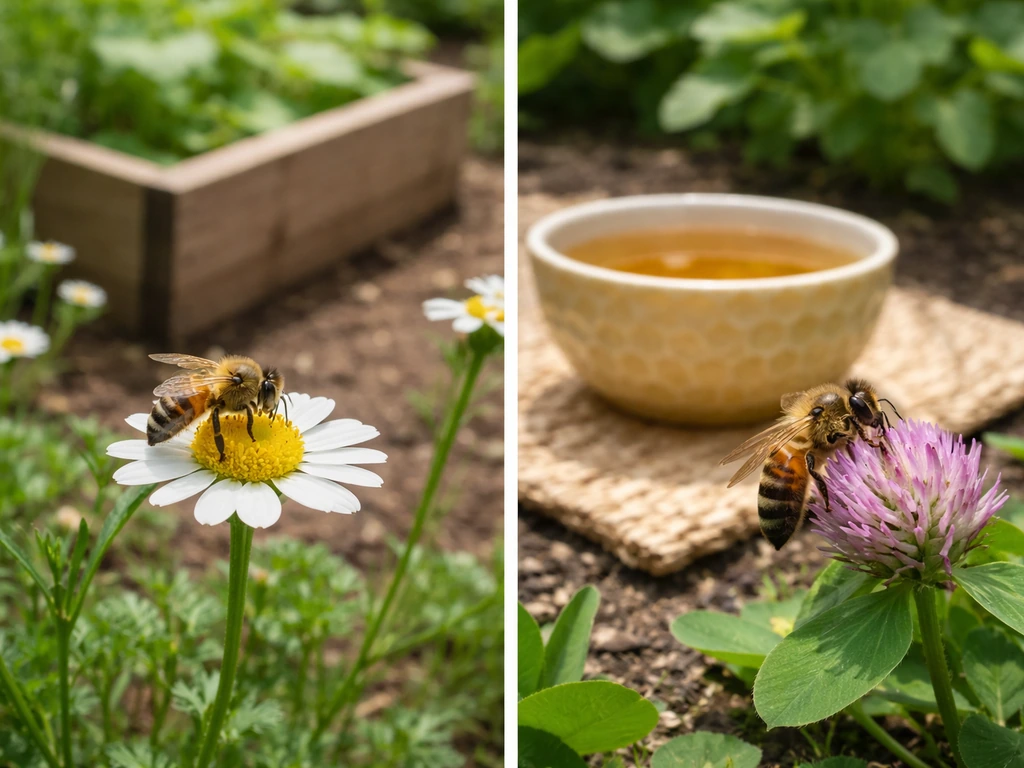
Both the Bee and the Honey Bee come out of the same Bee Egg (which costs 18 Honey or 129 Robux and has a 4-hour 10-minute hatch time), so you are not choosing between two different purchases. You are choosing how satisfied you are with your hatch result. The Bee has a 65% hatch chance, Honey Bee is 25%.
| Creature | Pollination Cooldown | Hatch Chance (Bee Egg) | Hunger | Extra Passive |
|---|---|---|---|---|
| Bee | ~25 min | 65% | 25,000 | None |
| Honey Bee | ~20 min | 25% | 25,000 | Cooldown reduces with pet level |
| Petal Bee | ~25 min | 4% | 25,000 | ~1% chance flower-type fruit stays after harvest |
| Queen Bee | ~25 min | 1% | 65,000 | Refreshes the highest-cooldown pet every ~25 min |
| Wasp | ~30 min | 55% (Anti Bee Egg) | 28,000 | Stings a random pet, pushes cooldown +60s every 10 min |
The Honey Bee wins the head-to-head against the base Bee on every metric that matters for pollination. Its 20-minute cycle fires 25% more often than the Bee's 25-minute cycle, and that gap widens as you level the Honey Bee up because its cooldown continues to drop. The basic Bee has no level scaling on its passive at all. If you hatch a Bee and you have spare eggs, keep hatching. If you are short on Honey, the base Bee is functional, but you should treat it as a placeholder rather than a permanent fixture.
Wasp vs Honey Bee vs Bee: roles, behaviors, and what they actually do to your farm
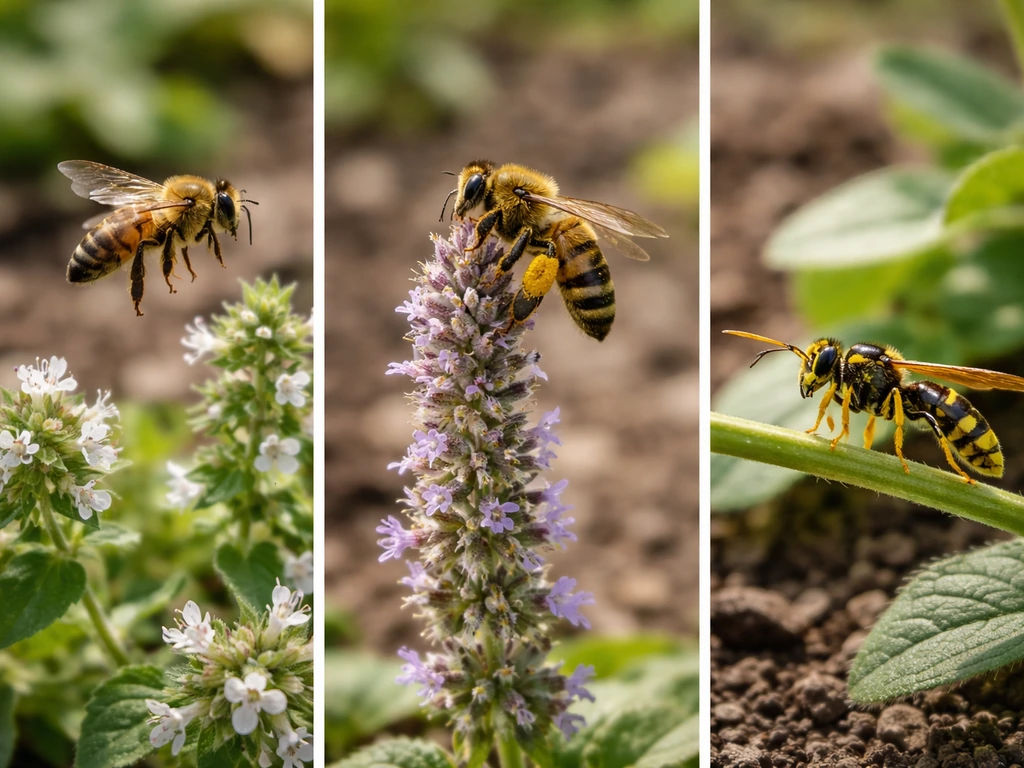
This is where things get genuinely interesting, because the Wasp is not a worse bee. It is a different creature doing a different job, and whether it helps or hurts depends entirely on how your farm is set up.
The Wasp pollinates every 30 minutes, which is the slowest of the group, so on raw pollination output it loses to both Bee and Honey Bee. But the Wasp also has Stinger Mischief: every 10 minutes it stings a random pet and pushes that pet's ability cooldown forward by 60 seconds.
GAGdata also describes Wasp “Stinger” as a 10-minute ability that reduces or resets cooldowns by 60 seconds Stinger Mischief every 10 minutes pushes that pet's ability cooldown forward by 60 seconds. On an unoptimized farm with a random mix of pets, this is essentially dead weight or even a liability, because it can delay the cooldown of your best pollinator right when you need it to fire.
On a deliberately structured farm, though, it is a coordination tool. If you know which pets you want triggering and in what order, the Wasp becomes a timing lever.
So here is the practical take: run a Honey Bee as your primary pollinator. If you are instead choosing between a garden-growing strategy and a Bee Swarm Simulator-inspired approach, the same pollination and cooldown logic helps you pick the better path. If you have a well-planned farm with multiple high-value passive pets and want to experiment with cooldown manipulation, add a Wasp as a secondary slot. Do not use Wasp as a replacement for Honey Bee at any stage of the game.
Queen Bee vs Wasp vs everyone else: how the Queen changes your whole setup
Queen Bee is the rarest hatch in the Bee Egg pool at just 1%, and it fundamentally changes the math on everything above. It does not just pollinate, it also runs a second passive called For the Queen, which blank" rel="noopener noreferrer">refreshes the ability of the pet with the highest cooldown every ~25 minutes. If you want to draw the Queen Bee for your Grow a Garden guide, focus on the regal shape and the crown-like details first For the Queen. That is a huge deal.
Before the Working Bee update, For the Queen targeted a random pet. Now it specifically targets the pet with the highest cooldown remaining, which makes it far more predictable and far more powerful in practice. You can engineer a cooldown hierarchy where your most impactful pet almost always has the longest remaining cooldown, meaning the Queen consistently refreshes the thing you actually care about.
The most discussed setup in the community is running multiple Queen Bees together. The wiki notes that clever Queen Bee setups can let them perpetually refresh each other's abilities. If Queen A has a higher cooldown than everything else when Queen B's For the Queen fires, Queen A gets refreshed, and vice versa. This creates a tight refresh loop that keeps both Queens active far more often than their base 25-minute cadence would suggest. The loop can be interrupted by another pet entering a higher cooldown state, so you need to be intentional about what else is in your farm.
Where does Wasp fit in a Queen Bee setup? Poorly, in most cases. The Wasp's Stinger Mischief adds uncontrolled +60s cooldown ticks every 10 minutes to a random pet. In a Queen Bee refresh loop, that random disruption can break the cooldown hierarchy and cause For the Queen to target a less valuable pet instead. Unless you are intentionally using the Wasp to manipulate which pet holds the highest cooldown, keep Wasp out of Queen Bee farms.
The Queen Bee also has 65,000 hunger versus 25,000 for standard bees, so it demands more attention on feeding. To support a Queen Bee properly, plan your feeding so it stays healthy and keeps triggering its strong passive without interruptions. That is a real maintenance cost to plan for, especially if you are running two Queens at once.
Petal Bee vs Honey Bee: when the flower buff actually matters
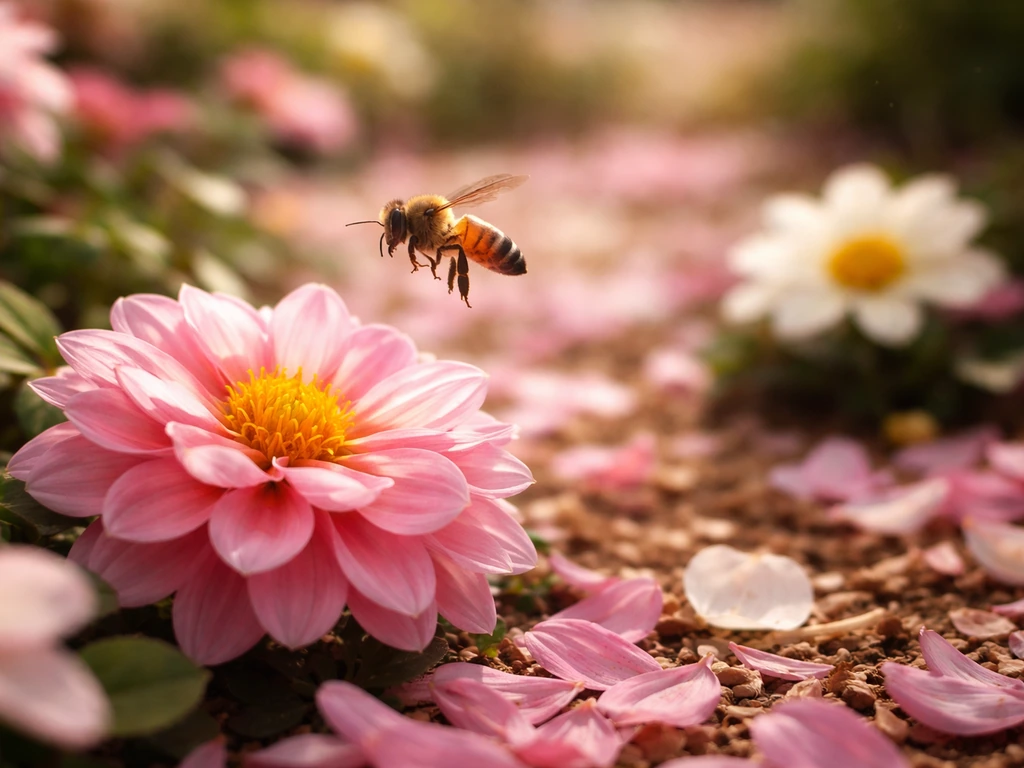
Petal Bee sits at a 4% hatch chance from Bee Egg, between the 1% Queen Bee and the 25% Honey Bee. Its pollination cadence is the same as the basic Bee at ~25 minutes, so it does not beat a Honey Bee on that axis. What it brings is a ~1% chance that a Flower-type fruit stays on the plant after harvest instead of despawning. If your farm does not heavily feature Flower-type crops, that passive does essentially nothing for you.
So when does Petal Bee beat Honey Bee? In a specialized Flower-type farm where you are harvesting flower crops repeatedly and the persistent fruit effect compounds over time. Even then, the 1% proc rate is low enough that you should treat it as a nice bonus rather than a core strategy unless you are farming at very high volume. For most players, Honey Bee is still the better general-purpose slot. If you happen to hatch a Petal Bee, use it in a flower farm build. Do not replace a Honey Bee with it in a mixed or standard setup.
How to actually build and scale your bee setup right now
Here is how I would approach this from scratch today, depending on where you are in the game. If you are trying to figure out how long do bee swarms last in the game, plan your setup around the cooldown cycles of your main pollinators build and scale your bee setup.
Early farm (no Queen Bee yet)
- Spend Honey on Bee Eggs and hatch until you land a Honey Bee. Each egg costs 18 Honey with a 4-hour 10-minute hatch time, so plan your session around that.
- Once you have a Honey Bee, level it up. The cooldown reduction with level is the most direct upgrade you can make to your pollination rate.
- Use any base Bees you hatch as filler while you keep saving for more Bee Eggs. They are functional, just not optimal.
- Avoid buying Anti Bee Eggs purely for Wasp at this stage. The Wasp's slower pollination rate and disruptive passive are a net negative on a small early farm.
Mid farm (building toward Queen Bee)
- Keep hatching Bee Eggs alongside leveling your Honey Bee. You are fishing for that 1% Queen Bee, and there is no shortcut other than volume.
- If you land a Petal Bee and your farm has significant Flower-type production, slot it into a dedicated flower farm row. Otherwise, bench it and keep your Honey Bee as primary.
- Start thinking about your pet roster composition. The Queen Bee's For the Queen passive targets the highest cooldown pet, so you want to understand what pets are sitting next to it before you add one.
Late farm (Queen Bee refresh loop)
- If you have one Queen Bee, place it next to your highest-value passive pets. Its cooldown refresh will target whatever has been waiting longest, so structure your farm so your best pet is consistently the one with the most cooldown remaining.
- If you have two Queen Bees, run them together and minimize interference from other high-cooldown pets in the same zone. The mutual refresh loop is the strongest bee mechanic in the game right now.
- Keep your Honey Bee active elsewhere on your farm. A Queen Bee loop covers ability refreshing, but you still want consistent raw pollination across all your crops.
- Do not add a Wasp to a Queen Bee zone. Its random +60s stings will disrupt the cooldown hierarchy and break your refresh loop.
Quick decision checklist before you commit

Run through these before you spend eggs or restructure your farm. Each one points you toward the right creature for your situation.
- Do you have a Honey Bee? If no, that is your first priority. It is the best general-purpose pollinator in the Bee Egg pool.
- Is your Honey Bee leveled? Level it before hunting for upgrades. The cooldown reduction per level is direct, measurable output improvement.
- Do you run heavy Flower-type crops? A Petal Bee earns a slot. Otherwise it is a bench creature.
- Have you landed a Queen Bee? If yes, study your current pet roster's cooldown structure before placing it, because placement and pet composition matter more than with any other bee.
- Do you have two Queen Bees? Set up the mutual refresh loop but make sure no high-cooldown pet disrupts it from the same zone.
- Are you tempted by Wasp? Only add it if you have deliberately mapped out how Stinger Mischief interacts with your existing cooldown rotation. On most farms it is a disruption, not an upgrade.
- Are you comparing this to the Tarantula Hawk or other aggressive insect pets? Those serve a different niche entirely and the comparison is covered separately for players evaluating those lines.
- Is the meta still current? The Working Bee update changed Queen Bee's For the Queen from random to highest-cooldown targeting, which was a significant buff. Check patch notes if significant time has passed since April 2026.
The short version of all of this: Honey Bee first, Queen Bee when you can get it, Petal Bee only in flower farms, and Wasp only if you are doing deliberate cooldown manipulation. If you are deciding between a Tarantula Hawk and a Queen Bee grow-a-garden approach, treat the Queen Bee as the safer baseline for dependable cooldown-driven support.
If you are also thinking about running creature strategies like cockatrice vs phoenix to help grow a garden, you will want to plan around how their passive effects interact with your setup cockatrice vs phoenix grow a garden. If you are trying to compare that strategy to growing a garden, it helps to think about the different schedules and long-term goals each one rewards bee swarm simulator.
If you are trying to decide between amber and old amber grow a garden too, focus on how their growth and reward behavior matches your setup Honey Bee first. Amber vs old amber grow a garden can feel confusing at first, but the right choice depends on which pets you are building around. That priority order will hold for most farms at most stages of the game right now.
FAQ
Is it ever worth keeping a base Bee even after I hatch a Honey Bee?
Usually no. Once you have a Honey Bee in your pollination slot, treat additional base Bees as filler only if you are constrained by Honey Egg supply or need temporary coverage. Since the Honey Bee’s cooldown can keep dropping as it levels while the base Bee has no passive level scaling, the Honey Bee will keep pulling ahead over time.
What should I prioritize first, cooldown rate or the number of bees I run at once?
Start with cooldown rate by building around Honey Bee, because it gives the most frequent pollination cycles on its own. Then add more Queens only if you can maintain the refresh loop. More “slow” pollinators tend to dilute output unless they also serve a specific role, like Queen Bee’s cooldown refresh or a deliberate Wasp timing plan.
Do Queen Bees still help if I do not have a carefully planned “cooldown hierarchy”?
They help less predictably. Queen Bee’s refresh targets the pet with the highest cooldown remaining, so if multiple pets are entering similar cooldown windows, the refresh may land on a less important pet. If you cannot coordinate cooldown lengths with your other passives, running one Queen Bee is safer than stacking multiple.
How can I tell if Wasp is actually hurting my Queen Bee setup?
If your best passive pet is losing its expected refresh timing, Wasp’s Stinger Mischief is likely injecting random +60 seconds that scrambles which pet holds the highest cooldown. A simple test is to remove Wasp for a day of farming and compare how consistently your top pet’s cooldown stays in the “highest remaining” position.
Should I run Wasp alongside Honey Bees without Queens?
Generally, no unless you have a reason to manipulate cooldowns and you can tolerate some randomness. With only Honey Bees, Wasp’s stinging slows overall effectiveness because it pollinates less frequently than both Honey Bee and base Bee, while also pushing cooldowns on random pets.
What happens if a “higher cooldown” pet enters mid-refresh in a Queen Bee loop?
It can redirect For the Queen. Because For the Queen targets the pet with the highest cooldown remaining, a newly cooldown-stacked pet can steal the refresh from your intended priority pet, interrupting your intended loop. Plan what else in your farm can briefly jump to the top cooldown state.
Is Petal Bee worth it if I only occasionally harvest flower crops?
Usually not. The Flower-type persistence effect is a low-proc bonus and Petal Bee’s pollination cadence is basically the same as the base Bee. If your flower harvest volume is low, the compounding benefit is too small to justify taking a slot away from Honey Bee.
Can I replace Honey Bee with Petal Bee in a mixed crop farm?
Avoid it. In mixed or standard setups, Petal Bee does not outperform Honey Bee on pollination frequency, and its persistence effect only applies to Flower-type crops. You will typically lose general-purpose yield by swapping the main pollinator slot.
What is the main practical downside of running Queen Bees compared to Honey Bees?
Maintenance, especially feeding. Queen Bee has much higher hunger and requires more attention to keep it healthy and triggering its passive reliably. If you are not ready to manage feeding alongside your farm schedule, single-Queen or waiting for better resources is safer.
If I only have one Bee Egg right now, which hatch should I aim for?
Honey Bee is the best default target for immediate pollination output. Queen Bee is much rarer and Petal Bee is specialized, while base Bee is mainly a functional placeholder when Honey is scarce. The Honey Bee also has the advantage of a faster and scaling cooldown-driven pollination loop.
How should I plan my bee swarms and cooldown windows using this setup?
Plan around the cooldown cycles of your main pollinators, especially the Honey Bee and Queen Bee refresh intervals. If you are timing “when to expect triggers,” align your workflow to the roughly 20-minute Honey Bee pollination rhythm and the ~25-minute Queen refresh behavior, then treat Wasp as a modifier that can shift cooldown timing unpredictably.
Next Article
What Egg Hatches the Frog in Grow a Garden: Egg Guide
Find the exact Grow A Garden Frog egg, spawn sources, hatch steps, variants, feeding, breeding, and best farm builds.