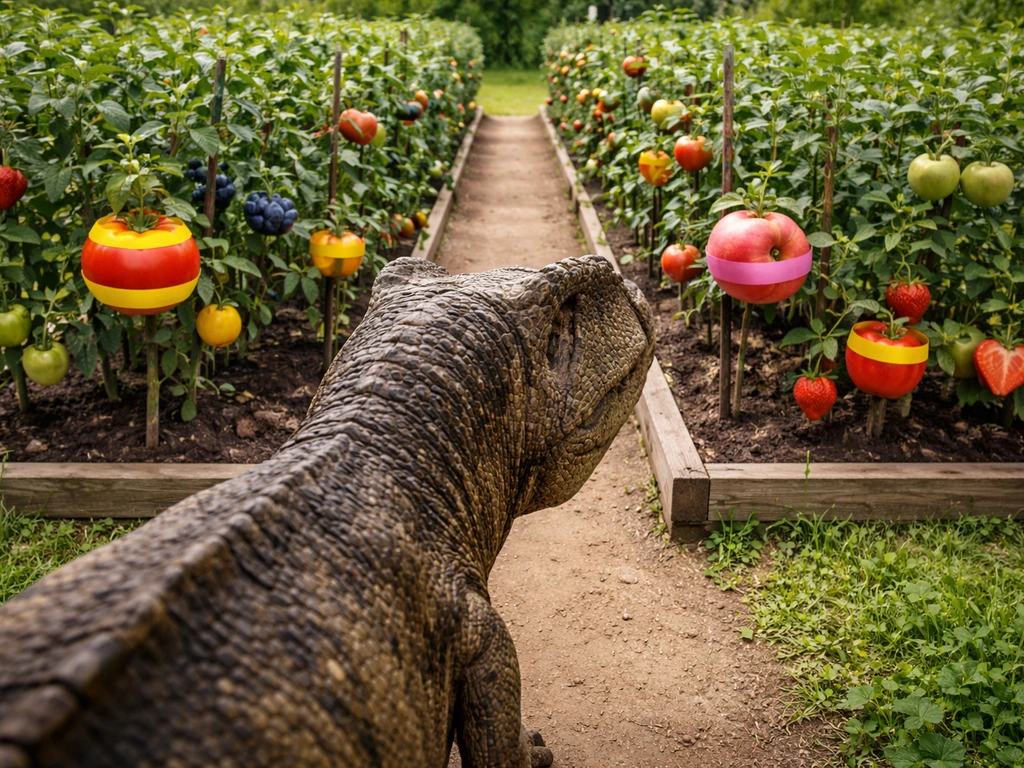
For most players, T-Rex wins the head-to-head for raw garden impact. Its Apex Predator ability actively spreads mutations across your crops every 20 minutes, which can dramatically accelerate the mutation density of your whole garden. Raptor is genuinely useful too, but its Clever Claws ability only triggers at harvest and offers a modest ~2 to 2. A recent discussion thread on mutations and raptor supports that raptor primarily applies Amber when you harvest, so your farming output depends on harvesting frequency rather than passive changes to unharvested plants blank" rel="noopener noreferrer">Clever Claws ability only triggers at harvest and offers a modest ~2 to 2.. Raptors in Grow A Garden mainly contribute by applying Amber during harvest through their Clever Claws trait. 5% chance to apply the Amber mutation per fruit collected. If your goal is maximizing garden output and mutation coverage, T-Rex does more heavy lifting. That said, which one is actually better for you depends on your player stage, your goals, and whether you can even get your hands on one.
T-Rex vs Raptor in Grow a Garden: Which to Choose?


What each creature actually does in Grow A Garden
Before diving into the comparison, it helps to understand what role these two dinos actually fill. Neither T-Rex nor Raptor is a breeding or egg-output creature in the traditional sense. They are farm-active pets whose value comes from their passive traits affecting your crops directly.
T-Rex: Apex Predator mutation spreader
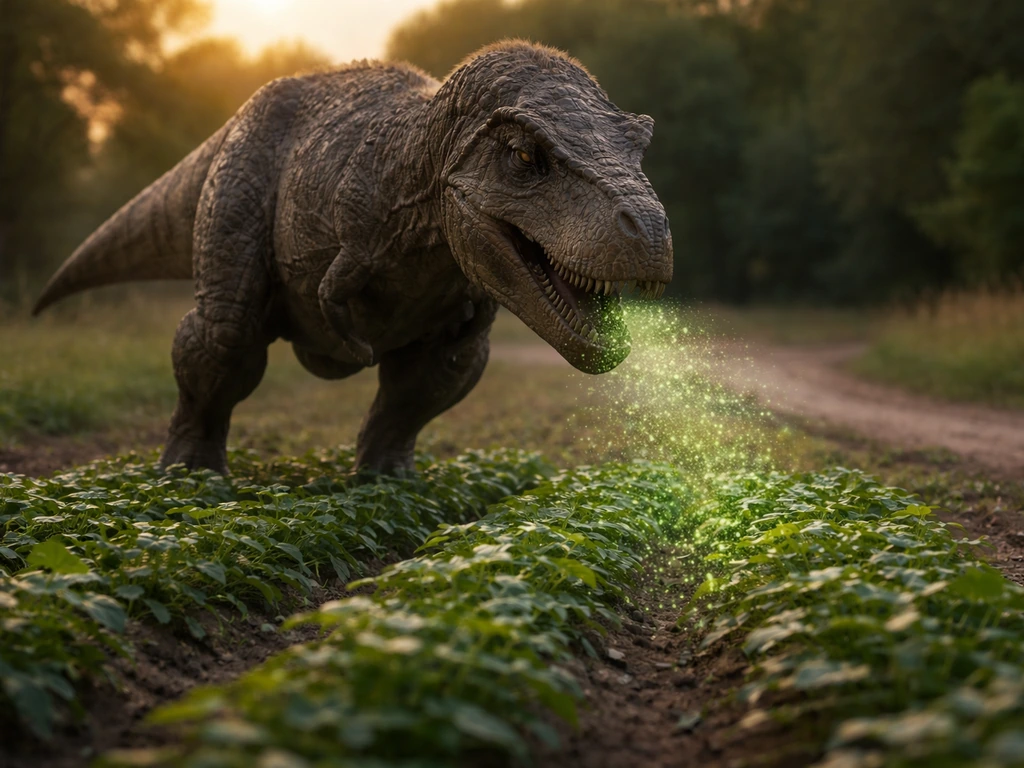
The T-Rex is a Divine tier pet, the rarest tier available, and it comes from hatching a Dinosaur Egg at a 0.5% hatch rate. Its signature passive is Apex Predator. Roughly every 20 minutes, it picks a random fruit in your garden, consumes one of that fruit's mutations, roars, and then copies that same mutation onto approximately three other nearby fruits. The original fruit loses the mutation, but the net effect is a spread: one mutation becomes present on up to three new fruits. Done consistently over time, this can blanket your garden with high-value mutations that would otherwise require sprays or lucky RNG. There are important restrictions though: T-Rex will not target fruits you have marked as favorites, it cannot spread Gold or Rainbow mutations, and it will skip spreading a mutation if every fruit in the garden already has it. Its Hunger value sits at 60,000, the highest of the two creatures here.
Raptor: Clever Claws Amber applicator
The Raptor is a Legendary tier pet, one step below Divine, also hatched from Dinosaur Eggs at roughly a 0.25% chance (about 1 in 400). Its main farm trait is Clever Claws, which gives each fruit you collect a ~2 to 2.5% chance to receive the Amber mutation the moment you harvest it. Amber mutation is specifically applied via Amber Mutation Spray, but Raptor can also trigger Amber during fruit harvest or collection Raptor's Amber proc is harvest-triggered. Rarer crops have a slightly lower probability. It also carries a Raptor Dance trait that boosts your movement speed by around 14 to 14.5%, which is a quality-of-life bonus for faster harvesting runs. Its Hunger value is 40,000, lower and cheaper to maintain than T-Rex. The critical thing to understand is that Raptor's Amber proc is harvest-triggered, meaning if you are not actively collecting crops, it is not doing anything for your garden.
Breeding and egg output: what these pets actually contribute
Neither T-Rex nor Raptor directly influences egg production or breeding chains. Their value is entirely crop-side, not breed-side. If you are looking for creatures that improve your egg output or offspring generation, these two are not the right comparison to be making. What they do affect is your crop mutation economy: T-Rex by spreading existing mutations through your garden passively, and Raptor by generating Amber mutations at harvest. If you are still deciding between them, use this sugar glider vs t-rex comparison to plan your garden the right way garden mutation economy. The Amber mutation itself can also be applied manually with Amber Mutation Spray, so Raptor is essentially a way to automate or supplement that spray without spending resources on it.
Garden impact side by side
| Attribute | T-Rex | Raptor |
|---|---|---|
| Tier | Divine | Legendary |
| Hatch rate (Dinosaur Egg) | ~0.5% | ~0.25% |
| Core passive | Apex Predator (mutation spread) | Clever Claws (Amber chance on harvest) |
| Trigger | Passive, every ~20 minutes | Active, only on fruit collection |
| Mutation affected | Any mutation (except Gold/Rainbow) | Amber only |
| Spread count | ~3 nearby fruits per cycle | 1 fruit per harvest proc (2-2.5% chance) |
| Favorites targeting | Skips favorited fruits | No restriction |
| Hunger | 60,000 | 40,000 |
| Bonus trait | None notable beyond Apex Predator | ~14-14.5% movement speed boost |
Looking at this directly, T-Rex has a broader mutation impact. It works on whatever mutations are already in your garden and spreads them every 20 minutes whether you are online or not. Raptor is narrower: it only generates Amber, and only when you harvest. For players who log in frequently and harvest constantly, Raptor is a solid Amber farm. For players who want their garden improving passively, T-Rex pulls ahead.
Early game vs mid-to-hardcore goals
Early game players
If you are early in your Grow A Garden progression and you happen to hatch a Raptor, use it. If you are wondering whether a Raptor is good for Grow a Garden, it is especially worth it early for harvesting-focused Amber gains is raptor good in grow a garden. The movement speed bonus alone makes harvesting runs faster, and any Amber mutations you generate at harvest are pure bonus value at this stage. Raptor is also easier to maintain with its lower Hunger of 40,000. The Amber mutation is genuinely useful and hard to get otherwise without spending Amber Mutation Spray, so even a 2% proc rate adds up over dozens of harvests. Do not stress if you do not have a T-Rex yet. At a 0.5% hatch rate, most early players will not.
Mid-game and optimizing players
Once you are mid-game and building out a serious mutation strategy, T-Rex becomes the more valuable tool. The ability to take one high-value mutation already present on a crop and replicate it three times every 20 minutes is a huge deal for mutation density. If you have rare mutations seeded into a few fruits, T-Rex will naturally propagate them through your garden over time. The key here is to manage your favorites setting carefully: do not favorite the fruits carrying your best mutations or T-Rex will skip them entirely. T-Rex will skip favorited fruits, so keep your favorites setting consistent with the mutations you want it to spread. Instead, favorite only fruits you want to protect from having their mutations consumed.
Hardcore/min-max players

At the hardcore level, T-Rex is the clear meta choice for garden mutation optimization. The 20-minute passive cycle compounds significantly over a long session. That said, T-Rex has a few real-world quirks to be aware of: community reports flag occasional bugs where the timer resets but no devour or spread actually occurs, and some players note it seems to favor spreading to the same fruits repeatedly rather than distributing evenly. If you think your setup is failing, make sure your sugar gliders grow a garden automation is actually triggering during each cycle or harvest sugar gliders grow a garden not working. These are worth tracking on your own farm. If T-Rex is being unreliable, a Raptor can still serve as a solid Amber generator while you troubleshoot or wait for patches.
Strategy recommendations and a practical breeding plan
Here is how to think about building around each creature depending on your situation.
- Prioritize getting a T-Rex if you are cracking Dinosaur Eggs regularly. At 0.5% it is rare, but it is worth targeting as a farm anchor. Every batch of eggs is a chance.
- If you hatch a Raptor first, deploy it immediately and start harvesting actively to stack Amber mutations on your crops. Raptor's value is directly proportional to how often you collect.
- When using T-Rex, seed your garden with at least one or two fruits carrying your most-wanted mutations before you let Apex Predator run. It cannot spread mutations that do not already exist somewhere.
- Set your favorite marker only on fruits you want shielded from T-Rex consumption, such as a single specimen of a rare mutation you want to keep pristine. Do not blanket-favorite everything or you will neuter T-Rex's effectiveness.
- Do not stack T-Rex and expect it to touch Gold or Rainbow mutations. Those are exempt from its ability entirely, so plan those separately.
- If your T-Rex appears stuck or not spreading, check that there are mutations in your garden it can legally target (not all favorited, not all already uniform). Community reports of T-Rex 'breaking' often trace back to these edge-case conditions rather than an actual bug.
Decision checklist and how to test on your farm
Use this checklist to figure out which creature fits your current situation and then verify it is actually working.
- Do you want passive mutation spread while offline or AFK? Pick T-Rex. It runs every ~20 minutes automatically.
- Do you harvest frequently and want a consistent Amber source? Raptor is a strong fit and cheaper to maintain.
- Do you already have rare mutations seeded in your garden? T-Rex will amplify them. If your garden is mutation-bare, T-Rex has nothing to work with yet.
- Are you struggling to get Amber without using sprays? Raptor solves this at no ongoing resource cost.
- Do you have favorites set on most of your fruits? Audit that list before running T-Rex or it will barely trigger.
- Is your T-Rex or Raptor not appearing to do anything? Check Hunger levels first (T-Rex needs 60,000 fed, Raptor 40,000). A hungry pet does not perform.
To test T-Rex on your farm, note which fruits have which mutations before a 20-minute cycle, then check back after the roar animation fires. You should see the source fruit lose its mutation and approximately three nearby fruits gain it. If that is not happening, check favorites, check that mutations exist in the garden, and verify no Gold or Rainbow mutations are involved. For Raptor, the easiest test is to do 50 harvests and count how many fruits come back with Amber applied. At 2 to 2.5%, you should see it proc roughly once every 40 to 50 harvests on average, though RNG variance is real so give it a proper sample.
The meta right now clearly favors T-Rex for serious farm optimization, but Raptor is a genuinely useful creature at every stage and much easier to obtain given its higher hatch rate. If you are debating between them and only have one: use what you have, play around its strengths, and work toward the other. They cover different niches well enough that having both eventually is the real long-term goal.
FAQ
If I am often offline, does T-Rex still outperform Raptor?
Yes, if your play style includes long offline stretches, T-Rex can still run its 20 minute cycle and spread mutations while you are away. Raptor will only matter when you actively harvest, so if you rarely collect crops, Raptor’s Amber generation may not ramp up enough to compete.
How should I use the favorites feature to avoid hurting my best mutations with T-Rex?
Manage favorites for intent, not convenience. To spread a mutation, leave the donor fruits un-favorited, but you can favorite “protect” fruits you do not want the Apex Predator to consume. If you favorite too broadly, T-Rex can stall because it has fewer eligible fruits to pick from.
Will T-Rex copy Gold or Rainbow mutations in my garden?
T-Rex cannot spread Gold or Rainbow mutations, so you can seed those higher rarity fruits without expecting Apex Predator replication. If your mutation plan depends on propagating Gold or Rainbow, rely on sprays or other mechanics instead of T-Rex’s cycle.
Why might my Raptor harvests show fewer Amber procs than expected?
If you are not seeing Amber-related gains from Raptor, confirm you are actually harvesting frequently enough and that you are counting the right fruit changes at return. Also remember rare crops tend to proc slightly differently, so compare similar crop types when you run your test.
How many harvests should I test to estimate my Raptor’s true Amber proc rate?
A meaningful way to reduce RNG frustration is to run a larger sample and track only Amber-tagged fruit outcomes. Your article’s rough expectation is one proc every 40 to 50 harvests at around a 2 to 2.5% rate, so doing 100 harvests gives you better signal than 20 harvests.
What troubleshooting steps should I try if T-Rex seems bugged or not spreading?
If the T-Rex timer resets but you do not see the roar effect changing fruit mutations, prioritize checks in this order: ensure there are eligible, non-favorited fruits with spreadable mutations, verify the garden actually has those mutations present before the cycle, then confirm the cycle is triggering during your session.
Can I combine Amber Mutation Spray with Raptor, and does it change the outcome?
Even with T-Rex, you can still use Amber Mutation Spray to seed Amber yourself, especially if you are early and need immediate coverage. Raptor then acts as automation on top, meaning you get both planned seeding (spray) and ongoing procs (harvest).
If I can only invest in one pet right now, how do I choose between them based on my main goal?
If you are forced to choose only one pet, pick based on your dominant bottleneck: if you need broader mutation coverage over time, T-Rex is the better choice. If your priority is faster harvesting and supplemental Amber generation during sessions, Raptor can be the more practical “day-to-day” option.
Does T-Rex Ignore Favorited Fruits in Grow a Garden?
Find out if T-Rex targets favorite fruits in Grow a Garden, how favorites work, and how to stop it with quick tests.