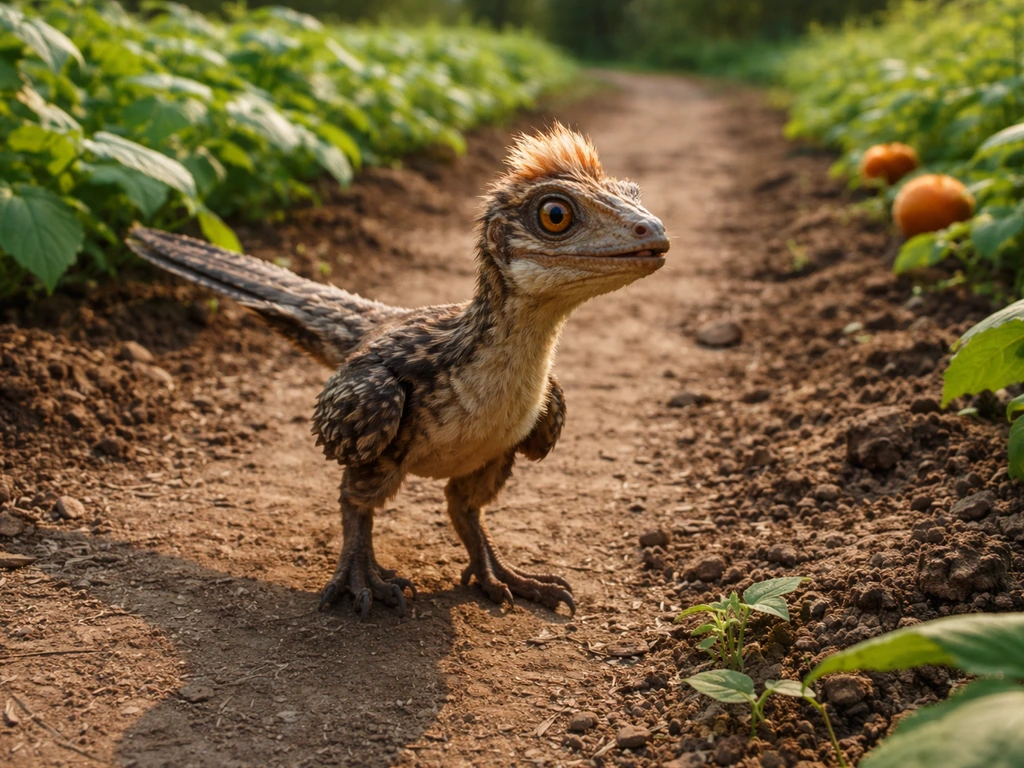
Yes, the T-Rex is genuinely good in Grow a Garden, but only if you set it up correctly. It's a Divine-tier pet that copies mutations across your garden automatically, which makes it one of the most powerful value-multipliers in the game when you know how to work with it. The catch is that it has real constraints around favoriting and targeting that trip up a lot of players, and at a 0.5% hatch rate from the Dinosaur Egg, it takes serious investment to obtain. If you have one and you use it well, it can significantly increase the value of your entire harvest.
Is T-Rex Good in Grow a Garden? Worth It or Not

Julian Russo
26 Apr 2026
What T-Rex actually does in Grow a Garden
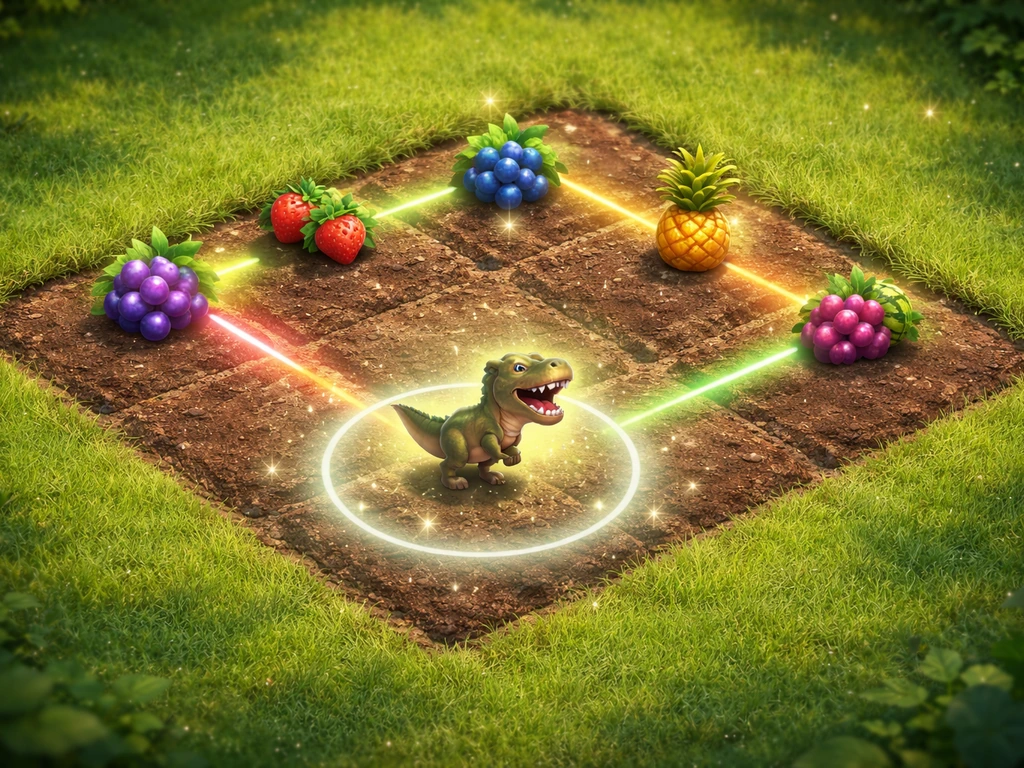
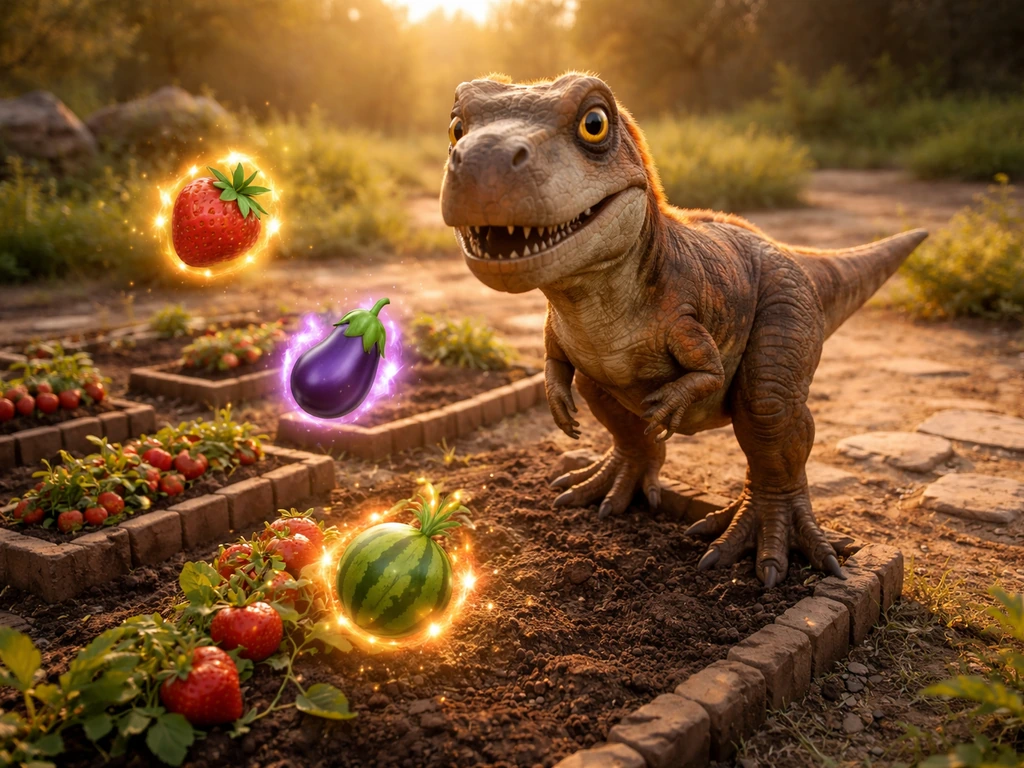
The T-Rex is a Divine pet introduced in the Prehistoric Update on July 5, 2025. Its core ability is called Apex Predator, and the loop works like this: every 20 minutes (give or take about 15 seconds depending on conditions), it "devours" a random mutation from one fruit in your garden, then roars and spreads that exact mutation to 3 or more other random fruits. The fruit it took the mutation from loses it, and the others gain it.
So in practical terms: if you have a fruit with the Juicy mutation sitting in your plot, the T-Rex might eat that mutation off it, then paste Juicy onto 3 other fruits. You're not duplicating mutations infinitely, since the donor fruit loses its mutation, but you're spreading one good mutation across several fruits per cycle. That's a significant net gain for harvest value when your garden is set up right.
A few hard rules that govern how this ability works, and getting these wrong is why a lot of players feel like their T-Rex "isn't doing anything":
- T-Rex cannot devour mutations from favorited fruits, but it can apply mutations to them. Favorited fruits are safe as mutation recipients, not as donors.
- It does not spread variant types like Gold, Silver, or Rainbow. Only standard mutations transfer.
- It can only take mutations from unlocked (non-favorited) fruits. If every fruit in your garden is favorited, it has no valid target to devour from, so nothing happens.
- Mutations don't stack in this game, so the T-Rex isn't building exponential bonuses. It's redistributing what already exists.
- In rare edge cases, if a mutation state exists across every crop simultaneously, the T-Rex may cycle without any visible effect.
Quick verdict: when T-Rex is worth it and when it's not
T-Rex is worth it when you have a garden with mixed mutation quality and you want to normalize mutations across all your fruits passively. It's essentially a mutation equalizer that does the spreading work for you on a roughly 20-minute timer. For players running large gardens with high-value mutations already in play, that passive spreading translates directly into higher harvest totals without any extra effort.
It's not worth chasing if you're early in the game. The 0.5% hatch rate from the Dinosaur Egg means you could burn a lot of resources before you see one. If you're still building out your garden's basic mutation pool, a T-Rex won't save you because it can only spread mutations that already exist. It's a multiplier, not a generator. If your fruits have weak or no mutations to begin with, the T-Rex has very little to work with.
| Situation | T-Rex Good Here? | Why |
|---|---|---|
| Mid-to-late game, strong mutations already present | Yes | Spreads high-value mutations to more fruits each cycle |
| Early game, weak or no mutations | No | Nothing strong to copy, hatch cost is too high for the return |
| All fruits favorited in your garden | No | T-Rex has no valid donor fruit and ability does nothing |
| Mixed garden with some favorited, some not | Yes | Donates from unlocked fruits, can apply to favorited ones |
| Trying to spread Gold/Rainbow variants | No | T-Rex explicitly does not spread variant types |
What you actually get out of using T-Rex on your farm
The core value is passive mutation distribution. Every ~20 minutes, three or more fruits in your garden get a mutation they didn't have before, pulled from another fruit that did. Over a long farming session, that compounds meaningfully. A garden where only a handful of fruits had good mutations can shift into a garden where most fruits carry that same mutation without you doing anything manually.
The hunger mechanic matters here too. T-Rex has a hunger value of 60,000, which means you need to keep it fed to keep it active. If it starves out mid-session, you lose those ability cycles completely. Make sure feeding is part of your routine before you go idle or step away from the game.
The hunger value of 60,000 is relatively high, so plan ahead. The T-Rex paying off depends entirely on it staying active across multiple 20-minute ability windows. One or two cycles in a short session won't feel impressive. Over a longer session with multiple cycles, the mutation spread accumulates into real harvest value.
How T-Rex compares to other top choices
The most direct comparison is the Raptor, which was also added in the same Prehistoric Update. If you are also comparing pets, you may want to look at how the T-Rex differs from a Raptor and which one fits your garden better the Raptor. If you are also comparing pets like the Raptor, make sure you know what raptors eat in Grow a Garden before deciding on your lineup. If you are wondering whether the Raptor is good in Grow a Garden, it is generally better for players who collect frequently than for passive mutation spreading. The Raptor is a very different animal mechanically. Its Clever Claws ability gives a 2 to 2.5% chance of triggering an Amber mutation when you collect fruit, plus a movement speed buff. That's an active-collection benefit, whereas T-Rex is entirely passive and operates on a timer. The Raptor rewards players who are actively harvesting frequently. The T-Rex rewards players running longer idle sessions or large gardens.
If you're choosing between the two, T-Rex is the stronger pick for players optimizing harvest value at scale through mutation spreading. Raptor fits better if you're collecting frequently and want the Amber mutation proc on top of some movement speed. Both were introduced together, so neither is newer or presumably more balanced than the other. The T-Rex vs. Raptor tradeoff really comes down to your playstyle: passive and large-scale versus active and collection-focused.
| Pet | Rarity | Core Mechanic | Best For | Downside |
|---|---|---|---|---|
| T-Rex | Divine | Spreads existing mutations to 3+ fruits every ~20 min | Large gardens, idle sessions, mutation scaling | Needs unlocked donor fruit, high hunger, 0.5% hatch rate |
| Raptor | Lower than Divine | 2-2.5% Amber mutation chance on fruit collection + speed buff | Active players, frequent collection, movement efficiency | Doesn't help with passive mutation spread |
| Queen Bee | Varies | Refreshes ability cooldown of highest-timer pet | Paired with T-Rex to cycle its ability faster | Indirect benefit, depends on what pets you're running |
The Queen Bee deserves a special mention here because it has direct synergy with T-Rex. Queen Bee can refresh the ability cooldown of the pet with the highest timer, which in most setups will be the T-Rex with its 20-minute cycle. If you're running both together, you can get T-Rex's ability firing more frequently than it would alone. That synergy is one of the strongest passive combos in the current meta for mutation-focused farms.
Should you invest in getting a T-Rex?
The T-Rex comes from the Dinosaur Egg, and the hatch chance is 0.5%. That's a rare pull. To get one, you equip a Dinosaur Egg and place it on your plot to hatch it. You can unlock extra egg slots with Garden Coins if you want to run multiple eggs at once to improve your odds over time, but even then, you're looking at a grind. The question is whether your garden is at a point where the T-Rex's mutation-spreading ability will actually pay off.
If your garden already has several strong mutations in rotation and you're playing long sessions, yes, invest. The payoff is real and the mutation spreading compounds over time. If you're still in early stages where your mutations are weak or inconsistent, hold off. Put your resources into building the mutation base first, then go after the T-Rex when you have something worth spreading.
There's no shortcut to the hatch rate, so set realistic expectations. Some players get lucky quickly; most don't. Don't burn all your resources on Dinosaur Eggs in the early game when those resources could be better spent elsewhere. The T-Rex is a late-mid to endgame investment.
How to use T-Rex effectively once you have one
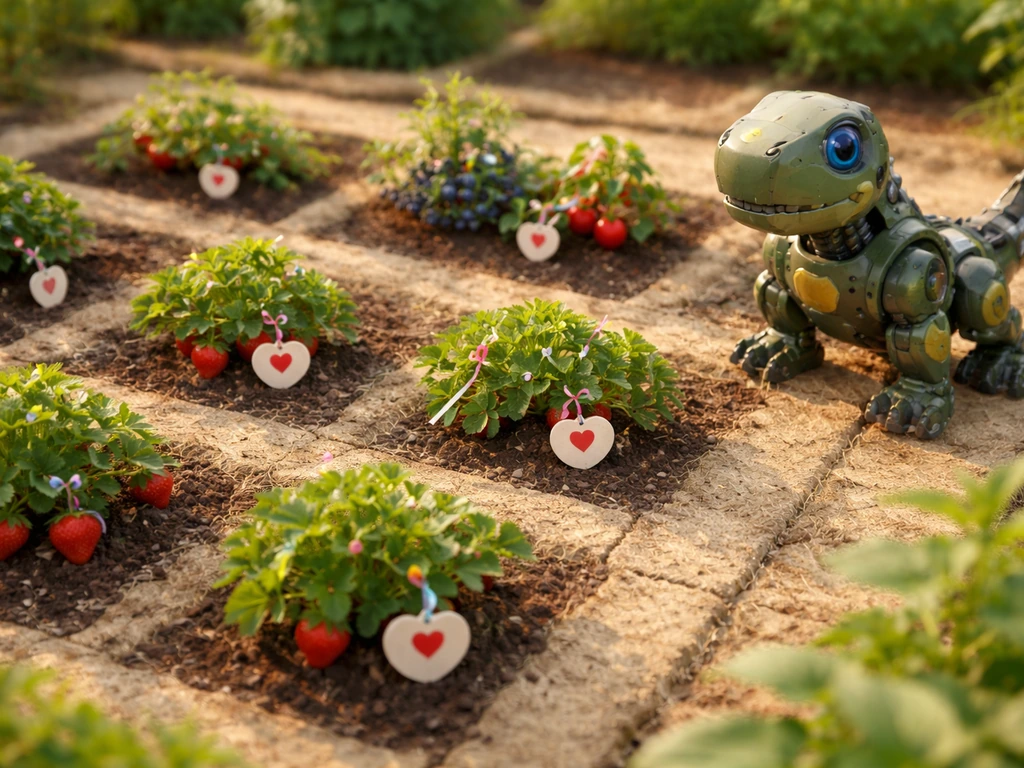
The single most important setup rule: always have at least one non-favorited fruit in your garden. If you favorite everything, the T-Rex has no valid fruit to devour a mutation from, and its ability cycle completes without doing anything. This is the number one reason players report their T-Rex "not spreading mutations." Keep one or more fruits unlocked (unfavorited) to serve as the donor pool.
- Favorite your highest-value or rarest fruits so the T-Rex cannot accidentally strip their mutations. It can still apply mutations to favorited fruits.
- Leave lower-value or mutation-rich fruits unfavorited so the T-Rex has valid donors to pull from.
- Keep the T-Rex fed. Hunger at 60,000 means you need to check in on it, especially during long sessions.
- Pair with Queen Bee if you have one, to reduce the effective cooldown on T-Rex's 20-minute ability cycle.
- Run the T-Rex during longer sessions where it will complete multiple ability cycles, not short check-ins where one or zero cycles fire.
- Don't expect it to create mutations from nothing. Make sure your garden already has good mutations before relying on T-Rex to spread them.
One more edge case to know: if every single fruit in your garden has the same mutation state simultaneously, the T-Rex may complete a cycle with no visible change. This is rare but possible, and it's not a bug. It just means there's nothing meaningfully different to transfer in that moment. Keeping a varied garden avoids this.
Who should use T-Rex and what to do next
Early-game players: Don't prioritize the T-Rex yet. Focus on building your mutation pool and unlocking stronger crops first. The T-Rex won't generate mutations for you, so there's no point spreading weak ones at scale. Only one mutation tier (Silver, Gold, or Rainbow) can be active at a time, which helps explain why different variants can behave differently blank" rel="noopener noreferrer">only one of the Silver, Gold, or Rainbow mutations can be active at a time. If you're also comparing sugar glider versus T-Rex-style garden effects, you can use the same mutation-spreading logic to choose the better pet for your setup sugar glider vs t-rex. Come back to this once your garden has some real value.
Mid-game players with some strong mutations already running: This is when T-Rex starts making real sense. If you have a few good mutations and you're running sessions of meaningful length, T-Rex will actively push more of your fruits into that mutation tier passively. Start farming Dinosaur Eggs now, but don't go all-in on egg resources if you're still building your core garden.
Late-game players optimizing for maximum harvest value: T-Rex is one of your best pets. Pair it with Queen Bee, set up your favorites correctly (valuable fruits favorited, some donors left unfavorited), keep it fed, and let it run. The mutation spreading over long sessions compounds into real harvest gains. Also look into whether the T-Rex and Raptor can complement each other in your pet lineup, since they serve completely different roles and don't compete with each other.
Your immediate next steps depend on where you are. If you're ready to go after a T-Rex, start farming Dinosaur Eggs and consider using extra egg slots to improve your hatch chances over time. Once you have one, set up your garden with the favoriting strategy above before you deploy it. And if you're weighing T-Rex against other pets, check out how it stacks up against the Raptor specifically, since that's the most common comparison players are making right now.
FAQ
How do I know if my T-Rex is actually spreading mutations (not just running its timer)?
After each 20-minute cycle, check whether at least three fruits changed to a new mutation that they did not have before the cycle. If every fruit you check still has the same mutation set, confirm you still have at least one unfavorited donor fruit available, and that you kept the pet fed so the cycle completed while it was active.
Should I favorite my best fruits, or leave them unfavorited for the T-Rex to copy from?
Favorite your “receiving” fruits, leave at least one “donor” fruit unfavorited, and avoid favoriting everything. A good pattern is to favorite the fruits you care about maximizing, then ensure the mutation you want to spread currently exists on an unfavorited fruit for the T-Rex to devour.
What if my garden is small, will T-Rex still work well?
T-Rex is most noticeable when you have enough fruits that three or more can benefit per cycle. In a very small garden, even if the mutation spreads, the absolute harvest gain may feel limited because fewer fruits can receive the transferred mutation each timer window.
If all fruits have the same mutation state, will T-Rex waste cycles?
It may complete cycles with no visible change because there is no meaningful difference to transfer at that moment. This is why diversifying your mutation pool (so at least one fruit has the target mutation donor state) helps you see results sooner.
Does T-Rex create new mutations on fruits that never had them?
No, it spreads mutations that already exist in your garden. If your garden lacks strong mutations early on, the T-Rex cannot “generate” value by itself, so it is better to build a base mutation pool first, then deploy T-Rex to normalize and scale it.
How should I manage T-Rex hunger if I play for short sessions or forget to check in?
Plan around longer idle windows. If you can only play briefly, feed the T-Rex right before you start farming, and avoid leaving it unfed for long periods that might cause starvation mid-cycle. If it starves, you lose entire timer windows, which reduces the compounding effect.
Is it worth using extra Dinosaur Egg slots immediately, or should I wait?
Use extra egg slots when your garden already has at least some mutations worth spreading, because the egg hunt is a grind and you want the payoff to be immediate once you hatch one. If your mutation pool is still weak, eggs and labor may be better spent improving crops first.
What are the most common mistakes that make players think T-Rex is “underpowered”?
The biggest issue is favoriting every fruit, which leaves no valid donor for the pet to devour. Other common problems are running too short a session to reach multiple timer cycles, letting the pet starve, and expecting new mutations when your garden only contains weak or limited mutation states.
Should I prioritize T-Rex over Raptor if I collect fruit frequently?
If you are actively collecting often, Raptor usually fits better because it offers an Amber mutation proc tied to collecting. T-Rex is better aligned with passive, timer-based scaling (especially during longer sessions or larger gardens), so the “better” choice depends on whether your playstyle is collection-focused or idle-focused.
Does pairing T-Rex with Queen Bee change how I should feed or manage my garden?
Yes, because Queen Bee can refresh the highest-timer pet, which can make T-Rex fire more frequently. If that increases its ability frequency, you should also be ready to feed more consistently so hunger does not interrupt additional cycles.
Next Article
Is Raptor Good in Grow a Garden? Yes or No Guide
Raptor worth it in Grow a Garden? Clear yes or no, with stats, role, breeding efficiency, and best alternatives.