
Both Sugar Glider and T-Rex are Tier S pets in Grow A Garden, and both do essentially the same job: spread mutations across your fruits. The real difference is how they do it, how hard they are to get, and which one fits your farm better right now. If you want the short version: T-Rex is easier to target-acquire and excels at duplicating a single strong mutation across your whole garden fast.
Sugar Glider vs T-Rex in Grow A Garden: Best Choice

Julian Russo
21 Jun 2026
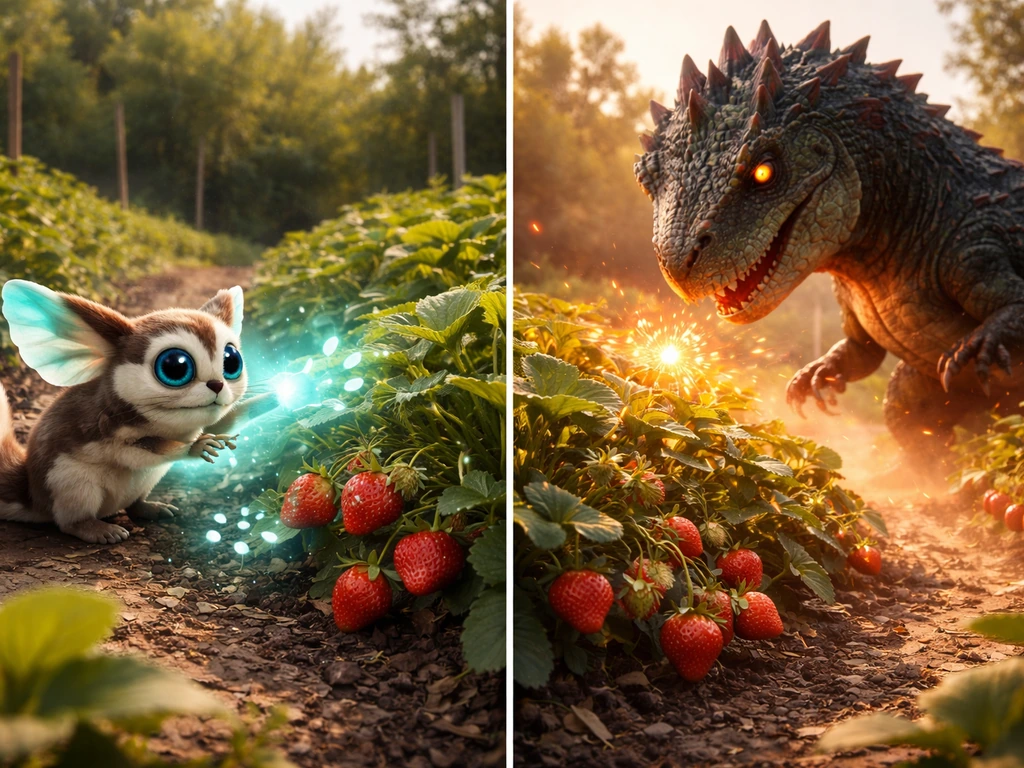
Sugar Glider is a mythical-tier pet locked behind a seasonal event that cycles mutations more broadly, making it a powerful complement rather than a direct upgrade. Which one to build around depends on your current mutation goals, your account stage, and whether the Fall Market is even live when you're reading this.
What Sugar Glider and T-Rex actually are in Grow A Garden
These are both pets, not crops or tools, so 'breeding' in the traditional sense doesn't apply here. Neither Sugar Glider nor T-Rex produces eggs or offspring the way some players expect. Instead, their value comes entirely from their mutation-manipulation abilities, which run on timers while they're active on your farm.
Sugar Glider is a mythical pet introduced during the Fall Market Event. It's sold in the Fall Pet Shop for 900,000,000 Sheckles and only becomes available after you contribute 13 Fall Blooms, meaning it's gated behind seasonal participation, not just raw currency. T-Rex is a divine pet obtained by hatching a Dinosaur Egg from the Prehistoric Event, with roughly a 0.5% hatch chance per egg. That's a different kind of grind: RNG-based egg hatching versus event-gated purchasing.
What each pet does on your farm
This is where the comparison really matters. Both pets manipulate mutations on your fruits, but the mechanics are distinct enough that they play differently in practice.
Sugar Glider: the mutation copier

Sugar Glider's ability is called Sugar Gliding. Every 18 to 20 minutes, it glides between 3 random different fruits, copies 1 mutation from each, and applies it to the next fruit in the chain. Think of it as a rotating mutation transfer: fruit A donates a mutation to fruit B, fruit B donates one to fruit C, and so on. Over time this spreads a variety of mutations across your garden without you doing anything manually.
There's a critical failure condition to know: the ability won't activate unless you have at least 2 unfavorited fruits with mutations present when it triggers. If you favorite most of your mutated fruits, the Sugar Glider goes idle. Keep enough unfavorited mutated fruits in your garden at all times or you're wasting the pet's timer cycles. Its hunger stat is 16,000, which means it feeds relatively infrequently compared to heavier pets.
T-Rex: the mutation spreader
T-Rex runs the Apex Predator ability on roughly a 20-minute cycle. It devours a random mutation from one fruit, then roars and applies that mutation to 3 or more other random fruits. This is single-mutation duplication: it picks one mutation and stamps it across your garden. The community sums it up well: 'T-Rex is good, it can duplicate mutations by devouring one on a plant.' If you have one high-value mutation you want everywhere, T-Rex is the faster and more focused tool. T-Rex is a great pick if you want to standardize one high-value mutation across more fruits quickly T-Rex is good.
T-Rex will not devour mutations from favorited fruits under normal conditions. It only targets favorited fruits if those are literally the only mutated fruits left in your garden. So the same advice applies: manage your favoriting deliberately. Its hunger stat is 60,000, which is significantly higher than Sugar Glider's, so factor that into your feeding routine.
| Attribute | Sugar Glider | T-Rex |
|---|---|---|
| Rarity tier | Mythical | Divine |
| Source | Fall Pet Shop (seasonal event) | Dinosaur Egg (Prehistoric Event, 0.5% chance) |
| Cost/unlock | 900,000,000 Sheckles + 13 Fall Blooms | RNG egg hatch |
| Ability name | Sugar Gliding | Apex Predator |
| Ability timer | ~18–20 minutes | ~20 minutes |
| Mutation behavior | Copies 1 mutation each from 3 fruits, chains them forward | Devours 1 mutation, spreads it to 3+ fruits |
| Failure condition | Fewer than 2 unfavorited mutated fruits | Only favorited mutated fruits present |
| Hunger stat | 16,000 | 60,000 |
| S-tier ranked? | Yes | Yes |
How to get each one and which is more efficient to chase
T-Rex is the more consistently chaseable option for most players because you can grind Dinosaur Eggs during the Prehistoric Event without waiting for a specific festival calendar window. Yes, 0. 5% per egg is rough, but you can hatch eggs continuously. Sugar Glider, on the other hand, is locked behind the Fall Market Event.
If that event isn't running right now, you simply cannot get one, no matter how many Sheckles you have. If your goal is to make sugar glider grow a garden work reliably, check whether the Fall Market Event is currently running. When the Fall Market is active, you need to contribute 13 Fall Blooms before the shop even unlocks Sugar Glider, and then have 900,000,000 Sheckles ready. That's a steep dual requirement.
If both events are currently live, and you're early-to-mid account, prioritize T-Rex first because the Prehistoric Event egg grind is more repeatable. Mid-to-late players with strong economies can pursue Sugar Glider during the Fall Market window as a powerful add-on. Neither pet should be skipped if you can access them, since both sit in Tier S.
Egg and offspring output: what to actually expect

This is worth clearing up directly because the question often comes from players expecting these pets to breed or produce eggs like other game systems. They don't. Sugar Glider and T-Rex don't have egg-laying or offspring mechanics in Grow A Garden. If you are wondering what raptors eat in Grow A Garden, note that these pets are focused on mutation spreading rather than feeding an offsite creature Sugar Glider and T-Rex don't have egg-laying.
Their 'output' is measured entirely in mutations applied to your fruits per hour. At a 20-minute cycle, each pet fires roughly 3 ability activations per hour when conditions are met. T-Rex spreads one mutation to 3+ fruits per activation, so you could theoretically stack the same valuable mutation across 9 or more fruits in an hour under ideal conditions. Sugar Glider cycles 3 different mutations per activation across a chain, which diversifies your mutation spread rather than concentrating one.
The practical farm impact: T-Rex is better for rapidly standardizing your garden around one killer mutation. Sugar Glider is better for building mutation diversity across a larger variety of fruits. Neither is 'more output' in an absolute sense. It depends on what output you're optimizing for.
Tier ranking and where each fits in the current meta
Both Sugar Glider and T-Rex are confirmed Tier S in the Grow A Garden community meta, appearing at the top of multiple respected tier lists including GameSpot's pet tier list. Grow a Garden Calculator’s pet tier list also ranks T-Rex as a top-tier option T-Rex as a top-tier entry. That means neither is a 'bad choice' in any scenario. The meta distinction is that T-Rex tends to be the foundational mutation spreader players slot in first because it's more accessible and its single-mutation duplication is immediately impactful. Sugar Glider is often treated as the advanced layer on top, used by players who already have strong mutations established and want to keep the whole garden cycling efficiently.
It's also worth noting that if you're looking at other top-tier options in the dinosaur/prehistoric category, the Raptor is another creature in this conversation. T-Rex and Raptor serve different roles, and understanding that distinction helps you plan your pet slots. The broader question of whether T-Rex is worth your Dinosaur Egg investment is a common one, and the short answer is yes for most farm stages. If you want to know whether T-Rex is worth it for growing your garden, this depends on how quickly you want one mutation to spread.
Which one should you actually build around right now
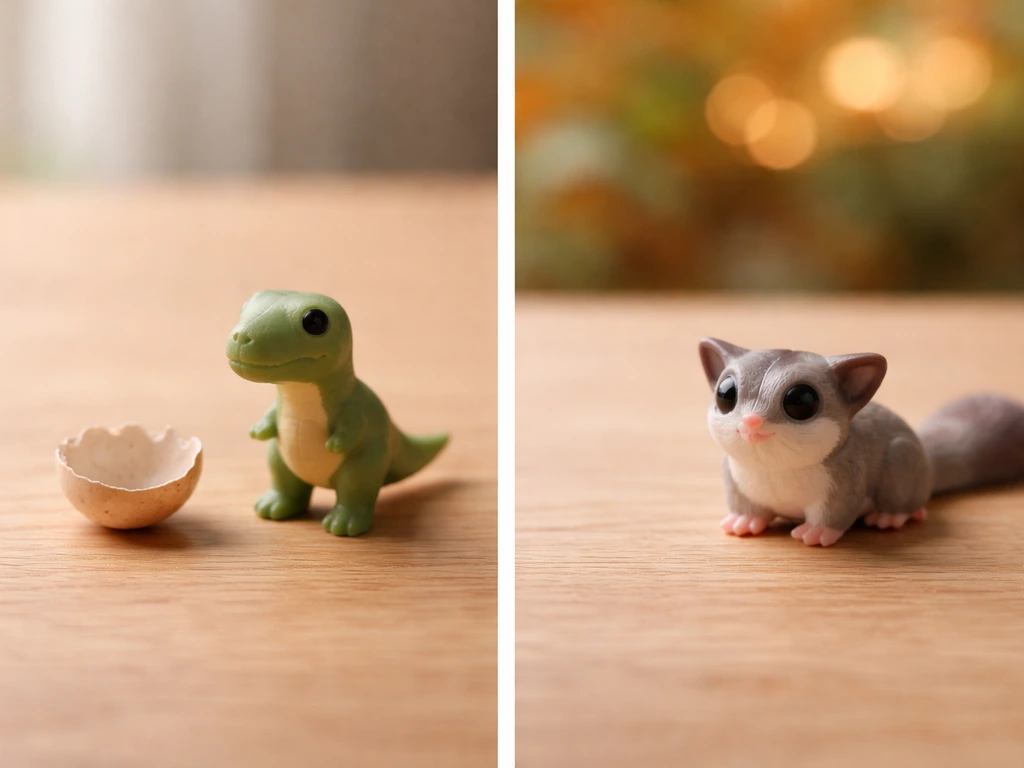
Use this as your decision guide based on where you are and what you're trying to do:
| Your situation | Best choice | Why |
|---|---|---|
| Early account, first S-tier pet | T-Rex | More accessible via egg grind, immediate mutation spread value |
| Fall Market is currently live, you have Sheckles + Blooms | Sugar Glider (add to roster) | Seasonal scarcity means get it now; you won't get another chance until next Fall |
| You have one amazing mutation you want everywhere | T-Rex | Apex Predator is built for single-mutation duplication across 3+ fruits per cycle |
| You want mutation diversity across many fruit types | Sugar Glider | Sugar Gliding cycles 3 different mutations per activation |
| Mid-to-late game, optimizing efficiency | Run both together | They stack well; T-Rex concentrates, Sugar Glider diversifies |
| Can't access either event right now | Wait for Prehistoric Event rerun for T-Rex | 0.5% per egg is grindable; Sugar Glider requires seasonal timing you can't force |
If you can only have one: T-Rex wins on accessibility and raw mutation-spreading power for most farm stages. If you're a late-game player who already has T-Rex locked in, Sugar Glider is absolutely worth chasing during the Fall Market. They aren't competitors so much as complements, but T-Rex is the more universally recommended starting point.
Your action plan: what to do today
Here's how to move forward depending on where you are right now:
- Check which events are currently active. If the Prehistoric Event is running, start grinding Dinosaur Eggs for T-Rex. If the Fall Market is live, prioritize contributing toward 13 Fall Blooms before spending Sheckles elsewhere.
- Audit your current pet roster. If you already have T-Rex, your next priority is Sugar Glider during the Fall Market. If you have neither, T-Rex is the target.
- Set up your farm for pet ability success. Keep at least 2 unfavorited mutated fruits in your garden at all times so Sugar Glider's ability doesn't idle. Favorite only the fruits you truly want protected from T-Rex's devour.
- Track your mutation spread every 20–25 minutes. After 5 to 6 ability cycles (about 2 hours), count how many fruits carry your target mutation. If T-Rex isn't spreading it consistently, check that non-favorited mutated fruits are available.
- Benchmark hunger management. T-Rex's hunger stat of 60,000 means it needs feeding less frequently than you might think, but it still needs it. Set a reminder cadence and don't let it go hungry mid-cycle.
- Once you have both pets active together, watch for mutation stacking. T-Rex spreads one mutation broadly; Sugar Glider then picks up those mutations and cycles them further. This compounding effect is where the Tier S pairing really shows.
The bottom line: Sugar Glider vs T-Rex isn't really an either-or choice once you're deep enough into Grow A Garden. Both are Tier S, both manipulate mutations, and both reward you for managing your favorited fruits carefully. Start with T-Rex because you can actually grind for it on demand, add Sugar Glider when the Fall Market window opens, and run them together for a farm that's constantly cycling and spreading your best mutations without manual intervention.
FAQ
Do Sugar Glider and T-Rex ever stop working if I favorite too many mutated fruits?
Favoriting works like a filter for both pets. For Sugar Glider, avoid favoriting too many mutated fruits because it must still find at least two unfavorited mutated fruits when its timer triggers. For T-Rex, it normally ignores favorited mutations, except in the unusual case where favorited mutated fruits are literally the only mutated fruits left.
Which pet should I pick if I want either one perfect mutation or a diverse mutation mix?
If your goal is to spread one signature mutation everywhere, T-Rex is the safer bet because it duplicates a single chosen mutation per activation. If your goal is to keep many different mutations circulating across the garden, Sugar Glider is better because it copies one mutation from each of three different fruits during its chain transfer.
Is there any breeding or egg-based loop with Sugar Glider or T-Rex in Grow a Garden?
Neither pet requires “breeding” or eggs from your side, they only run abilities on a timer while active. That means your planning should focus on having the right mutations available in the garden at trigger time, not on any cradle, hatch, or offspring loop.
What should I do if the Fall Market is not currently running but I want Sugar Glider soon?
Yes, both have practical gating around event timing and access method. T-Rex can be pursued by continuous Dinosaur Egg hatching during the Prehistoric Event, while Sugar Glider is locked behind the Fall Market Event and only becomes purchasable after you contribute 13 Fall Blooms plus the 900,000,000 Sheckles cost.
How does hunger affect my ability uptime if I run both pets together?
Treat hunger as a scheduling constraint rather than a stat you ignore. Sugar Glider feeds far less often (hunger 16,000) while T-Rex has a much higher hunger value (60,000), so if you run both, plan your feeding routine around the more demanding one to avoid idle time.
I can’t decide what to do first, should I chase T-Rex or Sugar Glider for long-term progress?
If you are building for consistency, prioritize T-Rex first because it is more repeatable to obtain via event egg grinding. Then, when Fall Market is active and you meet the 13 Fall Blooms requirement, add Sugar Glider as an add-on to broaden mutation coverage rather than expecting a direct replacement.
What is the most common mistake that makes these pets feel underpowered?
Be careful not to rely on favoriting as “set it and forget it.” Sugar Glider can go idle if at trigger time there are not at least two unfavorited mutated fruits available, and T-Rex’s mutation selection can shift if all remaining mutated fruits are favorited.
How should I arrange which fruits are mutated and which are favorited to maximize results?
Yes, the ideal “fast spread” setup depends on what you are trying to amplify. For rapid standardization, you want one high-value mutation present on a few non-favorited fruits so T-Rex can duplicate it across multiple targets. For diversity, you want multiple different mutations in play so Sugar Glider can copy from different fruits during the chain.
Can I predict mutations per hour, or is it too random to plan around?
You can estimate practical ability pressure by the cycle behavior described in the article, but you should still expect variance because the pets rely on which fruits are available and eligible at trigger time. Think of it as “around three activations per hour” when conditions are met, then reduce that expectation when your garden lacks the required variety of unfavorited mutated fruits.
Next Article
T-Rex vs Raptor in Grow a Garden: Which to Choose?
Head-to-head T-Rex vs Raptor in Grow a Garden: roles, breeding impact, yields, and which to pick for faster, better grow