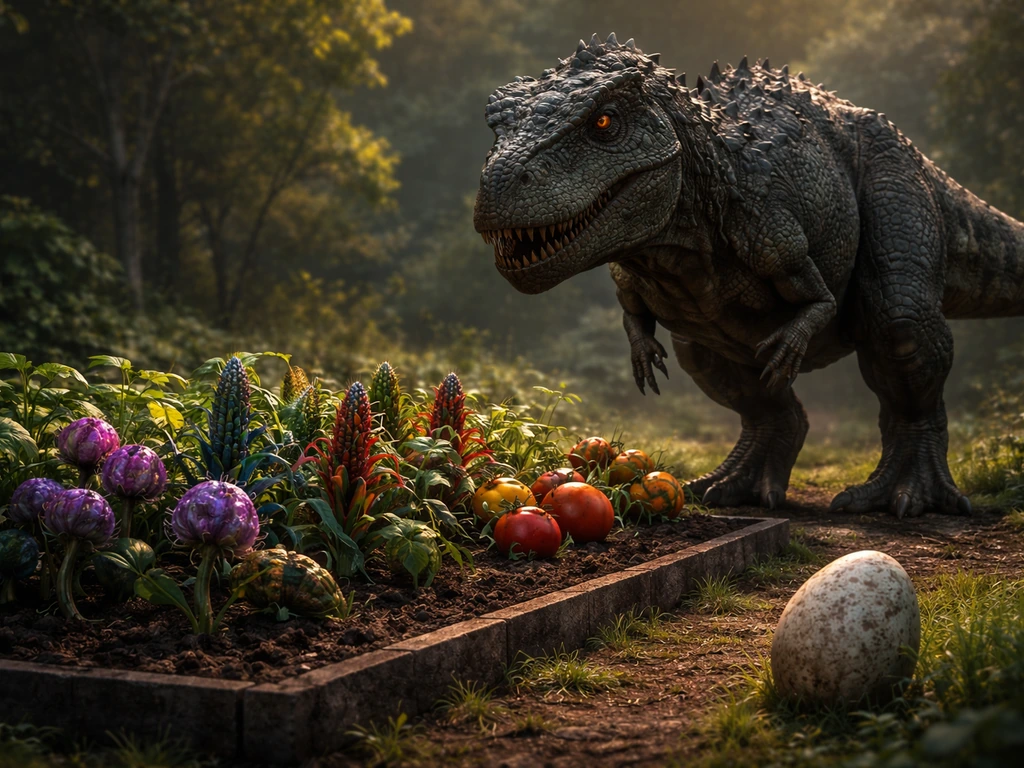
T-Rex is worth it in Grow A Garden, but only if you're at a stage where mutation spreading actually matters to your farm's output. If you're early in progression and still figuring out which crops to focus on, the investment probably isn't justified yet. But if you're running a mature garden with high-value mutations already in play, T-Rex is one of the most powerful passive tools you can have working for you every 20 minutes.
T-Rex Worth Grow a Garden: Is It Worth It in Game?

Julian Russo
5 Apr 2026
What T-Rex actually does in Grow A Garden
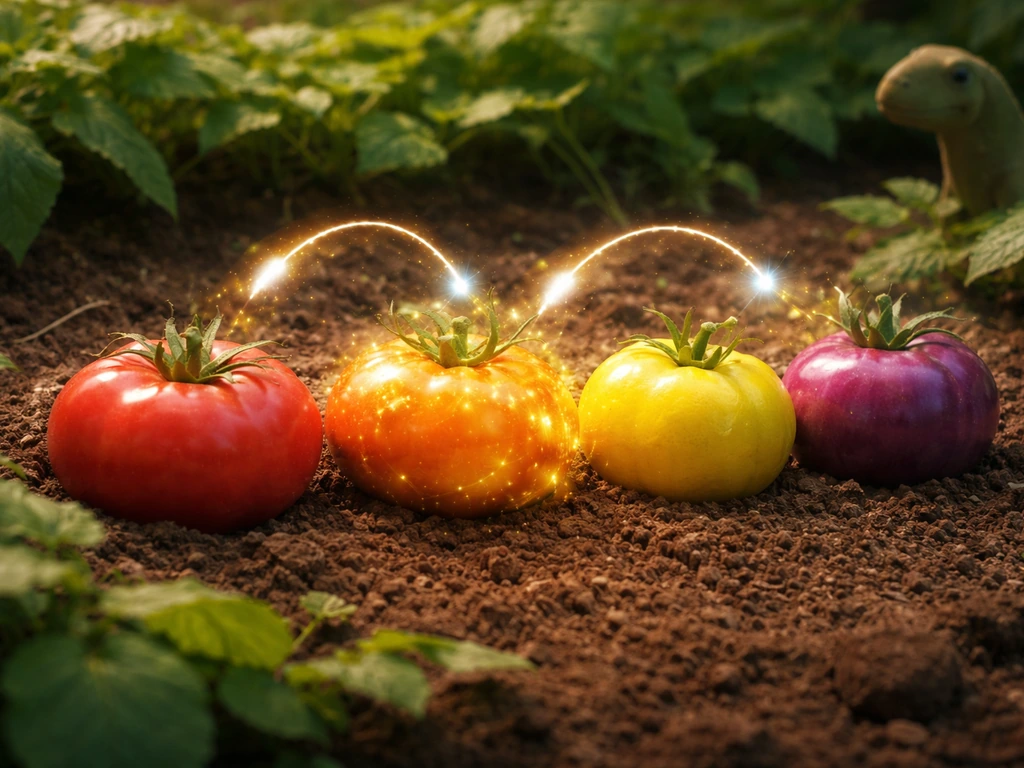
T-Rex's pet ability is mutation transfer: roughly every 20 minutes, it eats a random mutation from one of your fruits and then spreads that mutation to three other fruits in your garden. Think of it as a passive mutation copying machine running on a loop. One source describes it spreading to four other fruits, but the most consistent figure across the authoritative database is three, so plan around that floor number.
There are two important constraints you need to know upfront. First, T-Rex will not transfer Gold or Rainbow mutations. Those are excluded entirely from its ability, so don't count on it to copy your rarest mutation types. Second, it skips any fruit you've marked as a favorite. That second constraint is actually a feature you can use strategically: if you want to protect a specific fruit from being the one consumed, just favorite it. This means whether T-Rex ignores favorited fruits in Grow A Garden is something every T-Rex owner needs to understand before setting up their garden layout.
The practical loop looks like this: T-Rex eats a mutation off one unfavorited fruit, then pastes that same mutation onto three other unfavorited fruits nearby. Over a few hours, a single good mutation on one plant can spread across your entire garden passively. That's the core value proposition, and it's genuinely strong when you're working with high-multiplier mutations on crops that produce frequently.
How to get and breed T-Rex efficiently
T-Rex is a Divine-tier pet that comes exclusively from the Dinosaur Egg, which was introduced in the Prehistoric Event (Version 1.13.0, July 2025). The hatch chance is 0.5%, which is genuinely low. Here's the full hatch table for context:
| Pet | Rarity | Hatch Chance |
|---|---|---|
| Raptor | Common | 35% |
| Triceratops | Common | 32.5% |
| Stegosaurus | Uncommon | 28% |
| Pterodactyl | Rare | 3% |
| Brontosaurus | Epic | 1% |
| T-Rex | Divine | 0.5% |
Each Dinosaur Egg takes 4 hours and 10 minutes to hatch once placed in your garden (you can pay to speed this up). To craft a Dinosaur Egg yourself, you need 1 Common Egg, 1 Bone Blossom crop, and 5,500,000 Sheckles, with a 30-minute crafting time. You could also earn eggs during the Prehistoric Event by gifting pets to Graham or completing Dino Track quests, but outside of event windows those routes aren't available.
Because the hatch rate is 0.5%, the efficient path to T-Rex for most players is trading rather than hatching. The current market value sits in the 800 billion to 1.2 trillion Sheckle range, which tells you exactly how rare and sought-after it is. If you're serious about getting one, factor that trading cost into your decision rather than assuming you'll hatch it naturally from egg grinding.
Once you have a T-Rex, upgrading it requires 30,000 Garden Coins plus specific materials including Ancient Bones and Prehistoric-related fragments. Stack those upgrade materials as early as possible since upgraded T-Rex significantly improves the return on its mutation cycle. One estimate puts T-Rex at generating around 48 fossils per day (roughly 1,440 per month) when active, which gives you a concrete benchmark for assessing whether your setup is performing as expected.
Cost vs returns: what you're actually investing
Here's an honest look at the resource math. Getting a T-Rex either means trading at 800B–1.2T Sheckles, or grinding Dinosaur Eggs at a 0.5% hatch rate (meaning you statistically need around 200 eggs to see one, each costing a Bone Blossom and 5.5M Sheckles to craft). Neither path is cheap or fast.
- Egg crafting cost per attempt: 1 Common Egg + 1 Bone Blossom + 5,500,000 Sheckles
- Hatch time per egg: 4 hours 10 minutes
- Statistical eggs needed for T-Rex: ~200 (at 0.5%)
- Upgrade cost: 30,000 Garden Coins + Ancient Bones + Prehistoric fragments
- Trade value: 800,000,000,000 – 1,200,000,000,000 Sheckles
- Ability cycle: every ~20 minutes passively
- Mutations spread per cycle: 3 fruits targeted
The returns side depends heavily on what mutations you're spreading. If your garden already has a high-value non-Gold, non-Rainbow mutation on multiple crops, T-Rex amplifies your output every 20 minutes with zero additional input from you. That passive income compounds quickly on mature farms. On a garden without meaningful mutations in play, though, T-Rex has nothing useful to eat and spread, so it sits there doing very little practical work.
Where T-Rex fits in your progression
Be honest with yourself about where you actually are in the game before chasing this pet. T-Rex is a late-game optimization tool, not a starter accelerator.
Early progression players (still building Sheckle reserves, haven't unlocked high-tier crops yet) will see almost no practical benefit. The mutation transfer only matters if you have good mutations to transfer. Spending trading currency or egg resources on T-Rex at this stage is opportunity cost you'll regret when you realize you need that capital for foundational upgrades.
Mid-progression players who have a few solid mutations established and are focused on scaling output will start to see real value here. If you've got a garden that's producing consistently and you've got one or two desirable mutations appearing regularly, T-Rex starts justifying its cost by amplifying those mutations passively. This is the stage where the 20-minute cycle starts compounding in a meaningful way.
Late-game and optimization-focused players get the full value. If you're min-maxing mutation coverage across your entire garden, T-Rex is arguably the best passive pet for that purpose. The combination of frequent cycles (72 triggers per day) and three-fruit spread means your mutation density can reach near-full coverage without manual effort. If you're wondering whether T-Rex is actually good in Grow A Garden at the top of the meta, the answer for end-game farms is a strong yes.
T-Rex vs the alternatives: is there a better pick?
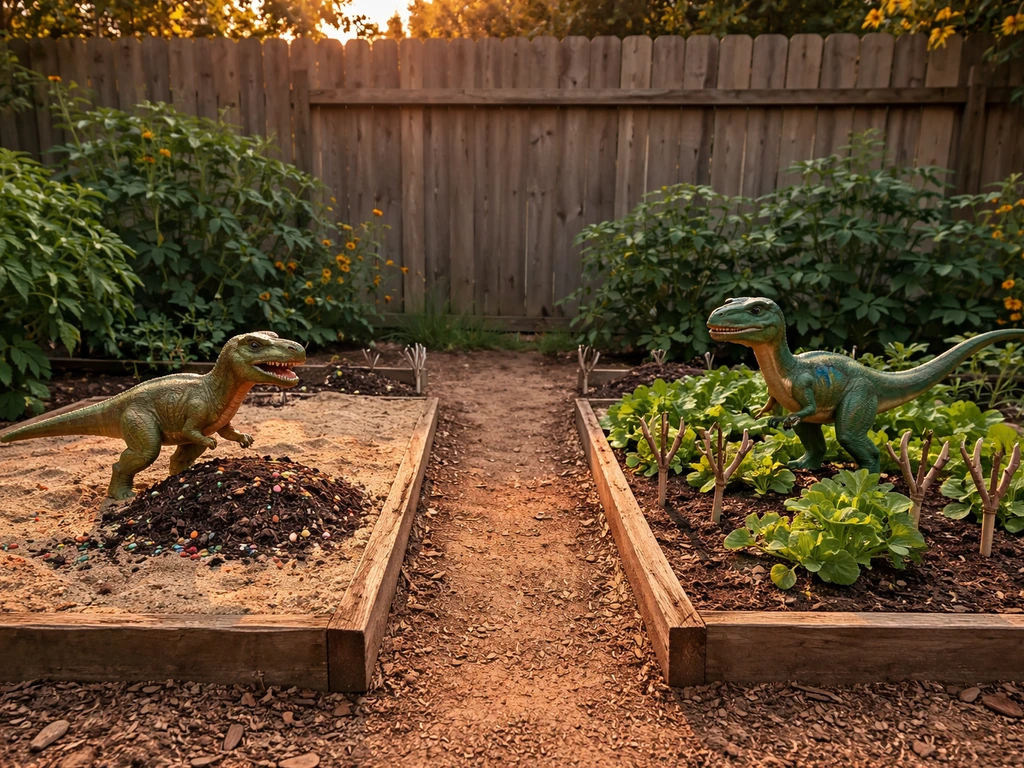
The most common comparison is T-Rex versus Raptor, since both come from the Dinosaur Egg and serve your garden in different ways. Raptor focuses on its Clever Claws ability, applying an Amber mutation mechanic after harvest rather than the broad mutation diffusion T-Rex provides. Raptor also has a dramatically higher hatch chance (35% vs 0.5%), making it far more accessible. If you want a deeper breakdown on how these two stack up across different farm setups, the T-Rex vs Raptor comparison for Grow A Garden covers that in detail.
The Sugar Glider is another pet that comes up in the conversation for mid-game players. It works differently from T-Rex and serves a distinct role, so the choice between them really depends on what your garden needs. If you're torn between the two, reading through the Sugar Glider vs T-Rex breakdown in Grow A Garden will help you figure out which one actually matches your current farm goals.
| Factor | T-Rex | Raptor | Sugar Glider |
|---|---|---|---|
| Rarity | Divine (0.5%) | Common (35%) | Non-Prehistoric |
| Primary ability | Mutation transfer (x3 fruits) | Amber mutation on harvest | Different utility |
| Ability cadence | Every ~20 minutes | On harvest | Varies |
| Excludes Gold/Rainbow? | Yes | No (different mechanic) | N/A |
| Best for | Late-game mutation spreading | Accessible mutation gains | Mid-game utility |
| Trade cost | 800B–1.2T Sheckles | Much lower | Lower |
Raptor is worth considering if you want Dinosaur Egg value without the lottery-level hatch rates. It won't spread mutations like T-Rex, but it's far easier to obtain and still contributes meaningfully to your farm. Whether Raptor is a good choice in Grow A Garden really comes down to where you are in progression, and for most players it's the more realistic first step into Prehistoric pets. Knowing what Raptors eat in Grow A Garden and how their feeding mechanic compares to T-Rex's mutation consumption is also useful context before you commit to either.
One thing to keep in mind: if you ever run into issues with a different pet in this tier, like a Sugar Glider not working correctly in Grow A Garden, the fix often involves checking favorite settings and ability triggers. The same logic applies to T-Rex: if its mutation cycle seems to stall, check that your unfavorited fruits actually have transferable mutations and that you're not accidentally blocking it with your favorites list.
Is T-Rex worth it for you? A quick checklist
Run through these before deciding to invest in T-Rex. If you're checking most of the boxes in the 'yes' column, it's worth pursuing. If you're checking mostly 'no', spend those resources elsewhere first.
- You have a mid-to-late game garden with multiple crop types producing regularly (not just starting out)
- You already have at least one valuable non-Gold, non-Rainbow mutation appearing in your garden
- You have enough Sheckle reserves (800B+) to trade for one, OR you can afford the egg-crafting grind without starving other upgrades
- You understand the favorites mechanic and can set up your garden to protect specific fruits while allowing T-Rex to work on others
- You're not expecting T-Rex to replace active play, just amplify existing mutation output passively
- You've already covered foundational upgrades (soil, water, basic pets) so T-Rex is an addition, not a replacement for basics
- You can realistically obtain or upgrade it within your current resource timeline, not just theoretically
If you checked five or more of those, T-Rex is worth the investment. If you're at three or fewer, focus on getting your garden to a state where T-Rex's mutation loop actually has good material to work with. The pet is only as valuable as the mutations already in your garden. Get those right first, then bring in T-Rex to multiply them.
FAQ
How can I tell if my T-Rex is actually doing work (and not just idling)?
Not always. If your garden has few non-Gold, non-Rainbow fruits with transferable mutations, the 20-minute cycle can feel slow or ineffective because the pet has little value to “copy and paste.” A quick check is to watch a full couple of cycles and confirm whether you see mutation changes spreading to multiple unfavorited fruits each time.
Should I place T-Rex near certain crops, or does placement not matter?
Don’t rely on passive spread to fix empty or low-mutation sections. T-Rex copies only what it consumes, and it can skip your favorite-marked fruits, so your best setup is to first ensure most of your production area has the mutation you want, then use T-Rex to proliferate it across the rest.
How many fruits should I favorite to avoid blocking T-Rex’s mutation cycle?
Favorites can protect specific fruits, but they can also reduce T-Rex’s available targets if you favorite too many plants. If you want maximum diffusion, keep only your highest-priority fruits favorited, and leave the bulk of your other fruits unfavorited so the cycle has enough eligible sources and targets.
Can T-Rex spread Gold or Rainbow mutations if I already have them growing?
Gold and Rainbow mutations are excluded from transfer, so the pet cannot help you spread those types at all. If your garden plan depends on Gold or Rainbow expansion, T-Rex will not fulfill that role, and you should invest in a different pet strategy for those mutations.
If I favorite a fruit, will T-Rex still paste mutations onto it?
The pet skips favorited fruits for both consumption and spreading targets, so if you favorite the wrong set of crops, the mutation may spread around them instead. Treat favorites like “do not touch” tiles, then favorite only the fruit you truly cannot afford to lose as a mutation source or recipient.
Is it ever worth buying or hatching T-Rex during early progression?
You can, but it’s usually only worth it once your farm has established at least a few high-value non-Gold, non-Rainbow mutations that are already showing up regularly. Buying or hatching too early often creates an opportunity cost, because the resources are better used to unlock higher-tier output and get mutation coverage started.
What garden setup increases the odds that each 20-minute cycle spreads to lots of plants?
Yes. Because the cycle spreads a mutation to three additional fruits, you can improve consistency by ensuring your garden has many eligible unfavorited fruits rather than a small, tight layout. More eligible recipients mean each 20-minute trigger has more places to “land,” which reduces the chance you waste cycles on partial coverage.
Which is usually more practical, trading for T-Rex or grinding Dinosaur Eggs?
Trading can be more efficient when you value speed and already have Bone Blossom supply and Sheckle liquidity, since you avoid the 0.5% egg lottery. If you lack the Sheckles for trading, egg grinding can still work, but budget for the typical scale of eggs needed and remember each egg has a 4 hour 10 minute hatch cycle you must manage.
Should I prioritize T-Rex upgrades immediately after getting one?
Upgrades are not purely cosmetic, they directly improve how much you benefit from the mutation loop, so postponing upgrades tends to delay returns. A practical approach is to upgrade your T-Rex once you have the required Ancient Bones and fragments stacked, then confirm you are seeing mutation spread accelerate across multiple cycles.
What are the most common reasons T-Rex’s mutation spread stops working?
If your cycle seems stalled, the fastest causes to rule out are (1) you accidentally favorite too many fruits, (2) most unfavorited fruits are Gold or Rainbow only, or (3) your unfavorited fruits are missing the non-excluded mutations that T-Rex can transfer. After adjusting, watch at least two full 20-minute intervals before deciding it is broken.
Next Article
Is Frog Good in Grow a Garden? Benefits, Tradeoffs, Next Steps
Find out if frogs are worth it in Grow a Garden, their benefits and downsides, and how to breed and place them.