
The Bug Egg in Grow A Garden costs 50,000,000 Sheckles, takes 8 hours to hatch, and can give you one of five bug pets: Caterpillar (40%), Snail (30%), Giant Ant (25%), Praying Mantis (4%), or Dragonfly (1%). For Bug Egg specifically, the Eggs page lists the 5 possible pet outcomes with their hatch probabilities and the 8-hour hatch time. If you're ranking them by actual farm impact, the order from best to worst is Dragonfly, Praying Mantis, Giant Ant, Caterpillar, Snail. The challenge is that the most powerful bugs are the rarest, so your strategy has to account for probability as much as preference.
Grow a Garden Bug Egg Tier List: Best Eggs to Breed Now

Julian Russo
24 May 2026

What bug eggs actually are in Grow A Garden

Bug Eggs are a specific egg type you can buy from the Pet Egg Shop for 50,000,000 Sheckles. They are not always available: the egg only has a 7% chance to be in stock at any given time, so you may need to check back repeatedly or time your visits. Once you purchase one and start incubating it, you are locked into an 8-hour wait before you see what hatched. That combination of high cost, low stock availability, and a long hatch timer makes every Bug Egg feel meaningful, which is exactly why you want a tier list before you commit.
The five pets that can come out of a Bug Egg all have unique passives tied to farm utility. None of them are purely cosmetic. Each one does something to your crops or harvest, which is why ranking them matters and why some are dramatically better investments than others depending on what your farm is focused on.
There is also an Exotic Bug Egg, which is a premium, limited-time variant purchased for 199 Robux that hatches in just 30 seconds. It is a different product than the standard Bug Egg covered in this guide, but it is worth knowing it exists if you want to skip the 8-hour wait and have a Robux budget for it.
How to use this tier list (the criteria that actually matter)
Not every tier list is built the same way. This one ranks Bug Egg pets on four things: value after hatching (what the passive actually does for your farm), breeding and acquisition efficiency (how hard it is to get and whether the cost is justified), hatch speed and consistency (how reliably and quickly you can obtain it), and overall farm impact (whether it changes what you can earn long term). A pet that is rare but transforms your earning potential lands higher than a common pet with a niche passive.
Use this list to decide which outcome you are actively chasing from each Bug Egg purchase. If your farm heavily grows leafy plants, Caterpillar moves up in personal priority even if it sits in mid-tier overall. The list is a starting framework, not a rigid script. That said, for most players building a general, high-output farm, the rankings below hold up well.
S and A tier: the bug eggs worth chasing hard
Dragonfly (S Tier, 1% chance)

The Dragonfly is the rarest Bug Egg outcome at 1%, but its passive, Transmutation, is the most universally powerful. It occasionally turns a random fruit gold, effectively creating Gold variant crops without any player input. Gold crops sell for significantly more than their base versions, and since this happens passively, it compounds over time. The catch is that Transmutation cannot upgrade crops that are already Silver or Rainbow variants, so it works best on base crops or farms running a lot of standard harvests. If you get a Dragonfly, it is an immediate upgrade to your earning potential regardless of what you are growing.
Praying Mantis (A Tier, 4% chance)
The Praying Mantis runs a passive called Zen Zone. Praying Mantis has the blank" rel="noopener noreferrer">Zen Zone passive, which periodically prays and boosts variant chance for nearby crops. Every 80 seconds it enters a prayer state for about 10.30 seconds, and during that window it boosts variant chance (Rainbow, Gold, and Silver) by roughly 1.51x for all crops within about 10.30 studs. That is a meaningful, repeating buff that directly affects crop quality and sell value. The positioning requirement is real though: you need your high-value crops planted within 10 studs of where the Mantis is placed to get the full benefit. It rewards players who think carefully about farm layout. Given it only comes out of Bug Eggs 4% of the time, getting one is a genuine win.
Giant Ant (A Tier, 25% chance)
The Giant Ant gives you a roughly 10% chance for any harvested crop to duplicate, with an extra 5% duplication chance specifically for candy-type fruit plants. Duplication means you harvest the same crop twice from a single plant, which is effectively a free 10% yield boost across your entire harvest with upside for candy crops. This is the best outcome you can reasonably expect to hatch from a Bug Egg with some regularity, and it has broad farm impact no matter what crops you are growing. The Giant Ant is why Bug Eggs are worth buying even if you do not get a Dragonfly or Mantis.
Mid-tier: situational picks that can punch above their weight
Caterpillar (B Tier, 40% chance)
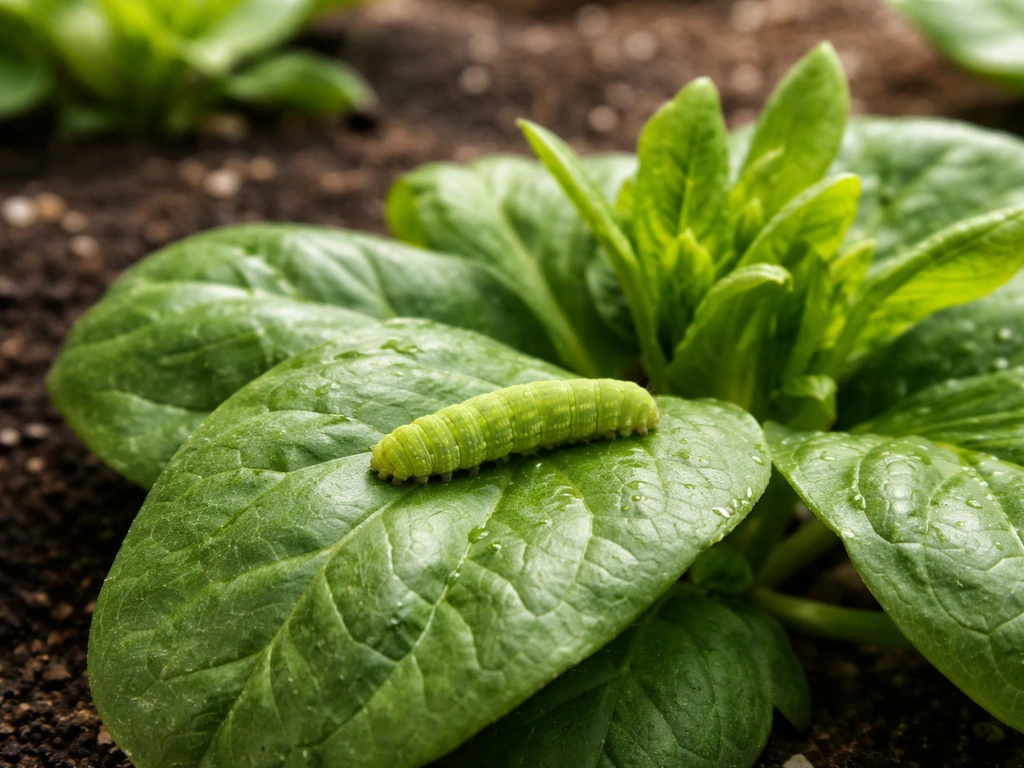
The Caterpillar has the highest hatch probability at 40% and brings the Leaf Lover passive, which makes leafy plants grow 1.5x to 2.5x faster. If your farm is built around leafy crops, this is genuinely powerful and should be treated as an A-tier priority for you specifically. The reason it sits in mid-tier overall is that it does nothing for non-leafy crops, making it a specialist rather than a generalist. Most players running mixed farms or focusing on fruit and candy crops will find a Giant Ant more useful. But if leafy plants are your main income source, the Caterpillar moves to the top of your personal list and you will get one fairly quickly given the 40% odds.
Low-tier: when to accept it and when to keep trying
Snail (C Tier, 30% chance)

The Snail is the second most common Bug Egg outcome at 30%, which makes it statistically likely that you will hatch at least one across multiple eggs. The issue is that the Snail's passive has limited impact on farm output compared to every other pet in this egg pool. It is not useless, and it counts toward collection progress, but if your goal is maximizing farm efficiency or income, the Snail is the outcome you are hoping to avoid. Do not buy Bug Eggs specifically to get a Snail. If one hatches, keep it for your collection and move on to the next egg.
The honest reality of Bug Eggs is that across a sample of eggs, you will statistically get roughly 1 Caterpillar for every 2.5 eggs, 1 Snail for every 3.3 eggs, and 1 Giant Ant for every 4 eggs. A Praying Mantis comes on average once every 25 eggs, and a Dragonfly once every 100 eggs. That means your budget planning should reflect that hitting S-tier is a long game, and A-tier (Giant Ant) is a realistic medium-term target.
| Pet | Tier | Hatch Chance | Passive | Best For |
|---|---|---|---|---|
| Dragonfly | S | 1% | Transmutation: turns random fruits Gold passively | All farm types, high-value harvests |
| Praying Mantis | A | 4% | Zen Zone: 1.51x variant chance near the pet every 80s | Players who optimize layout around high-value crops |
| Giant Ant | A | 25% | ~10% crop duplication on harvest (+5% for candy crops) | General farms, candy-focused builds |
| Caterpillar | B | 40% | Leaf Lover: leafy plants grow 1.5x–2.5x faster | Leafy plant specialists |
| Snail | C | 30% | Limited farm utility | Collection completion only |
Breeding and incubation tips to get the most from every egg
Bug Eggs hatch in exactly 8 hours with no variation. There is no mechanic that shortens this base timer for the standard Bug Egg, so the main lever you have is managing your incubation queue efficiently. If you want to run eggs continuously, start a new egg the moment you collect each hatch. The 8-hour timer means two eggs per day is realistic if you time your sessions around sleep or work.
On the purchasing side, the 7% stock chance means you need to check the Pet Egg Shop regularly. Set a routine to check every time you log in and buy immediately when the Bug Egg is available. Hoarding Sheckles in advance so you can buy the moment stock appears is the right play, especially since 50,000,000 Sheckles is a significant purchase that takes time to accumulate.
If you have a Robux budget and want to bypass the 8-hour wait entirely, the Exotic Bug Egg hatches in 30 seconds for 199 Robux per egg. It is a completely different product and a valid option if you are trying to chase a specific pet quickly, but for free-to-play progression the standard Bug Egg with good timing is the sustainable path.
- Keep your Sheckle reserve at or above 50,000,000 at all times so you can buy a Bug Egg the instant it appears in the shop.
- Check the Pet Egg Shop every login session, since the 7% stock rate means you may miss windows if you skip days.
- Start incubation immediately after purchase and set a reminder for 8 hours so you do not leave a finished egg sitting uncollected.
- Run two eggs per day by staggering your schedule: hatch one in the morning, one in the evening.
- Track your hatch history informally to estimate how many more eggs you realistically need before hitting your target pet.
- If you land a Giant Ant before a Dragonfly or Mantis, deploy it immediately on your farm. Do not hold pets in storage waiting for a better outcome.
Building your farm strategy around this tier list
The right way to use this tier list is to set a target pet, calculate a realistic budget, and farm toward it without stopping your progress in the meantime. For most players, the priority order should be: get a Giant Ant first (it is achievable at 25% odds and has broad impact), then run additional eggs aiming for Praying Mantis or Dragonfly. A Giant Ant active on your farm while you grind for a Mantis or Dragonfly means you are earning more Sheckles per session, which funds the next round of eggs faster.
Leafy plant farmers should adjust: if your primary income is leafy crops, treat Caterpillar as an equal priority to Giant Ant. The 1.5x to 2.5x growth speed buff compounds quickly when leafy plants are your entire income engine. In that case, your first Bug Egg might already deliver something immediately useful at 40% odds.
For Praying Mantis owners, farm layout becomes a real decision point. Centering your highest-value crops within 10.30 studs of the Mantis maximizes the 1.51x variant chance during its prayer windows. This is worth redesigning your plot if you are lucky enough to hatch one. Similarly, Dragonfly works best when you have a large number of base-variant crops ready to be transmuted, so do not over-concentrate Silver and Rainbow crops if you are using a Dragonfly since the passive cannot affect them.
The broader meta point is that Bug Eggs are a mid-to-late game investment. You need 50,000,000 Sheckles per egg, and the best outcomes require multiple attempts. Players at earlier stages should focus on building income first and treat Bug Eggs as a reward milestone rather than an early priority. Once you can sustainably buy multiple eggs per week, the tier list becomes your active decision framework. For more detail on specific pets and their hatch probabilities, the bug egg stats and bug egg odds pages on this site break down the numbers further. If you want to plan your next hatch, use the bug egg stats and bug egg odds to estimate which outcomes like 3 bug egg grow a garden you’re most likely to get. If you want to grow a garden efficiently, knowing the bug egg odds helps you plan which pets to chase next Bug Eggs. If you want to optimize your grind, use these bug egg stats and odds to estimate how long it will take to grow a specific high-tier pet. For more detail on specific pets and their hatch probabilities, check the bug egg odds breakdown.
Your action checklist right now
- Confirm your Sheckle balance is at or above 50,000,000 before your next login session.
- Open the Pet Egg Shop and buy a Bug Egg if it is in stock (7% chance per refresh).
- Start incubation immediately and set an 8-hour alarm.
- If you already have a Giant Ant, deploy it on your farm now and start earning duplication yields.
- If you have a Caterpillar and grow leafy plants, make sure it is active and assigned to the right plots.
- Set a medium-term target: decide whether you are grinding for Praying Mantis (plan for ~25 eggs on average) or Dragonfly (plan for ~100 eggs).
- Reinvest every Sheckle earned from active pets back into more Bug Eggs to accelerate the grind.
- Check the Exotic Bug Egg option if you want to skip wait times and have Robux available.
FAQ
How many Bug Eggs should I buy if my goal is a specific pet like Dragonfly or Praying Mantis?
Use the egg chances as a planning guide, not as a guarantee. For Dragonfly (1%), you generally need around 100 eggs for a reasonable shot at at least one, while Praying Mantis (4%) often takes around 25 eggs. If you are buying fewer, consider switching to Giant Ant as a nearer-term target, since it is 25% and has broad value right away.
Should I keep incubating multiple standard Bug Eggs at once, or wait for each hatch before buying the next?
With a fixed 8-hour hatch timer, the most consistent approach is to start a new egg the moment you see a hatch finish, so your queue stays full with minimal idle time. If your play sessions are shorter or unpredictable, start fewer eggs but aligned to your log-in times, otherwise you may end up with eggs hatching while you are offline and losing opportunity to immediately restart the cycle.
Does the 8-hour hatch time ever get shortened for the standard Bug Egg?
No. For the standard Bug Egg, the timer is fixed at 8 hours with no mechanic to reduce it. The only timing bypass is buying the separate Exotic Bug Egg, which hatches in 30 seconds but costs Robux and is a different item than the standard egg.
If I hatch an unwanted pet like Snail, should I sell it, store it, or keep it?
The article’s tier logic treats Snail as low farm impact, but it is still not “nothing.” If your focus is collection or future builds, keep it. If your goal is only maximizing income, do not buy extra Bug Eggs solely to chase Snail, because you will usually improve faster by redirecting purchases toward Giant Ant, then Mantis or Dragonfly.
Can Dragonfly’s Transmutation upgrade crops that are already Silver or Rainbow variants?
No. Transmutation only works on base crops and does not upgrade crops that are already Silver or Rainbow. If you plan around Dragonfly, avoid flooding your farm with higher-variant crops first, since that reduces the pool of eligible targets.
How exactly should I place crops when I have a Praying Mantis (Zen Zone)?
Zen Zone’s boosted variant chance applies only within the defined radius around the Mantis during its prayer window. Practically, group your highest-value crops inside that approximate 10.30-stud area and avoid spreading valuable crops too far from the Mantis, because crops outside the radius will not receive the boosted variant odds.
Is Giant Ant still worth it if I mostly grow only one crop type, like candy fruit?
Yes, and candy fruit can be even better. Giant Ant offers duplication on harvest with a general duplication chance and an extra boost specifically for candy-type fruit plants. That means a single high-candy loop can benefit more than mixed farming where fewer plants qualify for the candy bonus.
Does Caterpillar matter if my farm is not leafy-focused?
Caterpillar’s value is specialized. If you do not primarily grow leafy plants, its growth-speed passive will not translate into much output, which is why it drops in overall tier ranking. If your “leafy income engine” is small, prioritize Giant Ant first for broad, crop-agnostic yield value.
What is the best “sequence” to build a Bug Egg farm plan, instead of just buying randomly?
Pick a primary target, but use Giant Ant as your default stepping stone. A strong sequence is, get at least one Giant Ant early if you can, then keep incubating additional eggs while repositioning your farm to match the next target’s needs (layout for Mantis, base-crop emphasis for Dragonfly). This way, each hatch improves your session income while you grind for the rarer pet.
How can I estimate whether I am on track to hatch a high-tier pet over time?
Turn your daily or weekly play time into egg starts, since hatch time is fixed. If you can run roughly two eggs per day, you can model egg counts by week and compare them to the expected encounter rates (for example, Mantis around once every 25 eggs, Dragonfly around once every 100). This helps you decide whether to stay with standard eggs or consider the Robux-based Exotic option for speed.
Next Article
Exotic Bug Egg Grow a Garden Guide and Code Steps
Step by step guide to hatch exotic bug eggs in Grow A Garden, including where to enter the code and optimize farming.