
Dragonfly is stronger for pure gold-farming output, but Praying Mantis is the better long-term pick for players who want to stack mutation odds and breed rare variants consistently. If you are an active farmer who plants, tends, and harvests on a schedule, Praying Mantis rewards that attention. If you want something that quietly does work in the background every five minutes while you do other things, Dragonfly wins. Neither is bad; they just solve different problems.
Is Praying Mantis Better Than Dragonfly in Grow A Garden?

Julian Russo
22 Jun 2026
Quick verdict: which one should you actually pick
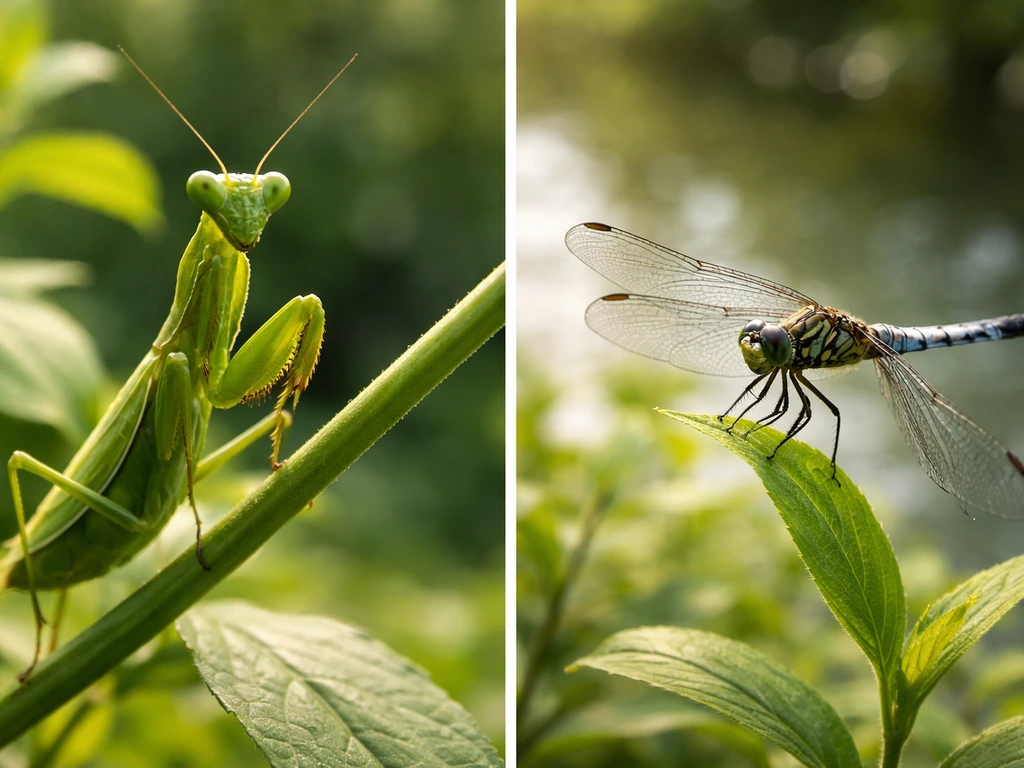
Dragonfly sits at Divine tier and Praying Mantis sits at Mythical tier, so on paper Dragonfly is the rarer, higher-value creature. But tier ranking does not always map cleanly to practical usefulness, and this is one of those cases where your playstyle matters more than the tier list. Praying Mantis gives roughly a 1.51x boost to variant chance on nearby crops every 80 seconds, which compounds beautifully if you are always near your garden. Dragonfly converts one random crop to Gold every five minutes with no input from you. Both are useful, but they pull in different directions.
| Criteria | Praying Mantis | Dragonfly |
|---|---|---|
| Tier | Mythical | Divine |
| Hatch chance (Bug Egg) | 4% | 1% |
| Hatch chance (Exotic Bug Egg) | 4% | 1% |
| Core passive | ~1.51x variant chance to nearby crops | Converts one random crop to Gold |
| Passive cooldown | Every ~80 seconds | Every ~5 minutes |
| Passive radius | ~10 studs | Random crop, no radius limit |
| Best for | Active farmers, mutation stacking | Passive/AFK setups, Gold farming |
| Key limitation | Must be near crops; no effect on already-grown fruit | Does not work on crops that already have any variant |
Bottom line up front: pick Praying Mantis if you are an active, present farmer trying to maximize rare variant rates. Pick Dragonfly if you want passive Gold generation and are willing to accept that it skips crops that already have a variant applied.
What each creature actually does in your garden
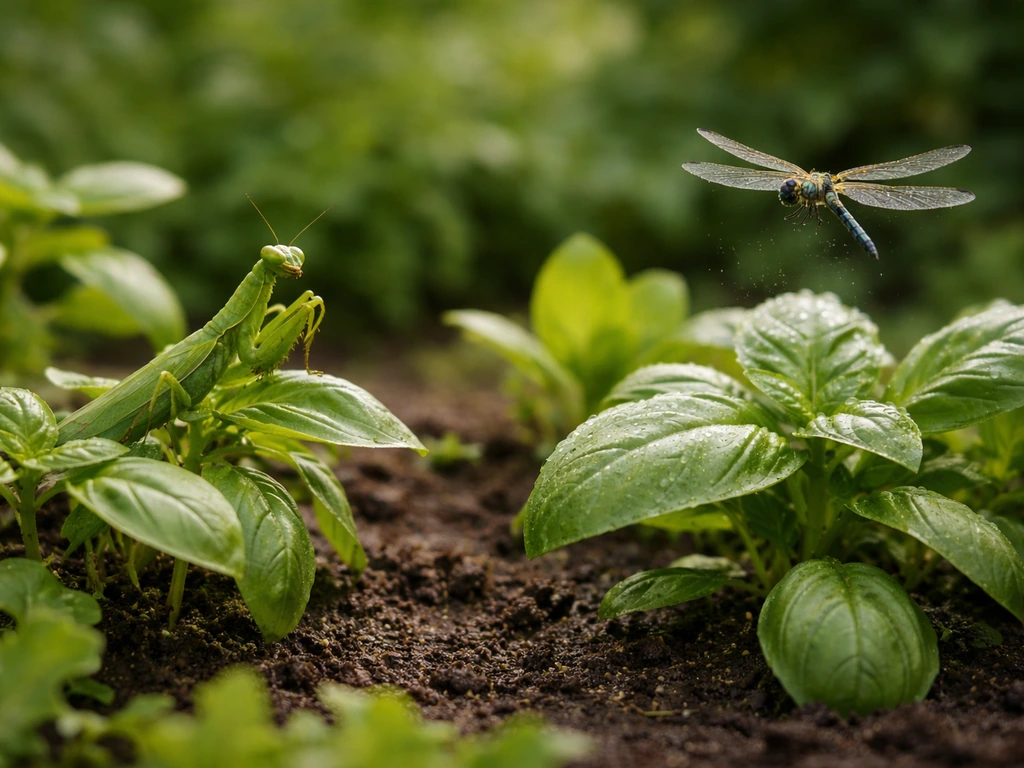
Praying Mantis has a single focused passive: roughly every 80 seconds it enters a praying animation for about 10 seconds, and during that window every crop within about 10 studs gets a ~1. 51x boost to its variant mutation chance. It does not instantly grant mutations to fully grown crops, and it does not interact with crops the way a Butterfly does. Think of it as a persistent probability amplifier that fires frequently.
If you are standing near your garden and your crops are actively growing, it is constantly nudging the odds in your favor. The radius is tight though, so placement and proximity matter a lot. If you are trying to grow a garden dragon fruit bug, focus on keeping your crops within the Mantis radius so the variant boosts actually land consistently.
Dragonfly works completely differently. Its Transmutation passive fires every five minutes and picks one random crop in your garden to convert directly to the Gold variant. Grow A Garden Pets overview page summarizes Dragonfly’s Transmutation as converting one random crop to the Gold variant every five minutes, making it a useful baseline for comparing passive output.
No probability involved, no radius to worry about. The catch is real though: if a crop already has any variant applied, including something as minor as Silver, the Dragonfly will skip it. Dragonfly's effects depend on where your garden is set up, so if you want to know whether dragon's breath can grow indoors, you should check if indoor crops count as active garden plants can dragon's breath grow indoors.
That limitation means Dragonfly performs best in a clean, unvariant-heavy garden where it can find eligible targets consistently.
How to get each one: hatching basics
Both creatures come from the same egg pool, so you are not chasing completely different sources. The Bug Egg is the standard route: it costs 50,000,000 Sheckles at the Pet Egg stand and takes 8 hours to hatch. Praying Mantis has a 4% hatch rate from the Bug Egg, while Dragonfly has a 1% hatch rate. That four-to-one odds gap is significant. Over ten Bug Eggs, you can statistically expect to see about 0.4 Dragonflies versus 0.4... wait, let me reframe that more usefully: you are four times more likely to hatch a Praying Mantis than a Dragonfly from the same egg, every single time.
The Exotic Bug Egg is the faster alternative if you can get one. It hatches in about 30 seconds rather than 8 hours, but the hatch probabilities stay the same: 4% for Praying Mantis, 1% for Dragonfly. For the Exotic Bug Egg specifically, Dragonfly is listed at a 1. 00% hatch chance with a 30-second hatch time, along with the associated Sheckles and Robux costs [Dragonfly probability and hatch time from the Exotic Bug Egg](https://grow-a-garden.
farm/pets/dragonfly). The Exotic Bug Egg is limited-time and not always available, so do not count on it being your primary source. If you are specifically hunting Dragonfly, budget your Sheckles accordingly and expect a grind. If Praying Mantis is your target, the 4% rate makes it considerably more accessible from the same egg.
Hunger costs to keep in mind
Praying Mantis has a hunger stat of 55,000, which is worth factoring into your feeding rotation. Dragonfly's hunger cost is comparable at the Divine tier level. Neither creature is cheap to maintain at scale, so if you are running multiple pets simultaneously (common in optimized farms), the upkeep adds up fast. Prioritize the creature that directly supports your current farming goal rather than running both at a loss.
Efficiency and viability: which one delivers better returns
Praying Mantis fires its passive roughly 45 times per hour (once every 80 seconds). Each activation boosts variant odds by ~1.51x for every nearby crop during that 10-second window. If you have 10 crops in range, that is 10 chances per activation, 450 boosted checks per hour. The math rewards density: pack your garden tight within that 10-stud radius and stay near it, and Praying Mantis becomes a serious mutation engine. To grow a garden tiger bug effectively, focus on consistent tending and keep your mutation-boost setup active so your crop changes compound over time pack your garden tight. It also stacks with other mutation-boosting sources in the game, so it fits into broader efficiency setups.
Dragonfly converts exactly 12 crops to Gold per hour under ideal conditions (one every five minutes). That sounds lower than Praying Mantis's activation count, but Gold is a guaranteed outcome rather than a probability bump, which has a very different value curve.
One Reddit player report after hatching a Dragonfly says it can turn a random fruit to gold quickly, within minutes, and they describe a large impact over a few hours can turn a random fruit to gold quickly (within minutes). The problem is the variant-skipping limitation.
In a garden that already has a mix of variants on its crops, Dragonfly may sit idle or waste conversions on low-value targets. If you are raising exotic bug pets and tending a garden, the right hatching strategy can make growth feel effortless. For a garden with freshly planted, clean crops, Dragonfly is brutally efficient. For a mixed or heavily farmed garden, its effective rate drops considerably.
- Praying Mantis is consistent: it boosts every eligible crop nearby on a fast cooldown, regardless of what variants already exist
- Dragonfly is high-ceiling but situational: guaranteed Gold is powerful, but the skip-on-existing-variant rule caps its real-world output
- Praying Mantis scales with crop density and player proximity; Dragonfly scales with how many clean, unvariant crops you have planted
- For long AFK sessions, Dragonfly wins on passive value; for active short sessions, Praying Mantis wins on total activations
- Praying Mantis is four times easier to obtain, which matters when weighing investment vs. return
Tier ranking and long-term meta value
In raw tier terms, Dragonfly is the more prestigious creature. It was introduced on May 3, 2025, and holds the distinction of being one of the first Divine-tier companions in the game. Divine sits above Mythical, and Dragonfly's 1% hatch rate reflects that scarcity. In trading and collection contexts, Dragonfly commands higher value simply because fewer players have one. If long-term collection value, trading clout, or server-status matters to you, Dragonfly is the flex pick.
Praying Mantis, despite its lower tier, has a quietly strong meta position for mutation-focused farming. Community threads as recently as mid-2026 note that fewer players actively use it compared to Dragonfly, which is partly why it flies under the radar. But mutation stacking is a core strategy for squeezing value out of crops, and Praying Mantis is one of the cleanest tools for doing that. If you are trying to bug egg praying mantis grow a garden strategy, this is the part that makes it shine for mutation-focused players. The mutation guide community treats it as a legitimate efficiency layer, not a budget substitute. It also fits naturally alongside other exotic bug pets in a broader creature strategy.
One thing worth noting from the community: some high-level players reportedly did not even recognize a Praying Mantis when they saw one in a server, suggesting it sees less screen time than its viability warrants. That is either a reason to dismiss it (if you care about meta recognition) or a reason to use it strategically (if you care about edge and efficiency that others are sleeping on).
Which one to choose based on your situation

Here is the direct decision framework. Match your goal to the recommendation below and you will have a clear answer. If you also want a practical walkthrough for giant scorpion breeding, grow setups, and timing, see our guide on how to get giant scorpion grow a garden Match your goal to the recommendation below.
| Your goal or situation | Recommended pick | Why |
|---|---|---|
| You farm actively and stay near your garden | Praying Mantis | Fast cooldown and proximity bonus compound quickly; you get full value from every activation |
| You run AFK or semi-AFK sessions | Dragonfly | Passive Gold conversion requires no input; fires reliably every 5 minutes regardless of where you are |
| You want to maximize rare variant mutation rates | Praying Mantis | 1.51x variant chance boost stacks with other mutation sources; designed exactly for this |
| You want guaranteed Gold crops with minimal management | Dragonfly | Gold conversion is deterministic, not probabilistic; cleaner for Gold-focused farms |
| You are on a Sheckle budget or grinding eggs | Praying Mantis | 4x better hatch odds from the same egg means far less time and Sheckle investment |
| You want collection or trade value | Dragonfly | Divine tier and 1% hatch rate make it significantly rarer and more valuable in trades |
| You are building a mutation-stacking setup with multiple pets | Praying Mantis | It fits naturally into multi-pet mutation chains alongside other creatures |
| Your garden already has lots of variants on crops | Praying Mantis | Dragonfly skips crops with existing variants; Mantis still boosts them regardless |
Recommended next steps
- Decide your primary farming goal first: mutation variety or Gold generation. That single decision narrows the choice immediately.
- If you are going for Praying Mantis, start saving toward a Bug Egg (50,000,000 Sheckles) and expect to hatch one in roughly 25 attempts on average given the 4% rate.
- If you are targeting Dragonfly, budget for a longer grind: at 1% odds and 8-hour hatch times per egg, patience and Sheckle reserves are essential. Watch for Exotic Bug Egg availability to speed this up.
- Once you have your creature, position Praying Mantis within 10 studs of your highest-value crop cluster and stay near it during active farming sessions.
- If you run Dragonfly, plant clean crops without any variants applied to maximize how many targets it can convert. Mixing it with heavily-variated crops wastes activations.
- Consider pairing either creature with other exotic bug pets to build a layered passive income setup and squeeze more value out of each farming session.
If you are still deciding and cannot afford the grind for both right now, start with Praying Mantis. It is more accessible, still genuinely powerful, and the mutation-stacking angle gives it a ceiling that a lot of players are not fully using. If you are working on how to grow a garden medium toy bug, this is a good section to compare what fits your mutation goals versus guaranteed gold output. Dragonfly is worth chasing eventually, especially for the collection value, but Praying Mantis will serve an active farmer better on a per-Sheckle basis until you get there.
FAQ
If my crops are close to the praying mantis radius, will it still increase variant odds on crops that are not growing right then?
Yes, but only if the crops are in your active garden state while the Mantis animation triggers. The boost only applies during the roughly 10-second praying window, so crops that are not actively growing at that moment will not benefit, even if they are within the 10-stud radius.
Can I use Dragonfly to target one specific crop for Gold, or is it always random eligible picks?
Dragonfly’s five-minute conversion picks a single random crop, so it can “miss” the one you care about. If you want Gold on a specific crop, you need to manage timing by ensuring that crop is the most likely eligible target at the moment, which generally means reducing pre-existing variants on the rest of the garden.
What happens if I run both Praying Mantis and Dragonfly in the same garden, will their effects stack cleanly?
If you put both pets on the same garden, you do not get a guaranteed synergy, because one pet amplifies mutation probability on nearby crops while the other skips crops that already have any variant applied. Practically, this means Dragonfly works best on a clean garden, while Mantis can thrive in a garden you are actively mutating.
Will Praying Mantis immediately mutate crops when it activates, or is it just increasing odds?
No, the praying mantis does not instantly apply variants, it boosts the chance during its active window. As a result, you can see progress slow down if your farming rhythm is off and crops spend time outside the boost windows, even if you keep your pet equipped.
How should I arrange my garden layout to get the most out of Praying Mantis?
Keep the garden dense inside the mantis radius and plan your tending so crops are growing and within range during frequent activations. Spreading crops farther apart reduces the number of boosted checks per activation, which lowers the overall compounding effect.
How do I know whether my current garden is “clean enough” for Dragonfly to stay efficient?
Dragonfly’s value curve depends on how many eligible crops it can convert. If most of your crops already have variants like Silver, the effective Gold rate will drop because those crops are skipped, leaving fewer valid targets for its random pick.
If I go AFK and miss some mantis boosts, what is the fastest way to get back on track?
If you missed Mantis activations while you were away, your best recovery is not to replant immediately, it is to keep the garden in a steady growth cycle and be present for the next few activations so odds have time to compound again.
What’s the most efficient egg-opening plan if I’m mainly hunting Dragonfly versus Praying Mantis?
The probabilities are per egg hatch, so the best approach is to match your budget and patience. If you are prioritizing Dragonfly specifically, consider saving Sheckles for the longer 8-hour Bug Egg process and accept that it is rarer at 1% hatch rate versus 4% for Mantis.
Does hunger change the practical choice if I’m managing multiple pets at once?
The hunger stat affects how often you must feed and therefore your ability to maintain uptime across multiple pets. If you run several companions, pick the one that best matches your feeding and tending schedule, because missed feeding can reduce your ability to keep the garden in the desired state.
Next Article
Grow a Garden Dragon Fruit Bug Fix Guide: Creature or Glitch
Fix Dragon Fruit issues in Grow A Garden: restore growth or creature behavior and troubleshoot the glitch fast.