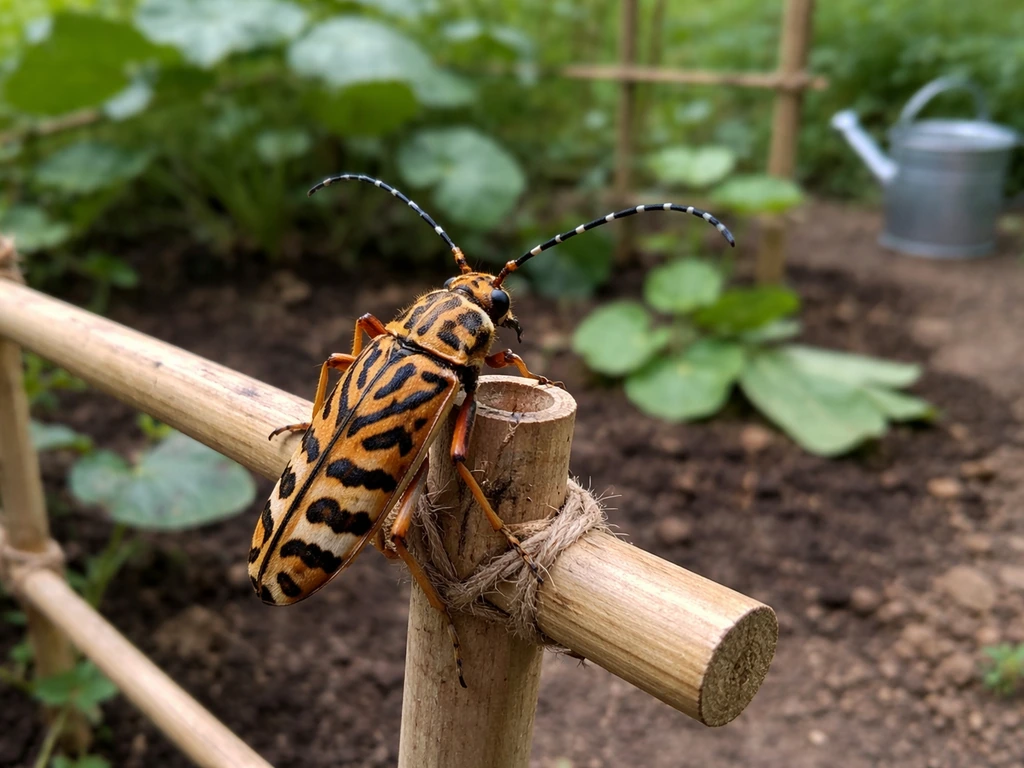
The Praying Mantis is a blank" rel="noopener noreferrer">Mythical pet in Grow A Garden with a 4% hatch chance from the Bug Egg or Exotic Bug Egg. You buy the Bug Egg from the Pet Egg Shop for 50,000,000 Sheckles (or 149 Robux), wait 8 hours for it to hatch, and hope the RNG lands in that 4% window. If it does, you get a Mythical that buffs Rainbow, Gold, and Silver variant chances on nearby growing crops every 80 seconds. Here's how to run that whole process efficiently, troubleshoot when things go wrong, and decide when the Mantis is actually worth chasing. If you're using this Mantis strategy to push variant-heavy crops, you can apply the same approach to a grow a garden dragon fruit bug playstyle as well.
Bug Egg Praying Mantis: Grow a Garden Guide

Julian Russo
15 Jun 2026
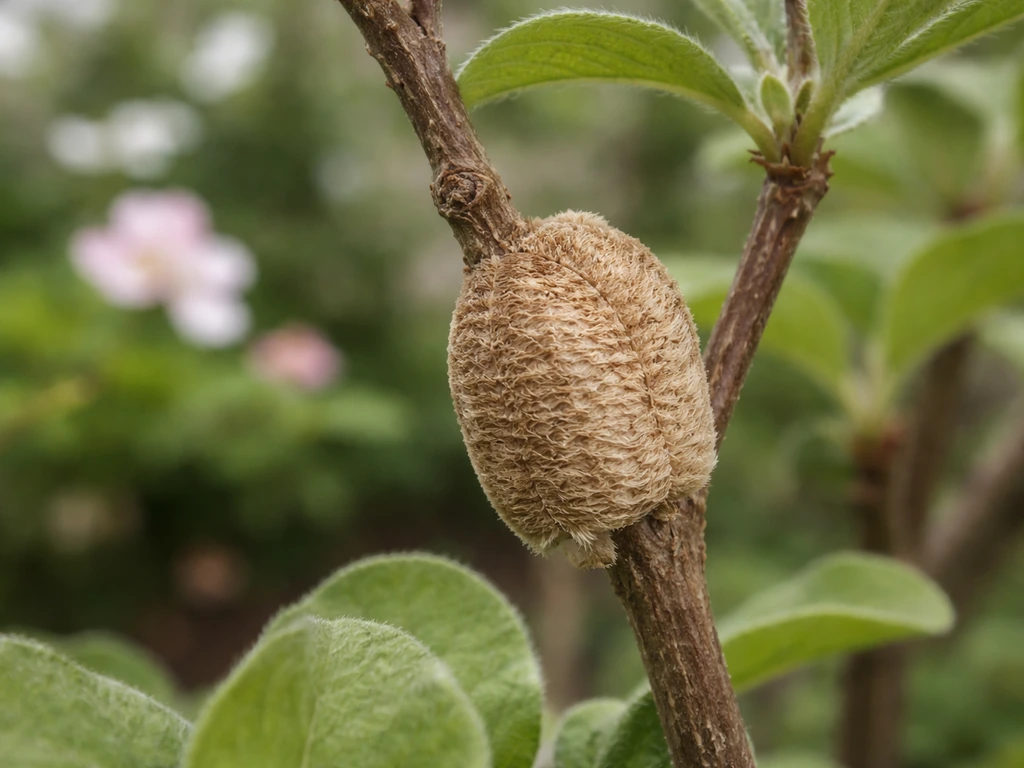
How mantis egg spawns work in Grow A Garden
There's no dedicated "Praying Mantis Egg" in the game. The Mantis comes out of the general Bug Egg, which is a multi-outcome egg with a randomized pet table on hatch. The Bug Egg has a distinctive look: it has four dragonfly wings attached to it, which makes it easy to spot in your inventory or in the shop. When you hatch one, the game rolls against the full drop table and assigns you a pet based on the outcome percentages.
The Bug Egg is available in the Pet Egg Shop, but it only appears in stock about 7% of the time, so it's not always sitting there waiting for you. When it does show up, you're paying 50,000,000 Sheckles or 149 Robux per egg. That's a meaningful investment, especially when you factor in that your actual odds of pulling a Praying Mantis on any given egg are just 4%. Understanding the full drop table helps you set realistic expectations before you start spending.
| Pet | Hatch Chance | Rarity |
|---|---|---|
| Snail | 40% | Common |
| Giant Ant | 30% | Common |
| Caterpillar | 25% | Uncommon |
| Praying Mantis | 4% | Mythical |
| Dragonfly | 1% | Mythical |
Two important clarifications: first, some eggs in Grow A Garden are flagged as unobtainable (the Anti Bee Egg and Bee Egg are documented examples), so always confirm an egg is currently in stock before planning around it. Second, the Exotic Bug Egg also gives a 4% Praying Mantis chance, so if you have access to Exotic Bug Eggs, those are a parallel path worth considering alongside the standard Bug Egg route. If you're aiming to maximize exotic bug pet value, plan your garden around the Praying Mantis's Zen Zone buffs and keep your growing crops active when it triggers exotic bug pets.
Getting the right praying mantis bug egg to hatch
Your two confirmed sources for the Praying Mantis are the Bug Egg (4%) and the Exotic Bug Egg (4%). Both give you the same odds, so the decision between them comes down to availability and cost in your current game session. If the Bug Egg is in the Pet Egg Shop when you log in, grab it. If not, check whether the Exotic Bug Egg is accessible, since it's another viable path at identical probability.
To identify a Bug Egg in your inventory, look for the four dragonfly wings attached to the egg shell. That visual cue distinguishes it from other egg types and confirms you have the right one before you commit to an 8-hour hatch cycle. Don't mix it up with other bug-category eggs that may have different drop tables or availability statuses.
One practical tip for mid-to-hardcore players: queue multiple Bug Eggs in parallel if your economy allows it. At 4% per egg, you're statistically looking at roughly 25 hatches before an expected Mantis drop, though variance means you could hit it on egg 3 or not see it until egg 50. Buying and hatching eggs in batches rather than one at a time reduces the time cost of waiting through dry streaks.
Hatching conditions: timing, placement, and what "ready" looks like
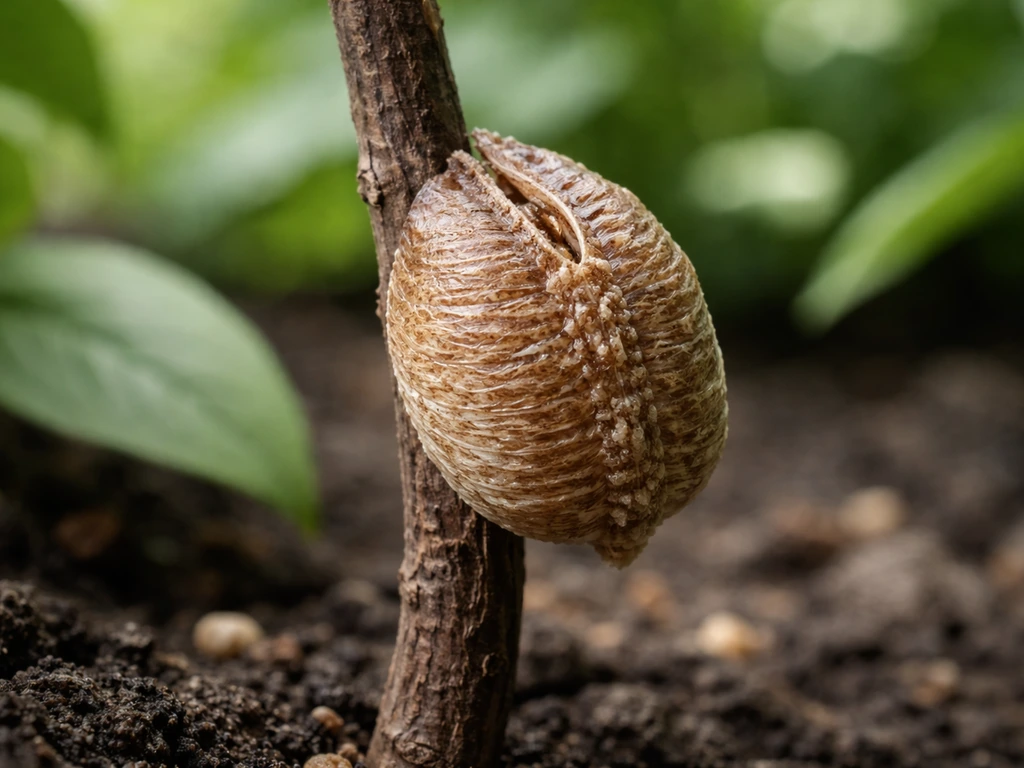
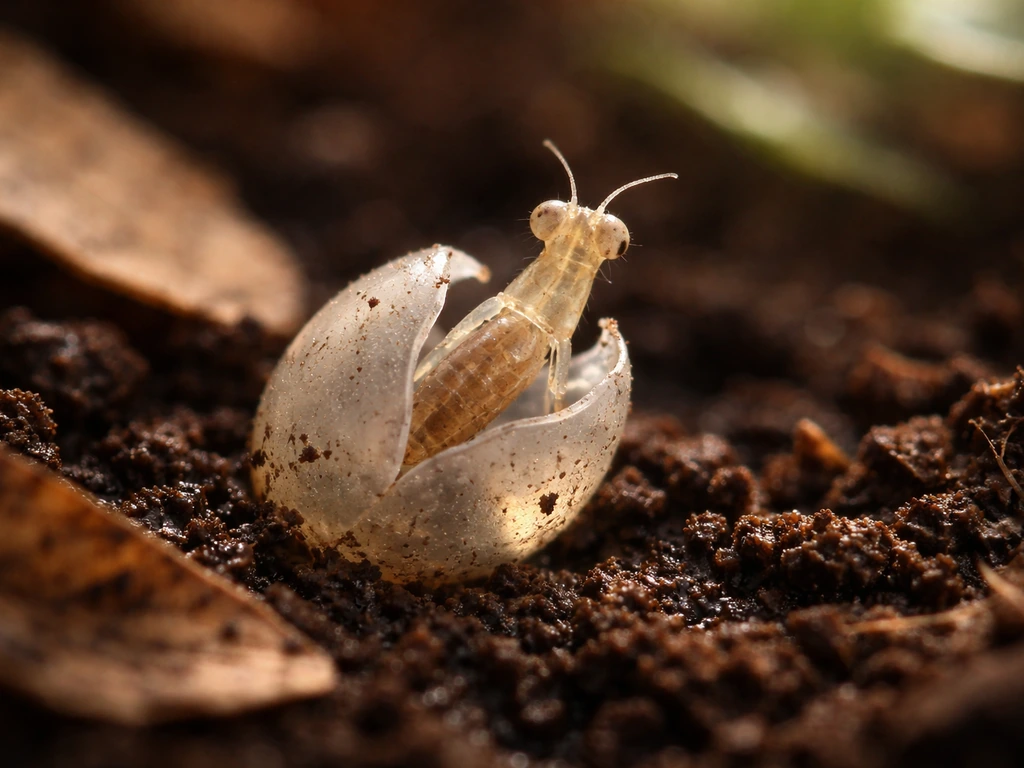
Unlike real-world praying mantis care, where you'd be blank" rel="noopener noreferrer">managing temperature (72 to 78°F) and humidity for 2 to 8 weeks waiting for an ootheca to hatch, Grow A Garden abstracts all of that into a single flat timer. The Bug Egg hatches in exactly 8 hours regardless of where you place it. There's no temperature mechanic, no moisture slider, and no humidity penalty for placing it in the wrong garden zone. The game handles the biology; you just manage the clock.
That said, placement still matters in terms of your workflow. Set the egg when you know you'll be active or able to check back around the 8-hour mark. Leaving a hatched egg unchecked doesn't break anything, but it delays you from placing the newly hatched Mantis in an optimized position to start benefiting your crops. Time your hatches so the egg resolves during an active session, not while you're offline.
When the 8-hour timer completes, the egg hatches and immediately reveals which pet you received. You'll know you got the Praying Mantis by its appearance: four small green legs, two big green claws, two black square eyes, and two antennae with light neon dots. That's your visual confirmation before any UI label tells you what you pulled.
Feeding, growth stages, and setting up your garden for the mantis
Once the Mantis hatches, your immediate job is keeping it fed and positioned correctly. The Praying Mantis has a hunger bar of 55,000, which is on the higher end for pets in the game. A higher hunger bar means it stays operational longer between feedings, which is great for passive farm setups where you're not constantly babysitting. Keep it fed to ensure the Zen Zone passive stays active.
The Zen Zone passive is the core reason you want this pet. Every 80 seconds, it activates for about 10.30 seconds and applies roughly a 1.51x variant chance multiplier (for Rainbow, Gold, and Silver outcomes) to crops within approximately 10.30 studs. The key detail that catches players off guard: Zen Zone only affects crops that are currently growing, not fruits that are already fully grown. If your crops have finished growing and are just sitting there waiting to be harvested, the Mantis buff does nothing for them. This completely changes how you think about placement.
Positioning the mantis for maximum Zen Zone coverage
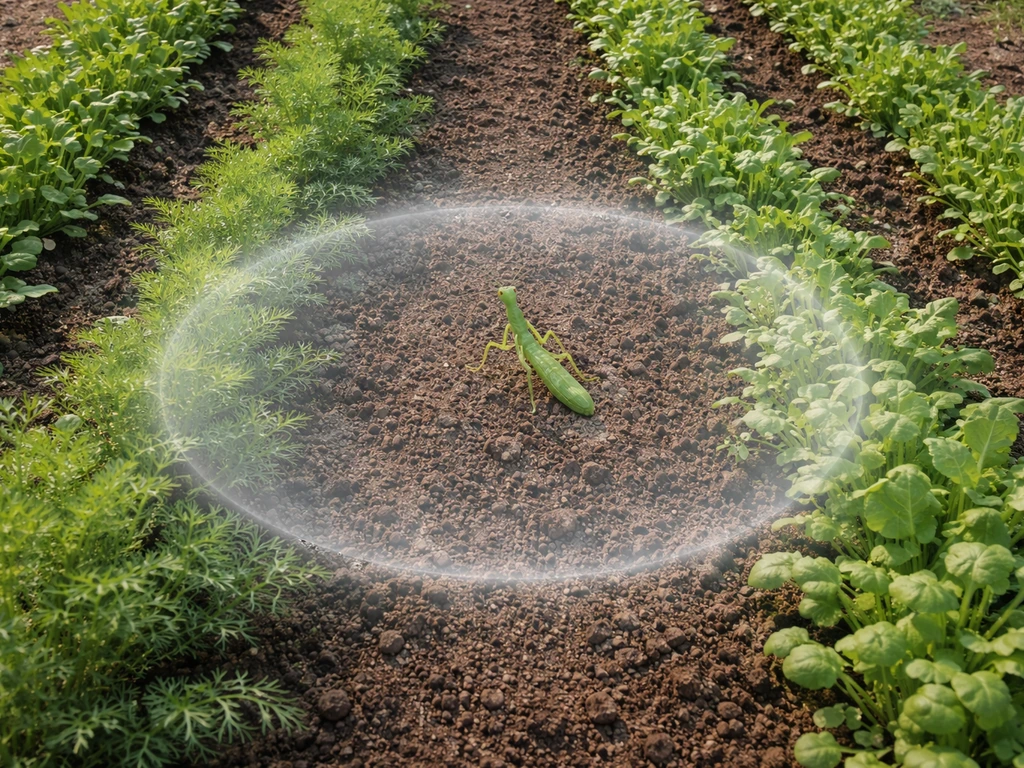
Since Zen Zone has a roughly 10.30-stud radius and only hits growing crops, place the Mantis centrally within a dense cluster of crop plots that are cycling through growth phases simultaneously. You want as many crops as possible in an active growing state during the 10.30-second activation window. Staggering your planting times slightly across adjacent plots means there's almost always something in mid-growth within the Mantis's range when the passive fires.
Avoid placing the Mantis at the edge of your garden or near crops that you've already harvested and haven't replanted. Wasted Zen Zone ticks are lost variant opportunities. Think of it like area-of-effect uptime: the more growing crops inside the radius, the better your expected Rainbow, Gold, and Silver returns per 80-second cycle.
Common problems: failed hatches, slow progress, and egg viability
The most common frustration with Bug Eggs is simply not getting the Mantis after multiple hatches. This isn't a bug or a broken mechanic. At 4%, you have a 96% chance of not getting the Mantis on any single egg. After 10 eggs, you've only reduced your probability of having zero Mantises to about 66%. After 25 eggs, you're statistically past the expected value threshold, but RNG doesn't reset. Each egg is an independent 4% roll. The only fix is buying and hatching more eggs, or sourcing Exotic Bug Eggs for additional 4% shots.
Another issue players run into is the Bug Egg not being in the Pet Egg Shop when they log in. Since it only has a 7% chance of being in stock at any given time, you may need to check back across multiple sessions. There's no workaround for this besides checking regularly or using Robux to bypass the shop availability issue when the option is offered directly.
If your Mantis seems to not be buffing crops after you've placed it, the most likely cause is that your crops are already fully grown when Zen Zone activates. Harvest them and replant, then monitor the next 80-second cycle. The passive should start contributing on the new growth phase. Also confirm the Mantis is fed: an unfed pet won't activate its passive reliably.
- Not getting Mantis after multiple eggs: expected at 4%, keep hatching or try Exotic Bug Eggs
- Bug Egg out of stock: only 7% shop availability, check back across sessions
- Zen Zone not triggering visibly: confirm crops are actively growing (not already harvested/idle)
- Mantis passive not activating: check hunger bar, feed the pet if the bar has run low
- Poor variant returns: reposition the Mantis closer to the center of your densest growing plot cluster
Breeding efficiency: optimizing your garden layout for mantises
If you're running multiple Mantises (either from good egg luck or deliberate farming), the layout question becomes about Zen Zone overlap and stacking. Multiple Mantises placed in the same garden zone will each fire their own independent 80-second Zen Zone cycles. Their activation windows don't sync automatically, so in practice you get more frequent total Zen Zone coverage across your crops, increasing the density of 1.51x variant windows your growing crops experience.
For a layout optimized around a single Mantis, a compact square or circular cluster of plots within a 10-stud radius from the pet's center position is the most efficient setup. Anything beyond about 10.30 studs falls outside the Zen Zone range and gets zero benefit. If your garden is wide and spread out, either reposition the Mantis centrally or consider whether your layout needs to be tightened up to take advantage of the passive.
One efficiency shortcut that works well: pair the Mantis with crops that have naturally longer growth cycles. Longer-growing crops spend more time in the "currently growing" state, which means they capture more Zen Zone activations over their lifecycle compared to fast-cycling crops that spend very little time in mid-growth. If you're farming variants specifically, slow-growing high-value crops are a better Mantis pairing than fast-turnover low-value crops.
Meta strategy: when to prioritize praying mantis vs other bug eggs
Whether the Praying Mantis is worth chasing over other bug egg outcomes depends on what you're optimizing for. If your goal is variant-quality crops (Rainbow, Gold, Silver), the Mantis is the clear priority in the Bug Egg pool. The Dragonfly is rarer at 1% and serves a different role. So if you're wondering whether a Praying Mantis is better than a Dragonfly for building a garden, the Mantis is usually the stronger choice for variant farming at 4% odds. The common outcomes (Snail, Giant Ant, Caterpillar) are fine filler pets but don't move the needle on variant farming the way the Mantis does. For a variant-focused build, the Mantis is the only Bug Egg outcome you actually care about pulling.
That said, 50,000,000 Sheckles per egg at 4% odds is a real cost. Before you commit to a Mantis-hunting session, ask whether your current garden generates enough crop value to justify the egg spend. If you're still building up your Sheckle base, it may be more efficient to grow your economy first and then invest in Bug Eggs when you can afford to hatch 10 to 20 at a time without it setting back your overall farm.
Compared to some other bug-type pets covered on this site, the Mantis is specifically valuable for variant-heavy playstyles rather than raw growth speed or yield boosting. If you're comparing it to the Dragonfly or thinking about how bug pets stack up in the broader meta, the Mantis wins on variant chance contribution but only if your garden layout is actually set up to take advantage of Zen Zone's growing-crop requirement. A badly placed Mantis with fully grown crops nearby is close to worthless. A well-placed Mantis in a properly staggered crop cluster is a genuine Mythical-tier asset.
Bottom line: yes, the Praying Mantis is worth prioritizing if you're a mid-to-hardcore player building toward a Rainbow or Gold variant-focused garden. Budget for multiple Bug Egg hatches, time your egg purchases to when the shop has stock, position the Mantis centrally in a dense growing cluster, keep its 55,000 hunger bar filled, and harvest and replant consistently to maximize the crop-growing uptime that Zen Zone actually benefits. If you also want to raise your odds beyond luck, you can follow our giant scorpion guide for a garden strategy that complements variant-focused farming. If you are wondering what mantis to grow a garden, the Praying Mantis is the one you should target for better variant odds Budget for multiple Bug Egg hatches.
FAQ
If I hatch the Praying Mantis but my crops are fully grown, does the Zen Zone buff still activate later for those same fruits?
No. Zen Zone only boosts crops that are in the currently growing state at the moment it fires. If your plots are already mature, harvest them and replant, then wait for the next 80-second cycle to get variant chance value.
How should I time my egg hatches so the Mantis is positioned to buff variants when it matters?
Start the 8-hour hatch countdown when you can be present near the end (or immediately on resolution), so you can place the Mantis into a dense growing cluster right away. Leaving it unplaced for long delays means you miss multiple Zen Zone triggers.
What happens if my Mantis hunger is low, do I lose all Zen Zone value or just some activations?
When the pet is not fed, you cannot rely on Zen Zone triggering consistently. Practically, low hunger can reduce or interrupt your coverage, so treat feeding as part of your 80-second uptime routine rather than an occasional task.
Does Zen Zone stack from multiple Mantises into a higher multiplier than about 1.51x?
Each Mantis runs its own independent Zen Zone cycle and each activation applies its own variant chance boost. You do not generally get a single multiplied mega-buff from stacking, you get more total activation windows across your crops by placing Mantises to cover more growing plots.
What is the best garden shape, square, circle, or rows, for “grow a garden” variant farming with Zen Zone?
Use a compact layout that keeps as many plots as possible within roughly the 10.30-stud radius of the Mantis center. A square or tight circle tends to minimize wasted space, but rows work if you still keep the whole crop cluster inside the radius at once.
Do fast-growing crops ever outperform slow-growing crops for Zen Zone variant farming?
Usually no. Fast crops spend less time in the growing state, so they capture fewer Zen Zone activations before becoming harvestable. Slow-growing, high-value crops typically get more triggers per plot over their lifecycle.
Should I reposition the Mantis during the farming session as crops progress?
Avoid frequent repositioning unless your garden planting schedule forces it. The passive only helps growing crops, so the safer approach is to keep a central Mantis location and instead stagger planting so crops are growing together inside the radius when Zen Zone fires.
If the Bug Egg shop stock is missing, is there any alternative besides waiting for the next restock window?
Yes, if you have access to Exotic Bug Eggs, use them as the parallel 4% path. Otherwise, your main option is to check back regularly since Bug Egg availability is intermittent and there is no reliable in-game workaround besides the shop offering you the egg.
Is it worth buying one Bug Egg at a time, or should I hatch in batches?
Batches are usually more efficient for your time cost. Statistically you may hit the Mantis earlier or later due to variance, but queuing multiple 8-hour hatches reduces idle time during dry streaks and lets you keep momentum toward building variant-focused coverage.
What is the most common reason my Mantis “is working” but I do not see variant improvements?
Most often, your plants are not in the growing state when Zen Zone activates, or the Mantis is not reliably fed. Confirm you have active growth on multiple plots inside the radius and then watch the next activation window after replanting.
How many crop plots should I plant for one Mantis to avoid wasting Zen Zone activations?
Focus on coverage density, not total garden size. Aim for a cluster where multiple plots are simultaneously growing within the radius, since Zen Zone does nothing for already mature crops. If most plots are outside the radius or finished, your expected variant gains drop sharply.
Is Praying Mantis always the best mythical to chase among bug-category eggs?
For variant-focused goals (Rainbow, Gold, Silver), it is usually the top priority in the Bug Egg pool due to the Zen Zone mechanics. However, if your current setup does not stagger growth inside the 10.30-stud window, a different strategy that fits your garden’s planting rhythm may perform better than a “well-lucked but poorly used” Mantis.
Next Article
Grow a Garden Tiger Bug Guide: Hatch, Raise, and Farm
Step-by-step guide to grow a garden tiger bug: unlocks, eggs, breeding workflow, care tips, and troubleshooting for bett