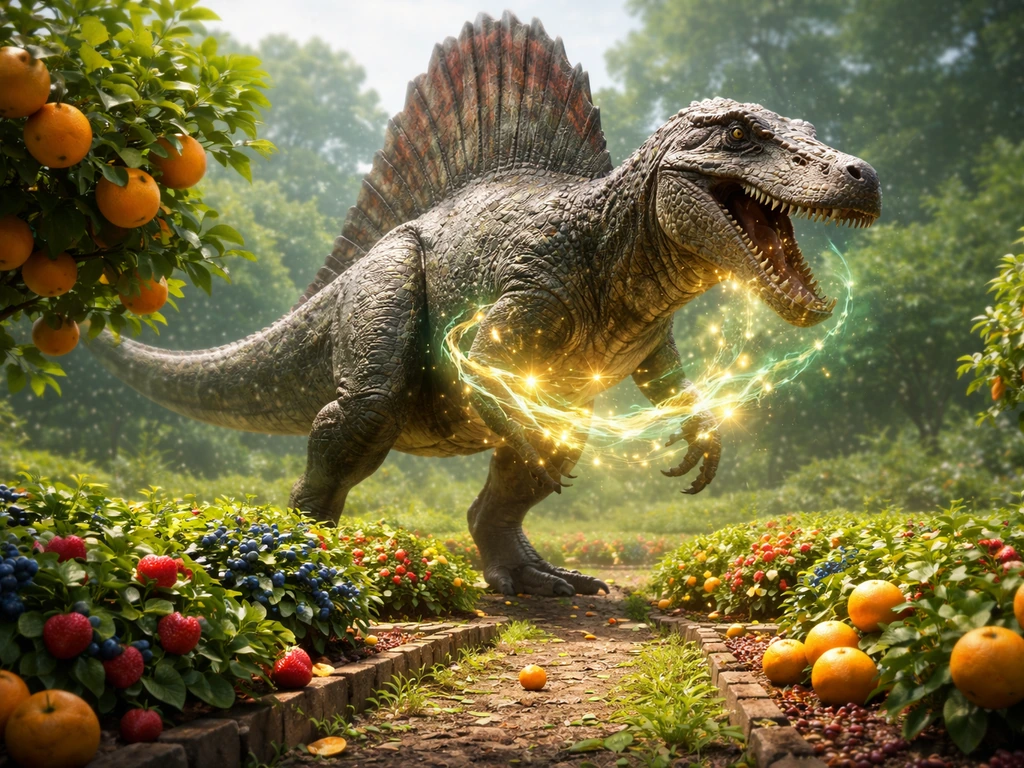
T-Rex wins the raw power comparison in Grow A Garden, but Spinosaurus is actually more useful for a lot of common player goals. That makes the Spinosaurus worth considering if you're aiming to grow a garden while protecting the progress you've built on specific fruits spinosaurus worth grow a garden. Spinosaurus bug grow a garden. That sounds contradictory, but once you understand what each dinosaur's passive actually does, it makes perfect sense. This guide breaks down the mechanics, the numbers, and exactly which dinosaur you should be running based on what you're trying to accomplish.
Spinosaurus vs T Rex in Grow A Garden: Which Is Better?

Julian Russo
21 Apr 2026
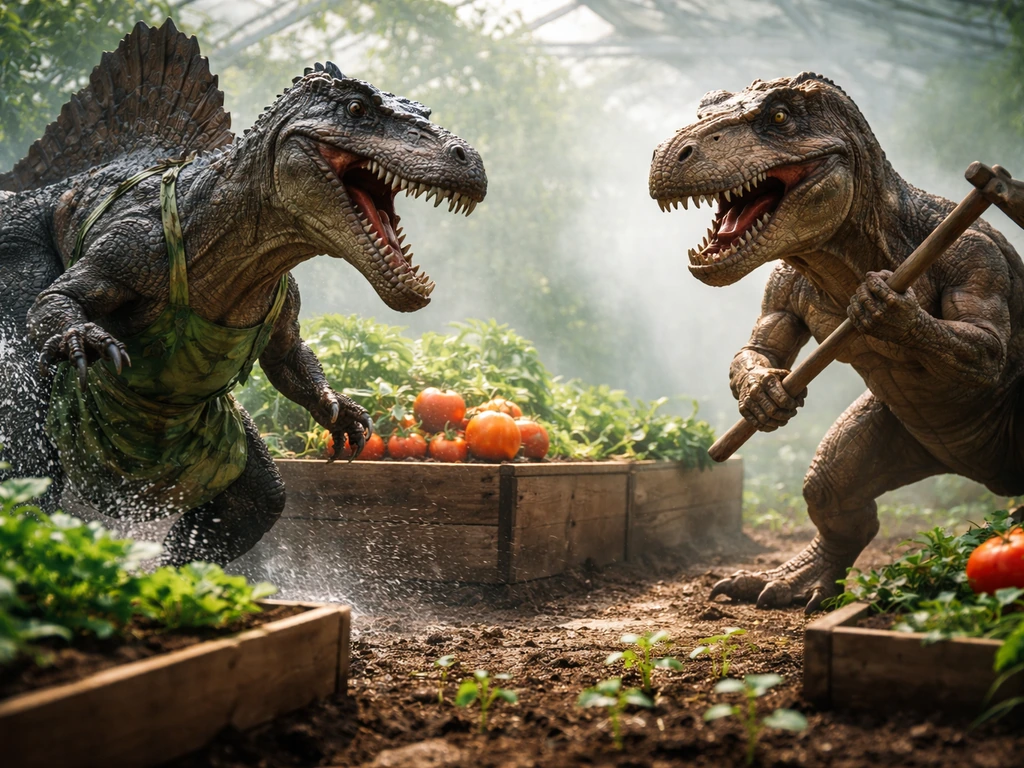
What 'growing a garden' actually means in Grow A Garden
In Grow A Garden, your garden's performance is driven almost entirely by mutations stacked on your fruits. Mutations are special modifiers that boost fruit value, growth speed, or other traits, and stacking multiple mutations on the same fruit is the core progression loop. Dinosaurs like Spinosaurus and T-Rex are called 'progression enablers' because their passives interact directly with those mutations. They don't water your plants or speed up growth cycles directly. Instead, they consume mutations from fruits and redistribute them across your garden, which is the mechanic that makes them valuable or dangerous depending on how you use them. Understanding this distinction is key: these dinosaurs are mutation management tools, not simple produce boosters.
Quick verdict: which dinosaur wins?
If you want maximum mutation spread across a large garden, T-Rex is the stronger pick. It activates roughly every 20 minutes, consumes one random mutation from a fruit, and spreads it to an average of 3.35 other random fruits per activation. That's a lot of coverage per cycle. However, if you're trying to stack and protect mutations on specific high-value fruits, Spinosaurus is more useful. Its 'Food Chain' passive moves a mutation from one fruit to just one other fruit, which means less collateral disruption and more control. Spinosaurus “Food Chain” is described as applying the mutation to 1 other random fruit, using an inverted version of T-Rex’s ability blank" rel="noopener noreferrer">Food Chain' passive moves a mutation from one fruit to just one other fruit. Spinosaurus can transfer mutations from fruit to fruit, which is the mechanic you want when building a mutation-controlled garden Spinosaurus transfer. If you see pterodactyl hints in your farm planning, treat them as another way to rethink your mutation management strategy pterodactyl grow a garden worth. The right answer depends entirely on your garden stage and goal, and that's what the rest of this guide is for. If you already know you want an Ankylosaurus build, you should compare its garden value to the better mutation-management picks before committing resources garden stage and goal.
Core comparison: stats and mechanics that actually matter
Both Spinosaurus and T-Rex are Divine-tier dinosaur-type pets, so rarity alone doesn't separate them. What separates them is the behavior of their passives, the spread target count, and how they interact with your existing mutation stack. Here's the side-by-side breakdown:
| Attribute | Spinosaurus | T-Rex |
|---|---|---|
| Rarity / Tier | Divine | Divine |
| Passive name | Food Chain | Apex Predator |
| Activation cooldown | Periodic (community reports as fast as ~15 sec under certain conditions) | ~20 minutes (20.03 min average) |
| Mutations consumed per activation | 1 from a random fruit | 1 from a random fruit |
| Fruits mutation spreads to | 1 other random fruit | 3+ other random fruits (avg ~3.35) |
| Source mutation preserved? | Yes (does not remove from source) | No (consumed/removed from source) |
| Best for | Controlled mutation stacking on target fruits | Broad mutation distribution across large gardens |
| Hatch odds from Dino Egg | Not specified in current data | ~0.5% from Dinosaur Egg |
The single most important mechanical difference is that Spinosaurus does not remove the mutation from the source fruit. It copies and applies it to another fruit, preserving your stacked state on the original. T-Rex, on the other hand, consumes (removes) the mutation from the source before spreading it to ~3 targets. This means T-Rex is actively reshuffling your mutation distribution every 20 minutes, which is great for spreading mutations widely but terrible if you've carefully built up a high-mutation fruit you want to protect.
There's also a practical control mechanic worth knowing: you can use the favorite tool on a plant to influence which fruit T-Rex targets for spreading. This gives you some directional control over its passive, which partially offsets the randomness. Spinosaurus doesn't have documented equivalent targeting control, but its lower spread count means the randomness matters less in a smaller or more curated garden.
Breeding and egg mechanics: what you need to know before you commit
Both dinosaurs enter your game through the Prehistoric Event progression, which was introduced in Update 1.13.0. The core loop works like this: you use the event island's DNA machine to convert non-dinosaur pets into Dinosaur Eggs. Those eggs then hatch into one of several possible dinosaur pets, including T-Rex and Spinosaurus. T-Rex has a documented hatch probability of approximately 0.5% from a Dinosaur Egg, which makes it genuinely rare. Spinosaurus hatch odds aren't publicly confirmed in the same way, but both are considered hard to get.
The Dinosaur Egg has its own hatch time requirements, so you'll need to plan around incubation before your chosen dinosaur can start working your garden. Because T-Rex is at 0. The Grow A Garden Database's Dinosaur Egg page lists T-Rex hatch odds at about 0.5% from the Dinosaur Egg T-Rex is at 0.. 5% odds, expect to go through a lot of Dino Eggs before you land one. If you're early in the prehistoric progression and just want a mutation-spreading dinosaur working in your garden as fast as possible, Spinosaurus may be the more realistic first target depending on its relative hatch odds.
One thing that affects both dinosaurs post-hatch: community observations suggest that a Spinosaurus's activation frequency can vary significantly based on the pet's age, diet, or applied mutations, with some players reporting activations as fast as every 15 seconds under certain conditions. This means Spinosaurus could end up cycling much faster than its baseline cadence, which changes its effective output considerably. If you're building a mutation-spreading setup around Spinosaurus, monitor your actual activation rate rather than assuming a fixed cooldown.
Which dinosaur to pick for your goals right now
The right dinosaur depends on where you are in the game and what you're optimizing for. Here's how to think about it:
- You're building a large garden and want mutations distributed broadly across many fruits: T-Rex is the better pick. Its ~3.35 fruit spread per 20-minute activation covers a lot of ground passively, and if you use the favorite tool to guide its targeting, you can get reasonably efficient broad distribution.
- You have a specific high-value fruit you've stacked mutations on and want to preserve that stack while spreading to nearby fruits: Spinosaurus is the safer choice. It doesn't consume from the source, so your carefully built fruit stays intact.
- You're in early-to-mid prehistoric progression and just want any mutation spreader working as soon as possible: whichever dinosaur you hatch first is fine. Both are Divine tier and both add real value over no mutation control at all.
- You're running a smaller or more curated garden where you track individual fruit mutation states: Spinosaurus fits better here because the 1-to-1 transfer is easier to work with and less disruptive.
- You want the highest ceiling for a fully developed farm optimized for throughput: T-Rex has higher raw output per activation (3.35 targets vs 1) and is the pick for min-max progression at scale.
- You're comparing these to other dinosaurs like Ankylosaurus or Pterodactyl: note that Spinosaurus and T-Rex are both mutation redistributors, while other dinosaurs may have entirely different passive types, so the comparison changes when you factor in the full roster.
How to test this on your own farm
The best way to validate which dinosaur is working better for your specific setup is to run a structured comparison over a few in-game days. Here's the workflow:
- Before placing your dinosaur, take a screenshot or written record of which mutations are on which fruits. This is your baseline state.
- Place either Spinosaurus or T-Rex in your garden and let it run for at least 3 full activation cycles (so roughly 60 minutes for T-Rex at its 20-minute cooldown, or shorter for Spinosaurus depending on observed activation rate).
- After those cycles, check your mutation distribution again. Count how many fruits gained mutations, how many lost them (only relevant for T-Rex), and whether your highest-mutation fruit changed.
- If you're using T-Rex, test the favorite tool: mark your target spread fruit as a favorite and observe whether T-Rex preferentially spreads to it. This is a key variable you can control.
- For Spinosaurus, note the actual time between activations. If it's cycling much faster than 20 minutes, account for that in your expected output since a faster cycle can make Spinosaurus outperform T-Rex on total activations per hour.
- After a full session, compare your mutation state to the baseline. Decide whether the distribution matches your goal (broad spread = T-Rex wins, targeted preservation = Spinosaurus wins) and commit to the one that fits.
If you're farming Dinosaur Eggs to hatch the one you want, focus your DNA machine runs on building up egg stock during active event periods since Dinosaur Eggs are tied to the Prehistoric Event content. At 0.5% odds for T-Rex specifically, plan for a grind. Consider keeping Spinosaurus as your active mutation manager while you farm toward T-Rex, rather than waiting to start garden optimization at all.
The short answer before you log in
T-Rex is the stronger dinosaur by raw spread numbers, but Spinosaurus is the smarter pick if you care about preserving your best fruits' mutation stacks. Use T-Rex if you want passive broad distribution across a big garden, especially with the favorite tool to guide it. Use Spinosaurus if you're curating specific fruits or if it's cycling much faster than T-Rex's 20-minute cooldown in your setup. Both are Divine tier, both require Prehistoric Event progression to obtain, and both are worth running over no mutation management at all. Start with whichever you hatch first, track your actual activation rates, and upgrade once you have the egg data to back the switch.
FAQ
If T-Rex is stronger in raw power, does it always beat Spinosaurus for faster gardens in Grow A Garden?
No. Spinosaurus and T-Rex are mutation management pets, they do not directly increase fruit growth rate by themselves. Their value comes from how they move or copy mutations among fruits, so if your garden is not yet mutation-heavy, the difference between them will feel smaller until you stack mutations on fruits.
How do I decide between spreading mutations widely (T-Rex) and keeping my best fruits stable (Spinosaurus)?
Use T-Rex when you want reshuffling for coverage, and use Spinosaurus when you want to protect a “hero” fruit or a small set of high-value fruits. A quick rule of thumb, if you cannot afford to lose or displace mutations on specific fruits, choose Spinosaurus. If you are okay with broad redistribution, choose T-Rex.
What should I do if T-Rex keeps spreading mutations to the wrong fruits?
T-Rex random targeting can be partially guided with the favorite tool on a plant, but it is still not deterministic. If you notice a fruit being ignored repeatedly, try changing which plant you mark as favorite right before an activation window, then watch whether the mutation spread lands closer to your intended cluster.
Is Spinosaurus better for building a curated mutation core on specific fruits?
Spinosaurus can copy mutations without removing them from the source, so the best use case is “multiplying” mutations on key fruits into nearby targets while leaving your original stack intact. If you are relying on mutation preservation as part of your build, Spinosaurus generally outperforms T-Rex even if T-Rex spreads more targets.
Why does Spinosaurus sometimes seem to work far more often than its baseline cooldown?
It can. Community reports indicate Spinosaurus activations may be much faster than a fixed baseline under certain conditions (age, diet, or applied mutations). Because of that, you should measure actual activation frequency in your garden (for example, count activations over a known real-time window) before committing to a full mutation-spreading plan around it.
Should I use Spinosaurus while I wait to hatch my first T-Rex?
If you are early and still incubating toward your first T-Rex, it often makes sense to start using Spinosaurus as your interim mutation manager rather than waiting to begin garden optimization. This is especially true if you can start getting mutations stacked sooner, since the value of your mutation distribution compounds over time.
What’s a reliable way to test which dinosaur is better in my own garden?
Yes. Run the comparison long enough to capture multiple activation cycles, especially for T-Rex since its spread cadence is longer. A practical approach is to measure how many unique fruits receive the mutation type you care about across several activations, then compare that to how much disruption happens to your best fruit stacks.
Will using T-Rex ruin a mutation build that depends on keeping a specific stack on one fruit?
If you depend on mutation removal being avoided, Spinosaurus is safer because it does not remove the mutation from the source fruit when transferring. If your plan assumes you keep a specific mutation stack exactly where it is, switching to T-Rex without adjusting strategy can cause your setup to break.
If Spinosaurus activates more frequently, does that always mean it’s better for my strategy?
Be cautious with how you interpret “activation frequency.” Faster cycling can increase the number of transfers, but it may also increase how quickly mutations spread away from your curated fruits. If your goal is preservation, monitor both spread coverage and source fruit stability, not just raw activation count.
What should I plan around besides the dinosaur choice, incubation, and egg grinding?
Your main bottleneck is usually access to the Dinosaur Egg hatch outcome and the incubation time requirements, not the pet itself. If your inventory lacks enough Dino Eggs to try repeatedly, your best short-term move is often to optimize with the dinosaur you can hatch first, then swap once you have reliable egg data for the one you want.
Next Article
Spinosaurus Worth Growing in Grow A Garden? Guide
Spinosaurus worth it in Grow A Garden? Costs, breeding tips, and when to grow or skip for best efficiency.