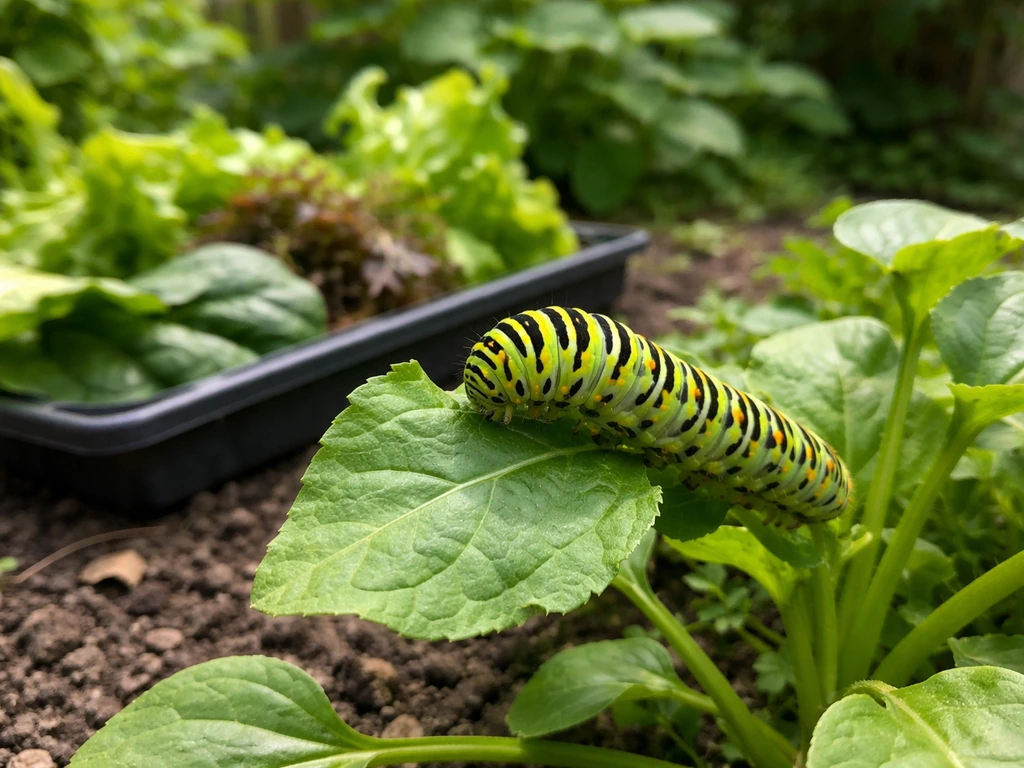
Yes, the Caterpillar exists in Grow A Garden as a obtainable pet with a real in-garden ability: it makes leafy plants grow 1.65x faster. Its community trade value sits around 800,000 Sheckles, but buying Bug Eggs specifically to sell Caterpillars is a losing proposition, each Bug Egg costs 50,000,000 Sheckles and the full expected trade value per hatch is only around 625,000 Sheckles. Keep the Caterpillar if you run a leafy crop setup; sell or trade it if you already have better farm coverage.
Grow A Garden Caterpillar Worth: Sell Value, Eggs & Breeding Guide

Julian Russo
12 Aug 2026
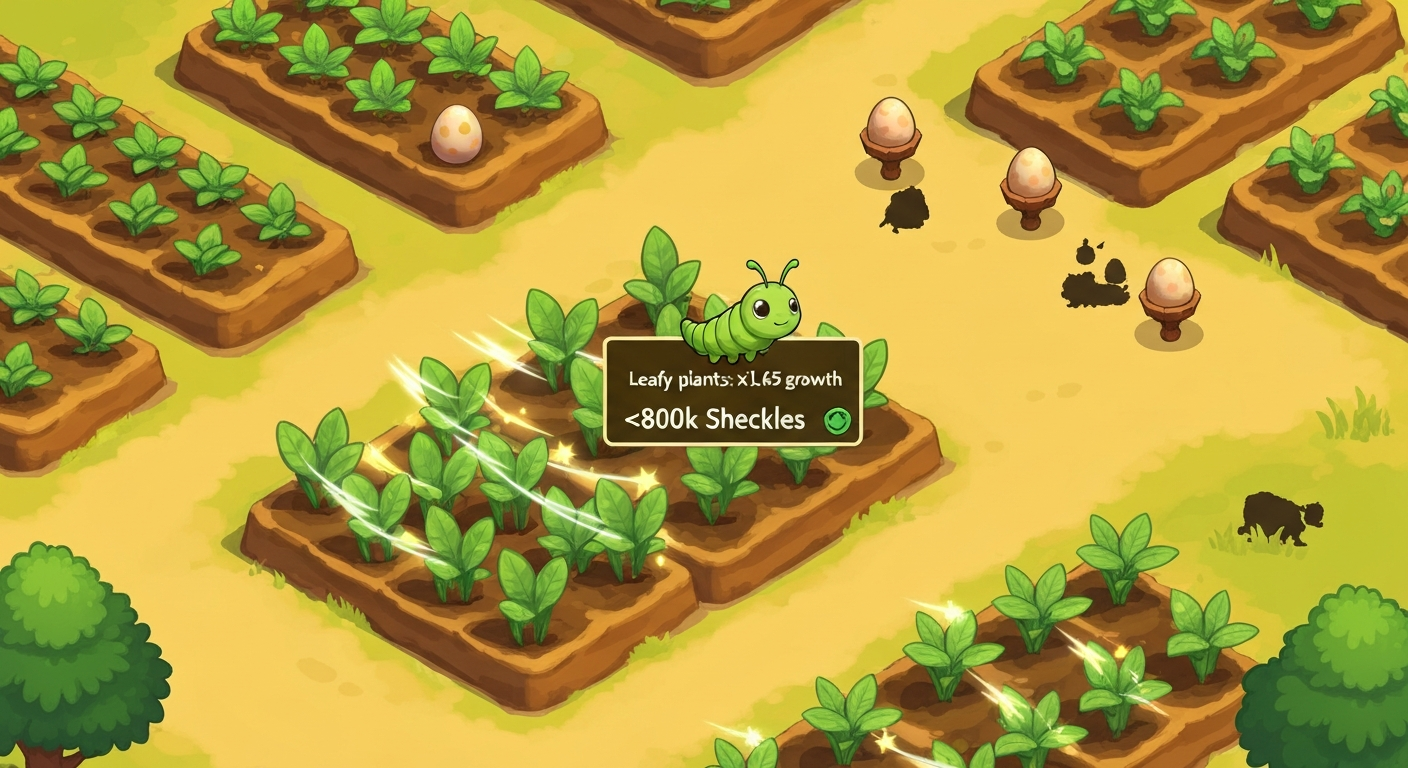
Does a Caterpillar exist in Grow A Garden and is it worth keeping or selling
The Caterpillar is a real, obtainable pet in Grow A Garden. It is not a placeholder or a legacy creature, it is an active member of the Bug Egg hatch pool right now. Its ability, 'Leafy Plants grow 1.65x faster,' gives it genuine farm utility on the right plot setup, which is what makes the keep-or-sell decision non-trivial. If you already have a leafy crop row or plan to build one, a Caterpillar is a meaningful throughput upgrade. If your farm is built around fruit, vegetable, or flower crops, the buff does nothing for you and trading it for liquid Sheckles makes more sense.
The short version: keep it if leafy crops are part of your active farm plan, sell or trade it otherwise. At a community median of roughly 800,000 Sheckles, it is not a high-value trade chip on its own, but it is not worthless either. The real question is whether its utility value on your specific farm exceeds its market value, and for a dedicated leafy setup, the answer is usually yes.
Caterpillar in-game values: sell price vs breeding value
Grow A Garden does not have a fixed NPC vendor price for pets. There is no auction house or in-game merchant that will buy your Caterpillar for a guaranteed Sheckle amount. All pet trading is player-driven through proximity gifting and manual trades, which means the 'sell price' is whatever the market will bear at the time you are trying to move it. Community value trackers like TradeKitsune and Spot.Monster are the closest thing to a price guide, and they consistently place the Caterpillar at approximately 800,000 Sheckles as a median trade reference. Actual trade offers can vary widely depending on server demand, current pet meta, and whether any events have recently flooded the Bug Egg pool.
On the breeding and acquisition side, the Caterpillar comes from the Bug Egg, which costs 50,000,000 Sheckles (or 149 Robux) at the in-game Pet Egg Shop. Given a 40% hatch rate for the Caterpillar out of that egg, you are paying 50M for a 40% shot at an 800K pet. The numbers do not work for profit. The breeding value of the Caterpillar is therefore almost entirely its utility value, the 1.65x leafy growth buff, rather than any meaningful resale margin.
| Value Type | Amount | Notes |
|---|---|---|
| Community trade median | ~800,000 Sheckles | Player-driven; no fixed NPC sell price |
| Bug Egg purchase cost | 50,000,000 Sheckles / 149 Robux | Primary acquisition method |
| Expected hatch value (EV) | ~625,000 Sheckles | Full pool EV; not just Caterpillar |
| Caterpillar utility value (leafy setup) | 1.65x growth speed on leafy crops | Passive, always-on farm buff |
| Caterpillar hatch rate from Bug Egg | 40% | Highest probability pet in the pool |
How Caterpillar value is actually calculated
Value in Grow A Garden comes from two places: market price (what someone will trade you for it) and utility (what it does for your farm). For the Caterpillar, these are very different numbers and it is worth understanding both before you decide what to do with one.
Market price and expected value
Because there is no fixed vendor price, market value is set by supply and demand among players. The Caterpillar is the most common pet from the Bug Egg at a 40% hatch rate, which means supply is relatively high compared to rarer Bug Egg pets like Dragonfly (1%). High supply pushes its trade price down. The community median of 800,000 Sheckles reflects that, it is not a throwaway pet, but it is not a rare trophy either.
To see the full picture, here is the expected value calculation across the entire Bug Egg pool using community median prices. This is the math you should run before deciding whether to hatch a Bug Egg at all:
| Pet | Hatch Rate | Community Median Value | Weighted EV Contribution |
|---|---|---|---|
| Caterpillar | 40% | ~800,000 Sheckles | 320,000 Sheckles |
| Snail | 30% | ~100,000 Sheckles | 30,000 Sheckles |
| Giant Ant | 25% | ~600,000 Sheckles | 150,000 Sheckles |
| Praying Mantis | 4% | ~2,500,000 Sheckles | 100,000 Sheckles |
| Dragonfly | 1% | ~2,500,000 Sheckles | 25,000 Sheckles |
| Total EV per Bug Egg | — | — | ~625,000 Sheckles |
A Bug Egg costs 50,000,000 Sheckles and returns an expected 625,000 Sheckles in trade value. Community trackers corroborate these figures, see Caterpillar Value, Traits & Mutations | Grow a Garden Wiki (TradeKitsune) for the source data and community EV calculations. That is an 80:1 loss ratio on paper. You would need to hatch roughly 80 Bug Eggs just to break even in Sheckles if you sold every pet at community median prices, and that assumes you can actually find buyers at those prices each time. This is not a viable Sheckle farming strategy.
Utility value and opportunity cost
The Caterpillar's utility value is harder to quantify but very real. A 1.65x growth speed multiplier on leafy crops means you are completing roughly 65% more harvest cycles in the same wall-clock time. If leafy crops are a meaningful part of your Sheckle income, that multiplier compounds across every cycle you run. The opportunity cost of selling the Caterpillar is giving up that throughput gain permanently unless you hatch or trade for another one. On a dedicated leafy plot, keeping the Caterpillar will outperform its 800,000 Sheckle trade value in a relatively small number of harvest cycles.
When to keep or sell: a decision framework
Here is how I think about the keep-or-sell decision for the Caterpillar. Run through these questions in order:
- Do you currently run or plan to run a leafy crop plot? If yes, keep it — the 1.65x buff is active and will pay back its trade value relatively quickly.
- Do you already have a Caterpillar on that plot? If yes and you have a duplicate, trade the extra — duplicates provide no additional stacking benefit on a single pet slot.
- Is your farm built around non-leafy crops (fruits, vegetables, flowers)? If yes, the Caterpillar does nothing for your active setup and trading it for 800K Sheckles is the better play.
- Are you short on Sheckles for a specific purchase (like another Bug Egg or an upgrade)? If that purchase is worth more than the Caterpillar's utility to you right now, sell it.
- Did you get the Caterpillar as a byproduct while chasing a Dragonfly or Praying Mantis? Treat it as a bonus — use it if it fits, sell it if it does not.
For mid-to-hardcore players optimizing farm ROI: the Caterpillar is a keeper on any farm that touches leafy crops, and a sell on any farm that does not. At 800K Sheckles it is a low-stakes trade either way, the bigger decision is whether you are spending 50M Bug Eggs trying to get one, which is almost never worth it unless you are targeting the rare pets in the same pool.
How to get Caterpillar eggs: drop sources, farming nodes, and event spawns
The Caterpillar is not obtained from a dedicated 'Caterpillar Egg.' It hatches from the Bug Egg, and also from the Exotic Bug Egg when that egg is available. These are the two primary acquisition paths you need to know.
Bug Egg (standard)
The Bug Egg is a permanent shop item available in the in-game Pet Egg Shop for 50,000,000 Sheckles or 149 Robux. This is your baseline acquisition route. It has an 8-hour hatch timer and contains five possible pets: Caterpillar, Snail, Giant Ant, Praying Mantis, and Dragonfly. With a 40% Caterpillar rate, it is the most likely single outcome from any Bug Egg hatch, but the cost makes farming it purely for Caterpillars economically irrational.
Exotic Bug Egg (event/limited)
The Exotic Bug Egg appears during specific events or as a limited-time shop offering. Its exact hatch odds and availability windows vary by event, but it pulls from a related bug pet pool that includes the Caterpillar. When this egg is active, check the current event hatch rates before spending, exotic eggs often have shifted odds compared to the standard Bug Egg pool.
Player trading
Because eggs themselves are not tradable between players in standard mechanics, you cannot simply buy a pre-hatched Caterpillar egg from another player. What you can do is trade for an already-hatched Caterpillar pet using proximity gifting. This is often the most efficient acquisition path if you specifically want a Caterpillar without gambling 50M on a Bug Egg, find a player with a spare Caterpillar and offer around the 800K community median or a pet swap of equivalent value.
Breeding mechanics and Caterpillar egg combos
Grow A Garden's breeding system for Bug Egg pets centers on the egg pool rather than direct parent-to-offspring breeding chains. The Caterpillar does not have a dedicated breeding pairing where combining two specific parent pets guarantees a Caterpillar offspring. Instead, acquiring a Caterpillar means engaging with the Bug Egg pool and managing your odds through hatch throughput.
The practical 'breeding' strategy for the Caterpillar is therefore about maximizing Bug Egg hatch volume when you need one. The key levers are egg slot count and hatch speed. You start with 3 simultaneous egg slots and can expand up to 13 through Trade unlocks, Garden Ascension purchases, or a gamepass. GAGdata's Grow a Garden Hatching Guide, Every Egg, Hatch Rate & Booster Pet Explained | GAGdata documents levers such as using Caterpillar only on dedicated leafy plots, expanding egg slots (up to 13) and using hatch‑speed booster pets, storing eggs until you have inventory/market plans, and treating Bug Eggs as utility purchases rather than direct Sheckle farms Grow a Garden Hatching Guide — Every Egg, Hatch Rate & Booster Pet Explained | GAGdata. Running more slots in parallel means more hatch attempts per 8-hour window. Combined with booster pets that accelerate hatch progress (Blood Kiwi, Rooster, and Chicken are commonly cited examples), you can meaningfully increase the number of Bug Eggs you cycle through per day.
If you are running Bug Eggs specifically chasing a rare pool outcome like Dragonfly, Caterpillars will be a frequent byproduct of that grind given the 40% hatch rate. Plan for what you will do with them, either deploy on leafy plots or have a trade target ready, to avoid inventory clutter.
Viable egg slot and booster combos
- 3 slots (default): 3 Bug Eggs per 8-hour cycle = 9 hatches per day maximum without speed boosts
- 13 slots (maximum): 13 Bug Eggs per 8-hour cycle = up to 39 hatches per day without speed boosts
- Booster pets (Blood Kiwi, Rooster, Chicken): reduce effective hatch time per egg, increasing throughput per slot
- Robux skip: instantly completes any egg regardless of hatch time; costs vary by egg type and is viable for single high-priority hatches, not bulk farming
- Key mechanic note: hatch timers only advance reliably while you are on the plot where the egg is placed — switching plots or slots can pause or desync timers, so stay on your hatching plot during active sessions
Egg odds and probability table
Here is the full Bug Egg probability breakdown, including rough expectations for how many hatches you should expect to run before seeing each pet. These are based on published community hatch odds and standard probability math.
| Pet | Hatch Rate | Expected Hatches to First (50% confidence) | Expected Hatches to First (90% confidence) | Rarity Tier |
|---|---|---|---|---|
| Caterpillar | 40% | ~2 hatches | ~5 hatches | Common |
| Snail | 30% | ~2 hatches | ~7 hatches | Common |
| Giant Ant | 25% | ~3 hatches | ~8 hatches | Uncommon |
| Praying Mantis | 4% | ~17 hatches | ~57 hatches | Rare |
| Dragonfly | 1% | ~69 hatches | ~230 hatches | Very Rare |
A quick note on probability math here: at a 40% rate, you have a 60% chance of not getting a Caterpillar on any single hatch. The 50% confidence figure means you have a coin-flip chance of seeing one within 2 hatches. The 90% confidence figure means you would need to run 5 hatches to have a 90% chance of seeing at least one. In practice, most players chasing a Caterpillar specifically will see one very quickly, the more realistic concern is spending 50M Sheckles per Bug Egg to get there, which is why player trading is often the smarter path for this particular pet.
Hatch rate modifiers can affect these odds during events or with specific gamepass features. Always check current in-game tooltips or community trackers for active modifiers before committing to a bulk hatch session, since event buffs can meaningfully shift the distribution, particularly for the rarer pets in the pool.
Hatching and incubation: costs, timers, and what you actually need
Before you hatch anything, understand how the egg slot system works. Eggs are single-use consumables placed directly on a garden plot to run their timer. They are not tradable in their unhatched state, once you buy a Bug Egg, you are committing to hatching it yourself. The hatched pet is the tradable object, not the egg itself.
| Parameter | Bug Egg Details |
|---|---|
| Purchase cost | 50,000,000 Sheckles or 149 Robux |
| Hatch timer | 8 hours |
| Default egg slots | 3 simultaneous |
| Maximum egg slots | 13 (via Trade unlocks, Garden Ascension, or gamepass) |
| Timer behavior | Advances only while on the active plot; switching plots/slots can pause or desync |
| Speed boosters | Blood Kiwi, Rooster, Chicken (reduce effective hatch time) |
| Robux skip option | Yes — instant completion; cost varies by egg type |
| Tradability (unhatched) | Not tradable between players |
| Tradability (hatched pet) | Yes — primary tradable form via proximity gifting |
The practical workflow for hatching efficiently: place as many Bug Eggs as your current slot count allows, deploy at least one hatch-speed booster pet on the same plot, stay on that plot during the session to prevent timer desyncing, and have a plan for each pet that comes out, whether that is deploying it on a leafy crop row or lining up a trade. If you are running multiple Bug Egg hatches and Caterpillars keep coming out when you want a Dragonfly, that is a statistical inevitability given the 40% rate. Stack duplicate Caterpillars in your pet inventory until you have trade partners lined up, or deploy extras on secondary leafy plots if you have room.
One more thing worth flagging: the Caterpillar's pet ability specifically states it affects crops, not eggs. Placing a Caterpillar near your egg slots will not speed up hatching, that is what the dedicated booster pets (Blood Kiwi, Rooster, Chicken) are for. Keep your Caterpillar on your leafy crop plots where its 1.65x buff actually activates.
Practical farm setup and ROI management
If you are running the Caterpillar for its farm utility, here is how to get the most out of it. The 1.65x growth speed buff applies to leafy plants only, so the return on having a Caterpillar is entirely dependent on how much of your active farm is running leafy crops. A mixed farm with one or two leafy rows benefits less than a dedicated leafy setup. For maximum ROI, concentrate leafy crops together on a designated plot and station your Caterpillar there, do not dilute the effect by spreading leafy plants across a farm that is primarily running other crop types.
For players asking whether the Caterpillar undergoes any metamorphosis in the game, whether it turns into a butterfly over time, that is a separate mechanic question worth exploring in the caterpillar lifecycle guides. For a quick answer to the common question “does caterpillar grow a garden,” see the dedicated guide on that topic. See the guide titled 'Do caterpillars turn into butterflies in Grow A Garden' for a direct answer on the Caterpillar's lifecycle in-game. Similarly, if you are wondering which specific plant types trigger the Caterpillar's buff or whether it interacts with plant health mechanics, those details are covered in the plant interaction guides for this creature. Understanding exactly what the Caterpillar eats and whether its behavior changes your plot management is also worth reading up on before you commit a prime plot slot to a leafy setup.
The bottom line on ROI: do not buy Bug Eggs to farm Caterpillars for Sheckles. The math does not work, 625K expected trade value against a 50M egg cost is an 80:1 loss. Buy Bug Eggs when you are chasing a specific rare pet (Dragonfly being the main target for most players) and treat any Caterpillars that come out as a useful byproduct. If you specifically want a Caterpillar for your leafy setup, trading with another player for around 800K Sheckles is almost always the more efficient path.
FAQ
What is the exact in‑game monetary value of a Caterpillar in Grow A Garden (market/trade price)?
There is no fixed NPC sell price; player trades determine market value. Community median/spot listings commonly place a Caterpillar at approximately 800,000 Sheckles (snapshot median from community trackers). Actual offers vary by server and time — use community price lists/discords for current spot prices.
What is the Caterpillar's breeding (utility) value in‑game?
Caterpillar’s core utility is a pet ability: Leafy plants grow 1.65× faster. That makes it valuable on dedicated leafy plots for cycle acceleration, improving harvest cadence and effective yield per realtime hour. It does not affect eggs or breeding odds.
How is Caterpillar value calculated (market price vs utility)?
Two values are considered: market price (player trade median ≈800k Sheckles) and utility value (time/harvest savings from 1.65× leafy speed). Market value is determined by supply/demand; utility value is player‑specific — calculate ROI from faster harvest cycles by comparing increased crop turnover revenue against the opportunity cost of holding the pet (or cost to obtain it).
Should I keep or sell a Caterpillar? When to keep it? When to sell it?
Keep if: you run dedicated leafy farms and the 1.65× buff meaningfully increases throughput (e.g., high‑tier leafy crops or automated harvest windows). Sell if: you need Sheckles, don’t run leafy plots, or can buy the buffed harvest ROI cheaper than the pet trade price. For target breeding (e.g., you need space/slots), sell duplicates; for short‑term cash, sell to active traders when demand is high.
How can I obtain Caterpillar eggs/pets (drop sources and breeding combos)?
Primary source: Bug Egg / Exotic Bug Egg pool (commonly called the Bug‑Egg pool). Bug Egg drop table (community): Caterpillar ~40%, Snail ~30%, Giant Ant ~25%, Praying Mantis ~4%, Dragonfly ~1%. Buy Bug Eggs from the in‑game Pet Egg Shop (community price: 50,000,000 Sheckles or 149 Robux) and place on a plot to run the hatch timer. Caterpillar cannot be bred via combinatorial pet breeding — it must be hatched from the Bug Egg pool or acquired via player trade.
What are the exact egg odds and hatch times/costs for Bug Eggs that can yield Caterpillar?
Bug Egg purchase cost (community documentation): 50,000,000 Sheckles (or ~149 Robux in the Pet Egg Shop). Hatch time: 8 hours on a plot. Hatch odds (community pool): Caterpillar 40%, Snail 30%, Giant Ant 25%, Praying Mantis 4%, Dragonfly 1%.
Next Article
What Do Caterpillars Eat in Grow a Garden? Food Guide
Learn what caterpillars eat in Grow a Garden, how to farm those foods, and tune feeding for faster growth.