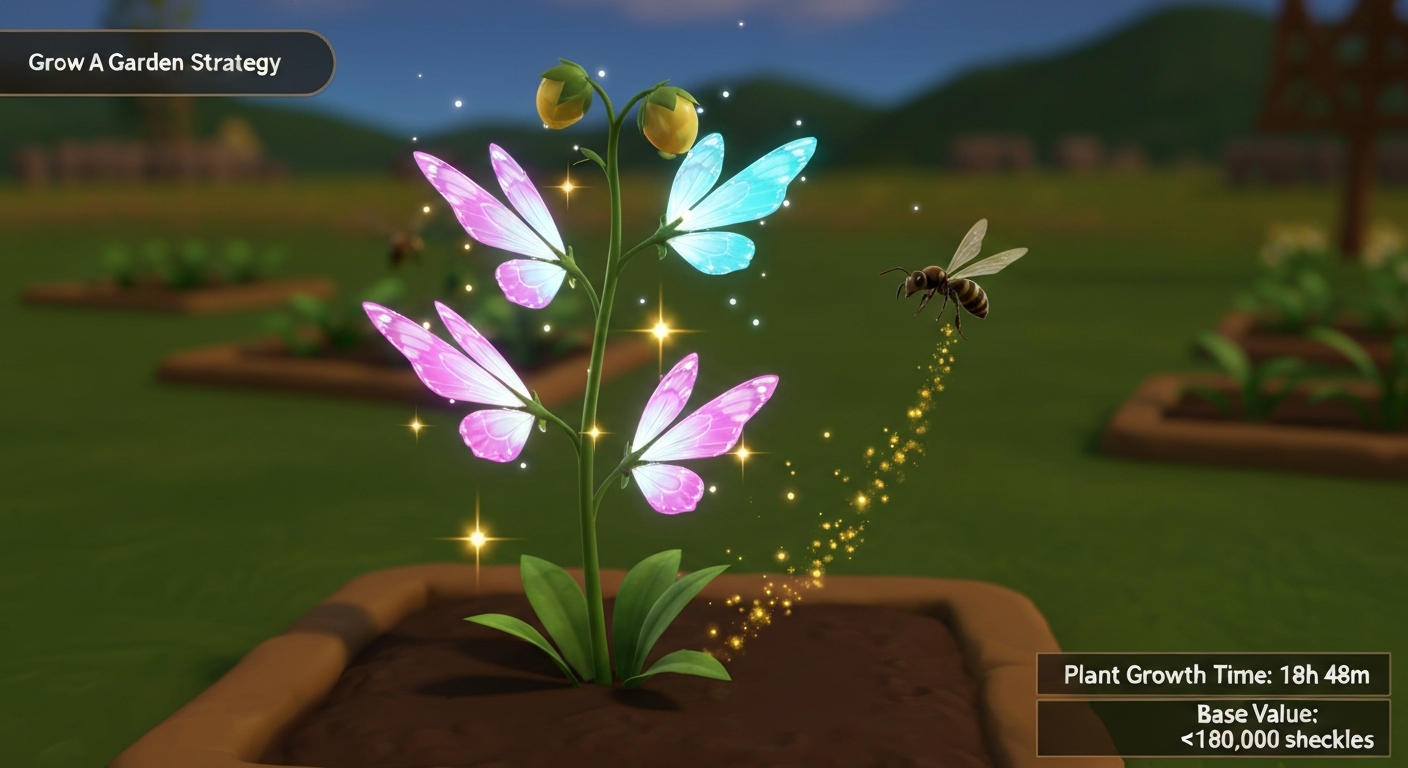
Wispwing is not a plant in the traditional sense you might expect from that search. It is classified in-game as a crop seed, specifically a multi-harvest plant that you grow in your garden plots. It is not a pet, creature, insect, or flower type in the way the Wasp or Will-o'-Wisp are. Wispwing was introduced as a Divine-tier (later reclassified as Prismatic) event crop during the Fairy Update (version 1.21.0, added August 30, 2025), and it produces an animated butterfly-wing fruit over a very long growth cycle. If you landed here wondering whether Wispwing behaves like a pet or has independent pollination abilities, the answer is no. It sits in your plot, grows slowly, and sells for a huge base value.
What Type of Plant Is Wispwing Grow A Garden: Guide

Julian Russo
13 Aug 2026
What Wispwing Actually Is in Grow A Garden
Wispwing is a crop seed item. In the game's UI it appears in your seed inventory alongside other plantable crops, not in the pets or creatures panel. Its in-game label is a multi-harvest plant, meaning once it reaches maturity it keeps producing fruit at timed intervals rather than dying after a single yield. The community wikis categorize it under event crops with a Prismatic rarity tag. It was originally listed as Divine on launch during the Fairy Event, and its rarity was adjusted in minor patches after Update 1.21.0. The fruit it produces is visually styled as a glowing butterfly wing, which is purely cosmetic flavor tied to the Fairy Event theme. It does not fly around, it does not pollinate other crops, and it does not have a pet ability. It grows in a plot, produces fruit, and you harvest or sell that fruit for its base value (roughly 180,000 sheckles per piece before mutations).
In-Game Stats at a Glance
Before getting into strategy, here are the core numbers that matter for planning your farm around Wispwing. These come directly from the game's crop data module and community wiki databases, so you can use them in your own calculator setups.
| Stat | Value | Notes |
|---|---|---|
| Rarity | Prismatic (event) | Introduced as Divine, updated post-Fairy Event |
| Plant Type | Multi-harvest crop | Keeps producing after first maturity |
| Plant Growth Time | 18h 48m | Longest standard plant growth in the game |
| Plant GrowTickTime | Min 60 / Max 80 | From game crop data module |
| Plant GrowRate | 0.01 | From game crop data module |
| Fruit GrowTickTime | Min 15 / Max 18 | Controls per-fruit cycle speed at maturity |
| Fruit GrowRate | 0.1 | From game crop data module |
| Average Weight | ~10.0 kg | Base, before weight mutations |
| Base Value (avg) | ~180,000 sheckles | Per fruit, before mutations |
| Price Floor | ~162,450 sheckles | Community database floor value |
| Huge Chance | 1/500 (0.2%) | Standard Huge rarity rate |
| Event Source | Fairy Event (Update 1.21.0) | August 30, 2025 |
The 18-hour 48-minute plant growth time is the single most important stat on that table for farm planning. That is the longest growth time among standard event crops, which means a Wispwing plot is a long commitment. You plant it, walk away for the better part of a day, and come back to a mature crop that then starts cycling fruit at the shorter fruit tick intervals. The fruit cycle (GrowTickTime 15-18, GrowRate 0.1) is considerably faster once the plant is up, so the real pain point is just that initial maturation window.
Core Behaviors and Mechanics
Pollination and Resource Outputs
Wispwing itself does not pollinate. It is a passive recipient of pollination effects, not a source. When a pet like the Wasp flies within range and applies the Pollinated mutation, your Wispwing fruit gets a value multiplier stacked on top of the already-high 180,000 sheckle base. That stacking is why pairing Wispwing with pollinating pets is one of the more efficient value strategies in the current meta. The crop's output is purely its fruit: one animated butterfly-wing produce item per completed fruit cycle, harvested manually or by automation setups. There are no secondary outputs, no dropped seeds from the plant itself, and no special passive aura.
Day/Night and Seasonal Effects
Wispwing does not have documented day/night or seasonal growth modifiers in the current patch. Its growth is driven purely by the GrowTickTime and GrowRate values in the crop data module. Community reports have flagged that it grows noticeably slowly compared to what players expect from a Prismatic crop, which tracks mathematically from that 0.01 GrowRate. Growth booster pets (Moon Cats, Triceratops, and similar creatures that apply growth multipliers) will reduce your effective maturation window, and this is one of the most practical ways to cut down the 18h48m wait.
Known Bugs and Display Issues
Community wikis and Reddit threads have documented a couple of persistent quirks with Wispwing. The most commonly reported issues are missing lower foliage on the plant model after spawning and a thin stud block appearing at the base during early growth stages. These are cosmetic bugs that do not affect yield or value, but they can make it hard to visually confirm the plant is actually growing. If you see a weird stub where your Wispwing should be, let it run and check the growth timer before assuming something went wrong with the planting.
How to Get Wispwing Seeds
Wispwing is event-exclusive. You cannot buy it from the standard seed shop or find it growing in the open world. The primary acquisition routes are the Fairy Event seed packs, specifically the Enchanted Seed Pack and the Exotic Enchanted Seed Pack, both of which list Wispwing at approximately 0.5% per pack. That is the officially advertised and community-observed rate. Some sources also note a Rainbow Sack route at around 7%, though this is a secondary option and the pack-opening route is the canonical method documented across most wikis.
To put the 0.5% in practical terms: you would expect to see one Wispwing seed roughly every 200 Enchanted Seed Pack openings on average. Obviously, variance means you might hit it in 20 packs or go 400 without one. If you are actively hunting Wispwing, the Rainbow Sack route at 7% is worth considering as a supplementary method, though the event availability of all these packs is the real limiting factor. Outside of active Fairy Event windows, you are dependent on trading with other players or stockpiled packs.
| Source | Wispwing Drop Rate | Availability |
|---|---|---|
| Enchanted Seed Pack | ~0.5% | Fairy Event only |
| Exotic Enchanted Seed Pack | ~0.5% | Fairy Event only |
| Rainbow Sack | ~7% | Event-period secondary route |
| Standard Seed Shop | Not available | Never |
| Player Trading | Varies | Peer-to-peer, any time |
Breeding Basics: What You Actually Need to Know
Here is where a lot of players get confused: Grow A Garden does not have a plant breeding system in the conventional sense. You cannot pair two parent Wispwing plants together to create offspring seeds. There is no cross-pollination mechanic that produces a new Wispwing seed from existing plants. Wispwing seeds come from seed packs exclusively. 'Breeding' in this game's context refers to pet/creature breeding, not plant reproduction. If you have seen guides talking about breeding Wispwing, they are either referring to mutation stacking on the fruit or they are mixing up terminology.
What does matter for maximizing your Wispwing's output value is the mutation system. Once your Wispwing is mature and producing fruit, mutations like Pollinated, Giant, Rainbow, and others stack multiplicatively on the base 180,000 sheckle value. Pets that apply mutations (the Wasp being the most relevant pollinator) and mutation sprays are your tools for turning a standard Wispwing harvest into a significantly higher payout. This is the closest thing to an 'optimization loop' that replaces traditional breeding for plant crops in this game.
Advanced Mutation Tactics and Troubleshooting
Stacking Mutations for Maximum Value
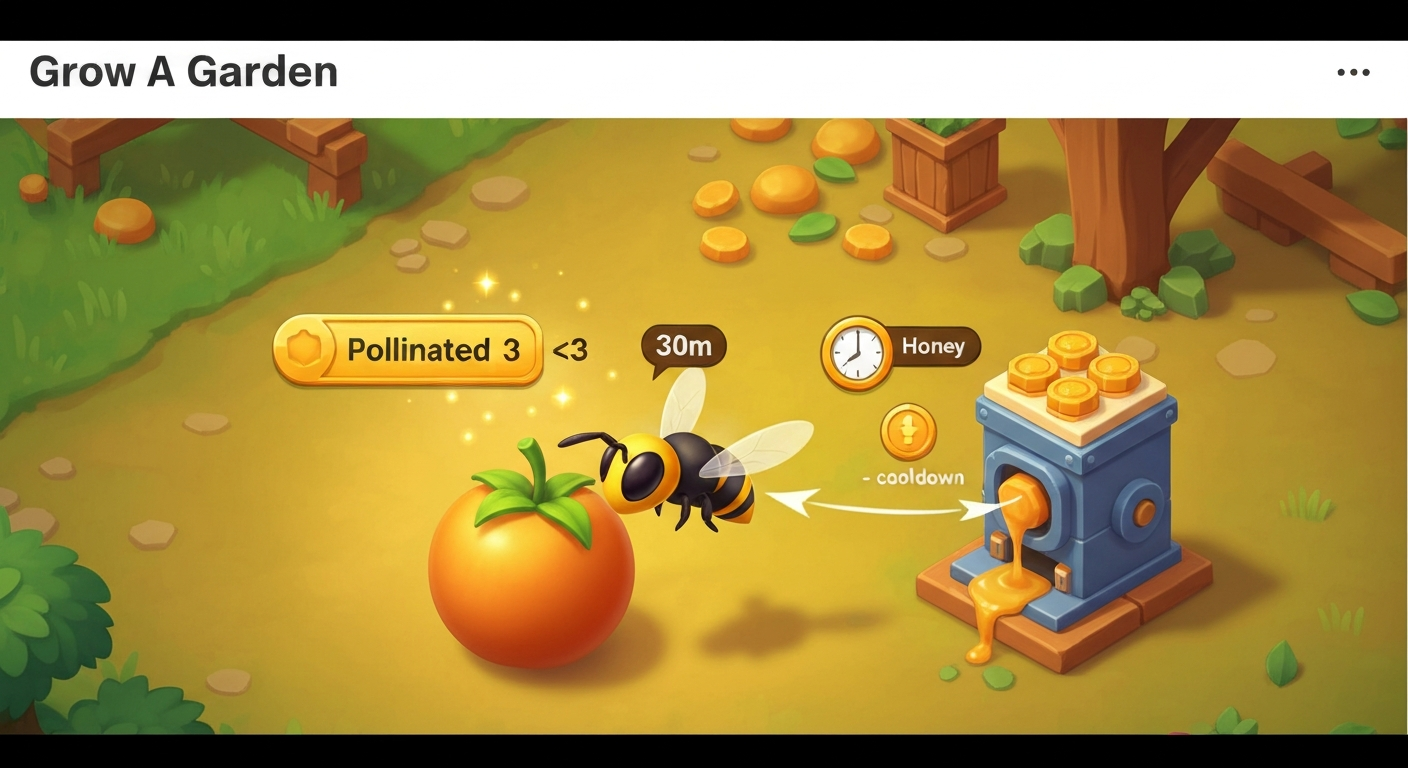
Because Wispwing has a 180,000 sheckle base value, each multiplicative mutation layer has an outsized absolute effect compared to lower-value crops. A Pollinated mutation from a Wasp pet (applied every approximately 30 minutes when the pet is in range) adds a value multiplier to the fruit. Grow A Garden Pro's Wispwing, Wasp, and Wisp pages confirm that Wispwing is an event Prismatic multi‑harvest crop obtained from seed packs and that the Wasp pet applies the Pollinated mutation to nearby fruit roughly every 30 minutes (while the Wisp pet and Wisp Well provide pet XP bonuses to speed pet leveling) blank" rel="noopener noreferrer">Grow A Garden Pro: Wispwing + Wasp + Wisp pages. See the Wasp, Pet ability & passive (Grow A Garden Pro), 'flies to a nearby fruit and pollinates it every 30m' page for official fan documentation of the Wasp's pollination behavior blank" rel="noopener noreferrer">Wasp — Pet ability & passive (Grow A Garden Pro) — 'flies to a nearby fruit and pollinates it every 30m'. Layering Pollinated with a Rainbow or Giant mutation through sprays can push individual fruit values well beyond the base. The practical approach is to have your Wasp pet placed within pollination range of your Wispwing plots and to apply any available mutation sprays right at the start of each fruit cycle so the mutation is applied early.
Using Will-o'-Wisp to Accelerate the Loop
The Will-o'-Wisp (Wisp pet, Legendary rarity) does not directly affect your Wispwing plant. Its mechanic is a pet XP bonus: while a Wisp Well is placed in your garden, active pets gain approximately 0.75 XP per second. This matters for Wispwing indirectly because leveling your mutation-applying pets faster means they unlock passive abilities and stat improvements that can increase their mutation frequency or range. If you are running a serious mutation farm on Wispwing, having a Wisp plus a Wisp Well in the same layout to accelerate your Wasp or other pets' leveling is a legitimate efficiency layer, but it is a secondary effect, not a direct crop interaction. There is a related question about whether Wispwing itself is a flower in the game's taxonomy, which connects to how pollination mechanics interact with it as a recipient rather than a source.
Increasing Your Odds and Handling Slow Growth
- Place growth-multiplier pets (Moon Cats, Triceratops) adjacent to your Wispwing plots to reduce the 18h48m base growth time
- Use advanced sprinklers set to frequent watering schedules — watering affects growth tick rates for most crops
- Dedicate Wispwing to long-term, low-maintenance plots rather than slots you rotate frequently, since the plant growth investment is steep
- Apply mutation sprays at fruit maturity rather than at planting, since sprays affect the fruit layer, not the plant growth layer
- Track your fruit cycle timer (GrowTickTime Min 15 / Max 18) to time manual harvests and spray applications for maximum overlap
- Do not harvest immediately at each cycle — let mutations stack if your pets are actively applying them, then harvest the highest-mutated fruits first
Sterility and Mutation Paths
Wispwing does not have sterility mechanics in the traditional breeding sense since it is a plant, not a pet. The nearest equivalent concern is whether a plant can stop producing fruit, which would happen if the plot is disrupted or if there is a pathing/placement bug (see the known stud-block bug mentioned earlier). Mutation paths for Wispwing fruit follow the standard crop mutation tree. The Huge variant (0.2% per fruit, or 1 in 500) is the most sought-after, and it multiplies the base value substantially. Chasing Huge is a volume game: more fruit cycles, more chances. Given the long plant growth time, the strategy is to get Wispwing plots established early in a session and let them run passively while you manage other parts of your farm.
Farm Viability: Where Wispwing Sits in the Tier List
Wispwing is a high-value, low-frequency, high-commitment crop. It earns a spot in the upper tier for raw per-fruit value (180,000 sheckle base is among the highest in the game for event crops) but the 18h48m plant growth time and the 0.5% acquisition rate create significant barriers. For farms focused on consistent hourly income, Wispwing is not your workhorse. It is a prestige slot: a plot you dedicate to Wispwing is a long-term investment that pays off in large individual sales rather than frequent steady income.
Realistically, Wispwing is best suited for mid-to-hardcore players who have enough other plots generating regular income to afford dedicating one or two slots to a slow, high-ceiling crop. Casual players or anyone who only has a few plots available will probably see better returns from faster-cycling crops. The viability case for Wispwing gets significantly stronger once you have a Wasp pet actively pollinating it and any growth-boosting pets reducing the plant timer, which is part of why the Wasp's role on a Wispwing farm is worth understanding in detail.
Wispwing vs. Wasp vs. Will-o'-Wisp: Direct Comparison
These three are frequently searched together (and for good reason, they all sound similar and have overlapping relevance in farm builds), but they are fundamentally different types of entities. Here is the breakdown.
| Entity | Type | Rarity | Primary Function | Direct Wispwing Interaction | Acquisition |
|---|---|---|---|---|---|
| Wispwing | Crop (plant seed) | Prismatic (event) | High-value multi-harvest produce | Is the crop being optimized | Enchanted/Exotic Seed Packs, ~0.5% |
| Wasp | Pet (creature) | Rare | Applies Pollinated mutation to nearby fruit every ~30 min | Directly pollinates Wispwing fruit, increasing its value | Pet eggs / event drops |
| Will-o'-Wisp (Wisp) | Pet (creature) | Legendary | Grants +0.75 XP/sec to active pets when Wisp Well is placed | Indirectly helps by leveling mutation pets faster | Event pet drops, Legendary rarity |
The practical takeaway for farm planning: Wispwing is your crop slot, the Wasp is the pet you want next to it, and the Will-o'-Wisp is a nice-to-have support pet that speeds up the broader mutation ecosystem rather than touching Wispwing directly. If you only have room for one of the two pets on a Wispwing plot, the Wasp wins by a wide margin because its Pollinated application directly multiplies your Wispwing fruit value on every cycle. The Wisp is genuinely useful but operates at one degree of separation. Questions about whether the Wasp is worth running and whether the Wasp's pollination applies broadly are covered in depth in the related guides on this site, and they are worth reading if you are building a Wispwing-focused layout.
Farm Build Recommendations for Wispwing
Placement and Layout
Dedicate your Wispwing plots to a corner or section of your farm that you do not rotate. Because the plant growth time is nearly 19 hours, replanting frequently is costly in time and seed resources. A dedicated zone of two to four Wispwing plots lets you stagger planting times (plant one every few hours) so you have fruits maturing at different points rather than all at once. This smooths your income curve and reduces the AFK pressure of having to be online for a single harvest window.
Pollination Layout
Place your Wasp pet so its pollination range covers as many Wispwing plots as possible. The Wasp targets a nearby fruit every approximately 30 minutes, so if you have multiple Wispwing plots in range you are increasing the probability that each fruit cycle gets a Pollinated mutation applied before harvest. Avoid placing high-value non-Wispwing crops in the same pollination radius if you want the Wasp's attention focused, though in practice the Wasp just picks the nearest fruit so spatial arrangement is the key lever here.
Automation and Efficiency Tips
- Use advanced sprinklers on Wispwing plots to keep growth ticks consistent and reduce the impact of being offline
- Pair with one or two growth-multiplier pets (Moon Cat, Triceratops) in the Wispwing zone to shorten the 18h48m plant timer
- Run a Wasp as your primary pollination pet in the Wispwing zone, targeting it to that section of the farm
- If you have a Will-o'-Wisp and a Wisp Well, place the Well within the same farm section to passively level your Wasp faster
- Apply mutation sprays at or just after fruit maturity to catch the fruit at the start of a cycle, maximizing the mutation window before harvest
- For AFK setups, stagger your Wispwing planting times across multiple plots so you return to a mix of maturing and producing plants rather than one mass harvest
At-a-Glance Reference Tables
| Parameter | Value |
|---|---|
| Plant Growth Time | 18h 48m |
| Plant GrowTickTime | Min 60 / Max 80 |
| Plant GrowRate | 0.01 |
| Fruit GrowTickTime | Min 15 / Max 18 |
| Fruit GrowRate | 0.1 |
| Base Fruit Value | ~180,000 sheckles |
| Price Floor | ~162,450 sheckles |
| Average Weight | ~10.0 kg |
| Huge Variant Chance | 0.2% (1/500) |
| Acquisition Rate (Enchanted Pack) | ~0.5% |
| Wasp Pollination Interval | ~every 30 minutes |
| Wisp XP Bonus (with Well) | +0.75 XP/sec to pets |
| Role | Best Pet for the Job | Why |
|---|---|---|
| Pollination (value boost) | Wasp | Applies Pollinated mutation to Wispwing fruit directly every ~30 min |
| Growth acceleration | Moon Cat / Triceratops | Growth multiplier pets cut the 18h48m plant timer |
| Pet leveling support | Will-o'-Wisp + Wisp Well | Accelerates XP gain for mutation pets like the Wasp |
| Mutation spray timing | Manual or automated sprinkler trigger | Apply at fruit cycle start for maximum mutation window |
Counters, Maintenance, and Edge Cases
Fragility and Long Growth Risk
Wispwing's biggest vulnerability is its growth time. An almost 19-hour plant timer means any disruption to the plot (accidental re-planting, plot clearing, game bugs) costs you nearly a full day of investment on a seed that cost 0.5% odds per pack to acquire. Treat Wispwing plots as permanent fixtures and double-check before making any changes to that area of your farm. The cosmetic stud-block bug at early growth stages has caused some players to mistakenly uproot the plant thinking it was broken.
Predators and Compatibility
Wispwing does not have specific predator interactions documented in current community sources. Compatibility concerns are more about pet placement than direct threats: avoid placing pets with destructive or disruptive passive effects in the same zone as your Wispwing plots. Any pet that interferes with fruit spawning or causes plot resets would compound the long growth investment problem significantly. Stick to supportive pets (Wasp, growth multipliers, Wisp) in the Wispwing zone and keep experimental pet placements to lower-value crop sections of your farm.
Maintenance Checklist
- Check Wispwing plots on return from AFK to confirm the growth stub bug has not reset your plant visually — verify by the growth timer, not the model
- Re-apply mutation sprays after each harvest cycle since spray effects do not persist across fruit cycles indefinitely
- Confirm your Wasp pet is still in range and active, especially after game sessions where pets can shift positions
- Water Wispwing plots before long offline periods if advanced sprinklers are not covering them
- Note the patch version when the game updates — Wispwing's rarity and stats have changed between patches and community wikis may update values post-patch
Keep, Breed, or Sell? The Quick Decision Guide
Keep your Wispwing seed if you have a dedicated plot slot you can leave alone for the long growth cycle and at least a Wasp pet to pollinate it. The 180,000 sheckle base value with Pollinated stacking makes it one of the best per-fruit earners in the game once it is running. The math favors keeping it as a permanent farm fixture rather than rotating it.
Sell your Wispwing seed if you are short on plots, do not yet have pets that can boost its value, or are in a phase of the game where consistent fast-cycling crops matter more than occasional large payouts. A raw Wispwing seed is also worth significant sheckles in player trades given the 0.5% acquisition rate, so if you have duplicates and no immediate use, selling one is not a bad call.
There is no traditional breeding to pursue with Wispwing since it is a plant crop rather than a pet. If you are trying to 'breed' it, redirect that effort toward stacking mutations on the fruit through the Wasp and spray system described above. That is the actual optimization loop for this crop.
| Situation | Recommendation |
|---|---|
| Have a dedicated plot + Wasp pet | Keep and plant immediately |
| Have seed but no pollination pet yet | Keep seed, acquire Wasp first, then plant |
| Have multiple duplicate seeds | Keep one planted, sell or trade extras |
| Farming for fast/consistent income | Sell seed, plant faster-cycling crops instead |
| Building a mutation farm setup | Keep, plant, layer Wasp + growth pets + sprays |
| No long-term plot available | Hold seed until you expand, or sell for sheckles |
Related Strategy Pages Worth Reading
If you are building out a Wispwing-focused farm setup, a few related topics on this site fill in the gaps this guide leaves. The Wasp guide goes deep on whether the Wasp pet is worth acquiring for your farm tier and exactly how its pollination mechanics interact with different crop types including event crops like Wispwing. There is also a dedicated breakdown of how Wasp pollination works mechanically, which is useful for understanding the 30-minute interval and range considerations when laying out your plots. If you are still uncertain about whether Wispwing's butterfly-wing theme means it counts as a flower in the game's classification system (and why that matters for certain mechanics), that question is addressed directly in the Wispwing flower classification guide on this site. And for players interested in the Will-o'-Wisp pet specifically and how the Wisp Well XP bonus integrates into a broader farm strategy, the Will-o'-Wisp creature page covers the Legendary pet's full ability set and best use cases. For a focused answer on whether a Will-o'-Wisp can grow a garden, see the Will-o'-Wisp, will o wisp grow a garden guide.
FAQ
What type of entity is Wispwing in Grow A Garden (plant/flower/insect/creature) and how is it labeled in-game?
Wispwing is a crop plant (multi‑harvest seed) — an event/Divine → Prismatic plant introduced in the Fairy Event. In‑game and on community wikis it’s listed as a crop/plant seed (not a pet or creature). It is treated as a high‑value harvestable plant rather than an autonomous creature or pet.
What are Wispwing’s core growth and fruit mechanics (growth time, multi‑harvest behavior, fruit tick cadence)?
Core mechanics (wiki/module values): total plant growth produces the ~18h 48m maturation time (module GrowTickTime Min/Max and Plant GrowRate set this). Once matured it is multi‑harvest; fruit tick cadence is shorter (Fruit GrowTickTime Min=15, Max=18 with Fruit GrowRate =0.1) which community tools use to estimate per‑hour yields. In practice Wispwing matures very slowly but continues producing fruit at the listed fruit tick intervals until removed.
Does Wispwing have day/night or seasonal effects, and does it self‑pollinate or require pollination?
Wispwing has no documented day/night or seasonal gameplay penalties/bonuses in community data — its growth is governed by the crop data values. It does not self‑pollinate as a pet would; pollination status (e.g., Pollinated mutation) must come from pollination mechanics (pet abilities, sprays, or other mutation sources). Wispwing itself is a plant that receives pollination effects but does not behave as a pollinating creature.
How is Wispwing obtained? Are there breeding methods or parent pairings to make it?
Wispwing seeds are event‑exclusive and obtained from Fairy Event seed sources: Enchanted Seed Pack and Exotic Enchanted Seed Pack (community reports and pack logs list ~0.5% drop chance per pack as the primary route). There is no in‑game plant breeding recipe to create Wispwing from parents — community guides explicitly list seed packs/event drops as the canonical obtainment method rather than breeding pairings.
How does Wispwing compare mechanically and strategically to Wasp (pet) and Will‑o'‑Wisp (Wisp pet)?
Short comparison: - Wispwing (crop): high base value (~180,000 sheckles), long grow time (~18h48m), multi‑harvest; role = value/mutation target for long‑term plots. - Wasp (pet): Rare pet that periodically flies to nearby fruit and applies the Pollinated mutation (~every 30 minutes); synergizes with Wispwing by applying Pollinated to increase mutated output/value. - Wisp (pet)/Will‑o'‑the‑Wisp effect: Legendary pet related mechanics (with a Wisp Well) give pets extra XP/sec, helping level pets used for mutation loops faster (indirect support to Wasp/other mutation pets). Use Wasp to apply Pollinated to Wispwing; use Wisp Well + Wisp to speed pet leveling if you need higher pet levels for mutation efficiency.
Is Wispwing farm‑viable? What tier/role should it have on farms and how does it compare to alternatives?
Viability summary: Wispwing is a high‑value, long‑term crop best used as a dedicated long‑grow plot or AFK farm target. Community tier placements treat it as a high‑value event/Prismatic crop (valuable but slow). Tradeoffs: very high base value and mutation potential vs long maturation window and occasional display/planting bugs reported. Compared to faster high‑value crops, Wispwing is less suitable for quick mutation loops but excellent when you can dedicate plots, use growth accelerators, and chain mutations. Against wasp/will‑o'‑wisp: those are pets that support Wispwing (not substitutes).
Next Article
Do Wasps Pollinate in Grow A Garden? In‑Depth Wasp Guide
Do wasps pollinate in Grow A Garden? Yes, complete mechanics, breeding, setups, and Wispwing/Will O’Wisp comparison.