What 'stacking' actually means in Grow a Garden
Before getting into the Giant Ant specifically, it helps to nail down what players mean when they ask about stacking, because the word gets used two different ways in this game and they matter a lot. The first meaning is physical stacking: placing multiple copies of the same pet on the exact same tile or into the same slot so they literally overlap in space. The second meaning, and the one that actually drives most of the conversation around Giant Ants, is ability stacking: having multiple pets active at the same time so their passive effects combine and increase your total benefit. Most of the time when someone asks 'do giant ants stack,' they mean the second thing. They want to know if running two, three, or eight Giant Ants at once gives them two, three, or eight times the crop duplication chance.
The game does support the ability-stacking model broadly. The wiki notes that having duplicates of the same pet can increase the strength of abilities, though this is not universal. Some pets, like the Owl, are explicitly called out as non-stackers. For pets that do stack abilities, each additional copy adds another independent roll or a cumulative bonus to the relevant effect. Physical tile overlap, on the other hand, is not a documented mechanic in Grow a Garden as of April 2026. Pets occupy slots, not shared tiles, and placement behavior is slot-based and server-persisted.
Short answer: yes, Giant Ant ability effects do stack
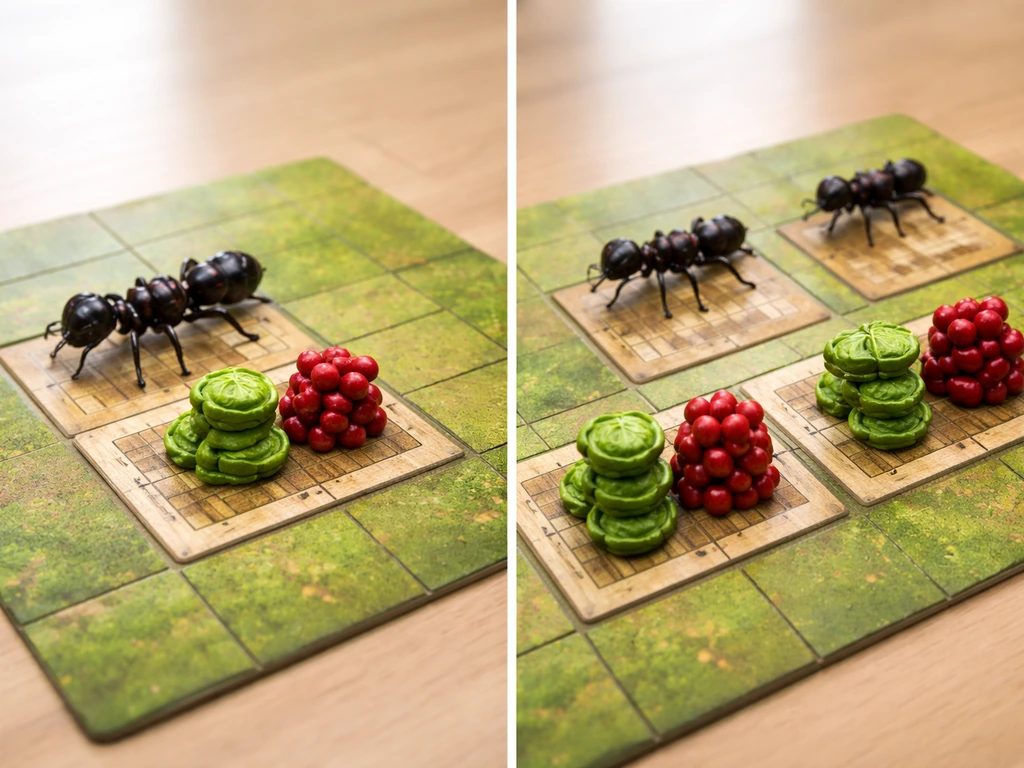
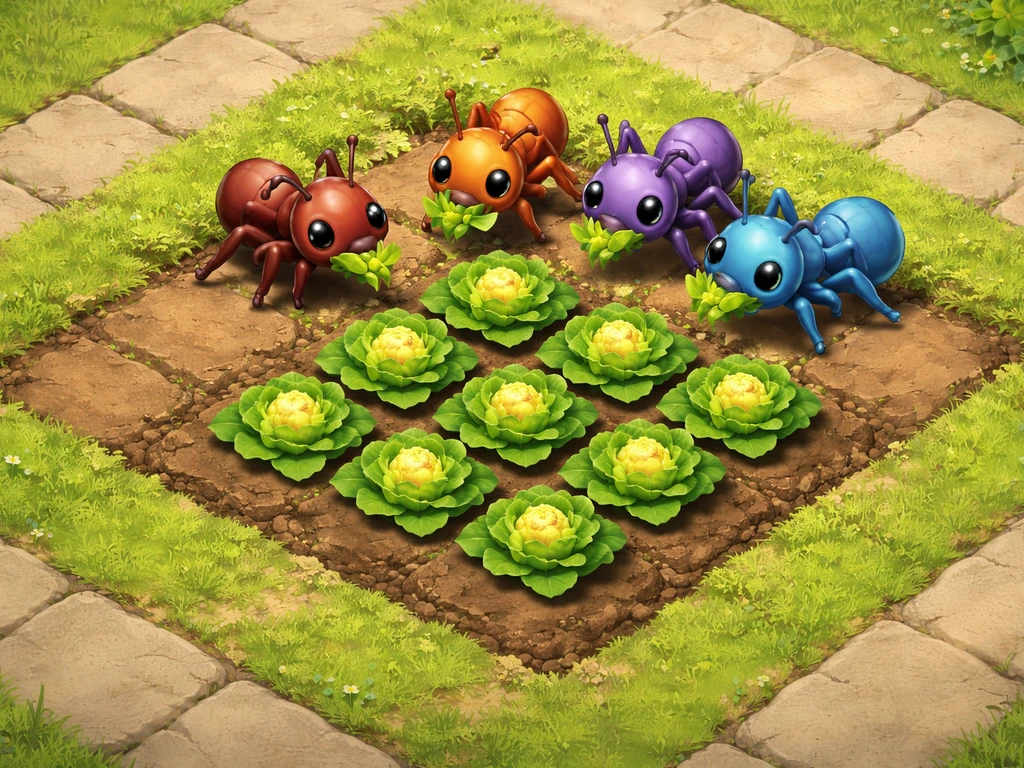
Yes, Giant Ants stack in the ability sense. Each Giant Ant you have active adds its own independent duplication chance on top of the others. Gamezebo also states that pet buffs and abilities can stack in Grow a Garden, using the Giant Ant as an example of a duplication ability that stacks (including its 10% duplication chance). The base Giant Ant gives roughly a 10% chance to duplicate harvested crops. Run two Giant Ants and you are rolling that 10% check twice per harvest. Run three and you are rolling it three times. This is exactly what the community thread is testing when someone asks 'I have 3 active Giant Ants so I have 30% chance for dupes, right?' and it is the basis for the 'carrot dupe infinitely with giant ants' strategy that has been circulating in the community. In practice the math is slightly different from a flat addition (three independent 10% rolls give you roughly a 27.1% chance of at least one duplication, not exactly 30%), but the stacking itself is real and confirmed by consistent community reports of 8x Giant Ant setups producing noticeably higher harvest yields.
What does not appear to be a thing is physical overlap stacking, meaning you cannot place two Giant Ants into the same single slot or on the same tile and have both persist. Each pet needs its own slot. There are no patch notes or community demonstrations as of April 20, 2026 that document repeatable physical overlap placement for any pet in Grow a Garden, Giant Ant included.
How to test Giant Ant stacking in your game right now
The cleanest way to confirm ability stacking for yourself is a controlled harvest comparison. Set up a small crop plot, preferably with a single consistent crop like carrots, and run several harvests with just one Giant Ant active. Count how many duplication events you get across, say, 20 harvests. Then add a second Giant Ant to a second slot and repeat the same 20 harvests on the same crop. If you see roughly twice as many duplication events in the second batch, ability stacking is working as expected.
A few practical cautions for the test. First, reload your plot after placing each pet and confirm the slot still shows the ant before you start counting. This matters because community reports around egg and pet placement document cases where a just-placed item does not persist through a server-side event or restart, and you want to be sure both ants are actually active. Second, run enough harvests to get a statistically meaningful sample. Ten harvests is too few to distinguish a 10% rate from a 20% rate with confidence. Thirty or more gives you a much clearer picture. Third, avoid running other duplication-type pets in the same test window, since synergy effects between different pets can muddy the data.
- Place one Giant Ant in a single pet slot, leave all other slots empty of duplication pets.
- Plant and harvest the same crop (carrots work well) 30 times, recording every duplication event.
- Note your duplication rate as a percentage.
- Add a second Giant Ant to a second slot, reload the plot, and confirm both ants are visible in their slots.
- Repeat 30 harvests on the same crop, recording duplications again.
- Compare the two rates. A roughly doubled duplication frequency confirms stacking is live on your server.
Conditions and limits that affect whether stacking works
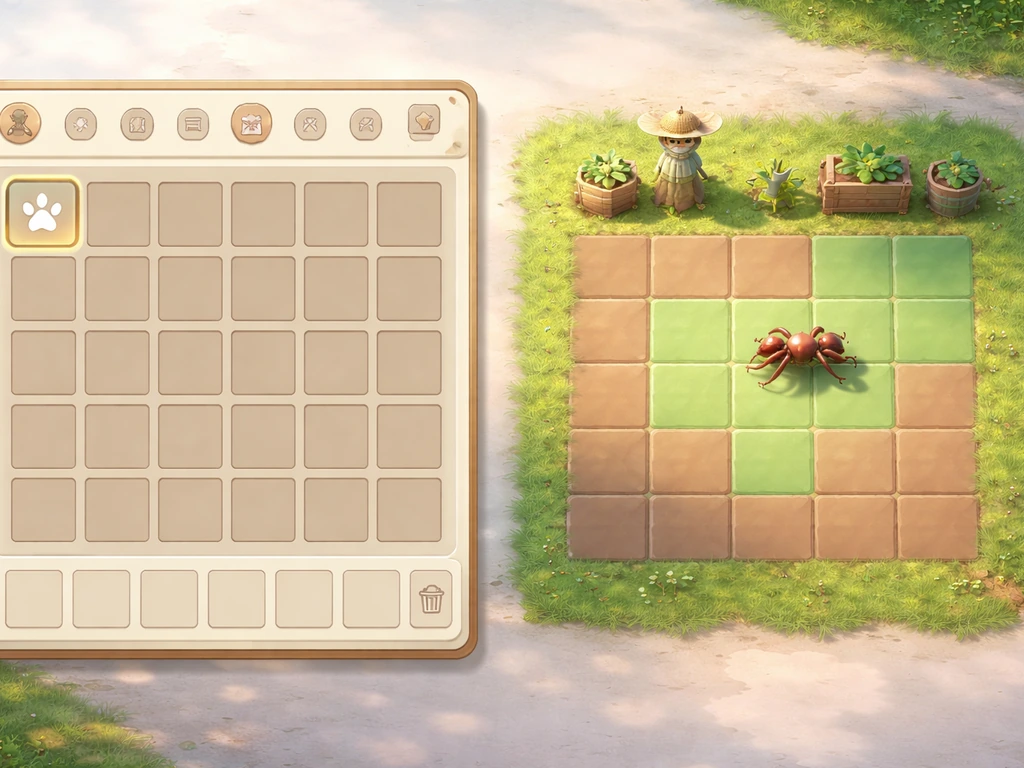
Stacking is not unlimited and a few real constraints are worth knowing before you go all-in on a full Giant Ant lineup. The most obvious one is slot count. You can only have as many Giant Ants active as you have available pet slots, so the ceiling on your total stacked duplication chance is directly tied to how many slots your farm has unlocked. Running 8x Giant Ants, which is a setup that appears in community discussions about high-point harvests, requires eight unlocked slots.
The Giant Ant is a Mythical-tier pet introduced in Update 1. The wiki-style Giant Ant page also reiterates that Giant Ant is a Mythical pet added in the Animals update and connects it to Update 1.04.0 naming Giant Ant is a Mythical-tier pet introduced in Update 1.. 04.0 on May 3, 2025. Because it sits at the Mythical tier, obtaining multiple copies is not trivial. You need to either acquire them through whatever drop or trade system is active or breed toward Mythical-tier duplicates, which is a significant time and resource investment. This is not a constraint on stacking itself but it is the real-world ceiling most players hit before they max out their slots.
There are also variant forms to consider. The Red Giant Ant and candy-type variants have different duplication rates or effects compared to the base Giant Ant. Mixing variants in your stack may change the math on your overall duplication chance since each pet contributes its own specific rate rather than the standard 10%. Confirm the exact rate for each variant you are running before calculating your expected output. Additionally, if Grow a Garden pushes a balance update that nerfs the Giant Ant's stacking behavior (similar to how the Owl was designated as a non-stacker), that would immediately change the picture. Always check the update log after major patches.
What stacking actually changes for your farm
The practical impact of stacking multiple Giant Ants is substantial if your goal is crop volume and resource efficiency. Each additional ant is essentially an independent free-crop ticket on every harvest. With one ant at 10%, you can expect one bonus crop roughly every 10 harvests. With four ants the probability of at least one duplication per harvest climbs to about 34%. With eight ants it is around 57%. Over hundreds of harvests, that scales into a meaningful increase in total crop output without requiring any additional planting or space.
For breeding purposes, more crops mean more raw material to feed into breeding chains or sell for currency to acquire better eggs and pets. If your bottleneck is raw crop volume rather than time, a stacked Giant Ant setup directly addresses that. It also pairs well with any other duplication mechanics in your setup since the rolls are independent and compound with synergy pets.
Spacing and physical layout are less affected because Giant Ants stack by ability, not by tile. You do not need to rearrange your garden geometry to benefit from multiple ants. Each ant goes into its own slot regardless of where crops are planted, so your existing farm layout stays the same. The only spatial consideration is making sure you have enough pet slots unlocked to house the number of ants you want to run.
| Number of Giant Ants | Approx. chance of at least 1 dupe per harvest | Expected dupes per 100 harvests |
|---|
| 1 | ~10% | ~10 |
| 2 | ~19% | ~19 |
| 3 | ~27% | ~27 |
| 4 | ~34% | ~34 |
| 6 | ~47% | ~47 |
| 8 | ~57% | ~57 |
Note: these numbers assume independent 10% rolls per ant using the base variant. Red Giant Ant and candy variants may differ. The 'at least 1 dupe' probability uses the complement rule: 1 minus (0.9 to the power of the number of ants).
Best practices for setting up your garden around Giant Ant stacking
If you are building a farm around stacked Giant Ants, the core setup recommendation is to prioritize high-value crops that benefit most from duplication. Carrots are the community favorite for this strategy specifically because they are reliable, fast-growing, and the 'carrot dupe infinitely' goal that shows up in community threads is achievable with enough ants active. High-value mutation crops are also strong targets since duplicating a mutated crop doubles a premium item, not just a base one.
Unlock pet slots before you invest heavily in acquiring multiple Giant Ants. There is no point owning four Giant Ants if you only have two slots. Slot unlocks should come first in your progression plan if stacking is your strategy. Once slots are ready, fill them with ants in order of quality: base Giant Ants first, then upgrade to Red or candy variants as you acquire them, since higher-rate variants improve your stacking math per slot.
- Unlock all available pet slots before stacking multiple Giant Ants.
- Prioritize planting fast-growing, high-value crops (carrots, mutated crops) to maximize duplication value.
- After placing each new ant, reload your plot and visually confirm the slot shows the pet before harvesting.
- Avoid mixing in non-duplication pets in slots unless they provide a clearly higher return than an additional ant would.
- Keep an eye on patch notes after updates, because stacking behavior for specific pets can be adjusted by the developers at any time.
- If you have access to Red Giant Ant or candy variants, place these in your stack first to get the highest per-slot duplication rate.
- Track your duplication events over time so you notice quickly if a patch silently changes the stacking behavior.
It is also worth comparing the Giant Ant setup against other stackable pets when deciding where to spend your slot budget. If you are wondering whether Gorilla Chef stacks in Grow a Garden, it helps to check whether it follows the same ability-stacking rules as Giant Ants. Creatures like Pack Bees and the Brontosaurus have their own stacking mechanics and farm efficiency implications. Pack Bees also have their own stacking rules, so check how their mechanics work before comparing farm efficiency to Giant Ants. If duplication specifically is your goal, Giant Ants are among the most direct tools for it. But if your bottleneck is something else, like mutation rate or XP generation, other pets may fill slots more efficiently. Always build around your actual farm bottleneck rather than defaulting to max ants just because stacking is possible.
Troubleshooting when your results don't match expectations
If you are running multiple Giant Ants and your duplication rate feels lower than it should be, the first thing to check is slot persistence. Reload your plot and confirm that every ant is still showing in its assigned slot. Community reports around pet and egg placement document cases where a server-side event or plot switch causes a recently placed pet to not register properly. This is the single most common reason a stacked setup underperforms: you think you have three ants active but only one is actually firing.
The second thing to check is your sample size. Duplication is a probability mechanic, not a guarantee. A streak of 15 harvests with no duplicates from a single 10% ant is unlucky but entirely possible within normal variance. Do not call stacking broken based on a short run. Use the 30-plus harvest benchmark described in the testing section and compare against the expected table above before concluding something is wrong.
If you are getting duplications but they seem to cap or diminish with more ants, that could indicate a soft cap on duplication events per harvest that is not publicly documented. This would be worth reporting in community threads with your data, since it would represent a meaningful undocumented mechanic. Similarly, if a recent patch dropped and your stacking suddenly stopped working, check the update log immediately. The developers have adjusted pet ability stacking for specific creatures before (the Owl is the most cited example), and a stealth nerf to Giant Ant stacking, while not documented as of today, is always possible after major updates.
Finally, if you are mixing Giant Ant variants (base, Red, candy types) in the same stack and your math is not adding up, remember that each variant may contribute a different base rate. The overall stacking still works, but your expected duplication probability calculation needs to account for each individual rate rather than assuming all ants are at 10%. Recalculate using each ant's specific rate and see if the adjusted number matches your observed results.