
Chicken Jockey is better than Dragonfly in most mid-to-late game setups where you care about sell value. The blank" rel="noopener noreferrer">Chicken Jockey (Chicken Zombie pet) can apply the Zombified mutation to your crops, which is a 25x value multiplier. That single mechanic makes it one of the highest-ceiling creatures in Grow A Garden. Dragonfly is a solid growth accelerator and a great early-game pick, but it simply does not have the same money-making ceiling that a well-timed Zombified mutation delivers.
Is Chicken Jockey Better Than Dragonfly in Grow a Garden

Julian Russo
18 Jun 2026
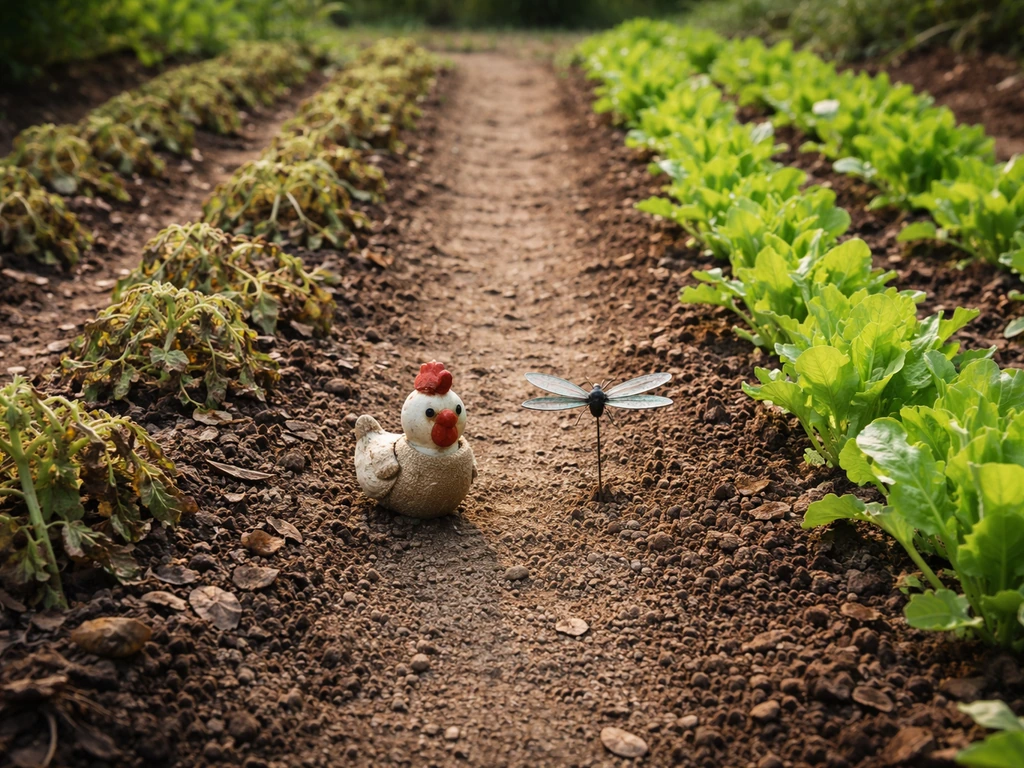
Quick verdict: when Chicken Jockey beats Dragonfly (and vice versa)
Chicken Jockey wins when your goal is maximizing the sell value of harvested crops. If you have high-value plants already growing, a single Zombified proc from the Chicken Jockey turns that crop into a 25x earner. Over time, that compounds into serious income. Dragonfly wins when you need faster growth cycles, especially early on when you are still unlocking better plants and just want harvests to come in quickly. The gap between the two widens as your crop value increases: the Dragonfly's growth speed bonus saves you time, but the Chicken Jockey's Zombified multiplier saves you time AND earns you far more per harvest.
| Scenario | Better Choice | Why |
|---|---|---|
| Early game, cheap crops | Dragonfly | Faster cycles matter more than value multipliers on low-value plants |
| Mid game, growing income | Toss-up | Chicken Jockey starts paying off as base crop values rise |
| Late game, premium crops | Chicken Jockey | 25x Zombified multiplier on high-value crops is a massive income spike |
| Breeding/egg incubation focus | Chicken Jockey | 10% egg hatch speed bonus is a free side benefit |
| Pure speed/cycle grinding | Dragonfly | Growth acceleration keeps harvests coming fast |
| Max sell value per harvest | Chicken Jockey | Zombified is the single best value mutation available |
How Chicken Jockey actually works in Grow A Garden
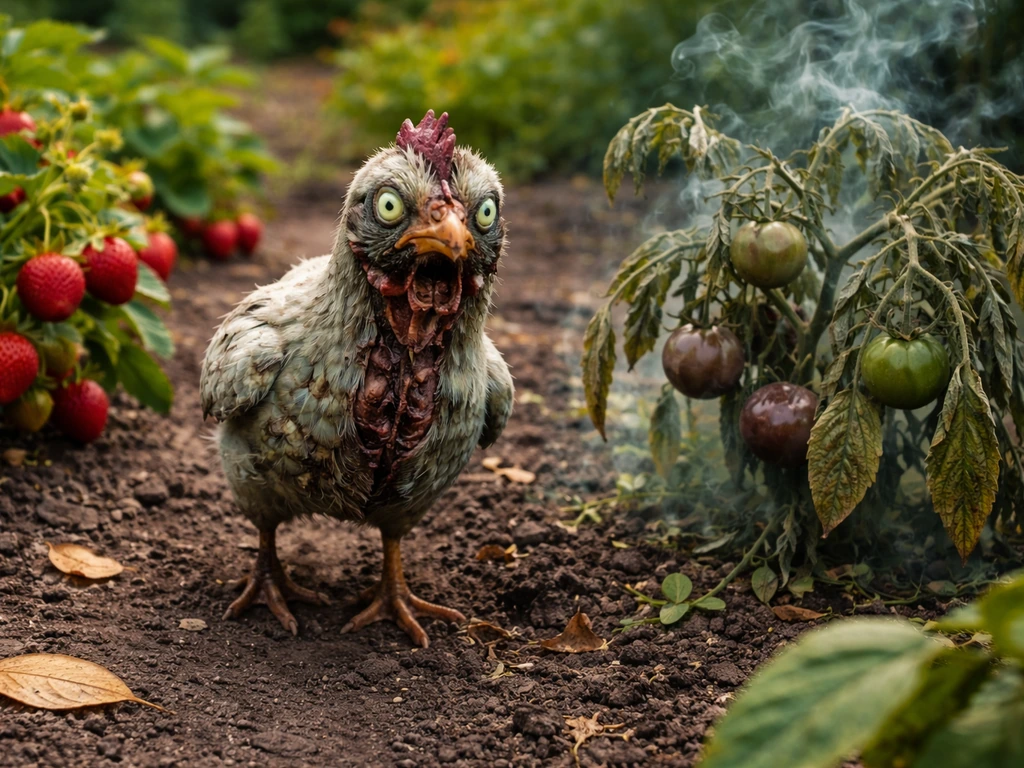
The Chicken Jockey is the passive effect tied to the Chicken Zombie pet. It roams around your plot and every 30 minutes it has a 20% chance to zombify a nearby fruit. PCGamesN summarizes Chicken Jockey as roaming your plot and, every 30 minutes, giving a 20% chance to zombify a nearby fruit, raising the sale value [a 20% chance to zombify a nearby fruit every 30 minutes](https://www. pcgamesn.
com/grow-a-garden/chicken-jockey). In Grow a Garden, the Chicken Jockey effect (from the Chicken Zombie pet) has a passive that gives a 20% chance every 30 minutes to zombify a nearby fruit every 30 minutes it has a 20% chance to zombify a nearby fruit. When that proc lands, the affected crop gets the Zombified mutation, which applies a 25x sale value multiplier.
That is not a 25% boost. That is 25 times the base value. On a crop already worth a decent amount, that is transformative.
On top of the Zombified proc, the Chicken Zombie also provides a 10% egg incubation speed bonus. That is a passive quality-of-life benefit that stacks nicely if you are running an active breeding operation alongside your main farm. It is not the main reason to use this pet, but it is a real bonus you should factor in if hatching eggs is part of your routine.
The key limitation to understand is the proc rate and cooldown. A 20% chance every 30 minutes means on average you get a Zombified fruit roughly once every 2.5 hours of active time. It is not guaranteed every cycle, so you cannot plan a harvest around it firing on demand. You treat it as a high-value bonus rather than a reliable per-harvest buff. Placement near your most valuable crops is essential so that when it does proc, it hits something worth multiplying.
How Dragonfly actually works in Grow A Garden
Dragonfly is a growth accelerator. Moon Cat is essentially another growth-utility option, so the real question is whether it can beat Dragonfly’s consistent mature-fast throughput for your current crop mix. Its core role is shortening the time it takes for your crops to mature and be ready for harvest. Faster growth cycles mean more harvests per hour, which translates to more consistent income over time. It is a reliable, steady performer rather than a high-ceiling spike creature.
Where Dragonfly shines is in the early-to-mid game when your primary bottleneck is cycle time rather than value per harvest. If you are grinding through lower-tier crops to build up gold, more harvests per session beats waiting on a rare mutation proc. Dragonfly also pairs well with other growth-focused setups and synergizes with creatures that buff yield quantity, since faster cycles mean those bonuses apply more frequently.
The ceiling for Dragonfly is honest but not spectacular compared to mutation-based creatures. It makes a good farm better by speeding things up. It does not have a mechanic that can single-handedly multiply your earnings the way Zombified can. That is the core difference between these two pets.
Side-by-side on the metrics players actually care about
| Metric | Chicken Jockey (Chicken Zombie) | Dragonfly |
|---|---|---|
| Primary ability | 20% chance to Zombify a nearby fruit every 30 min | Growth acceleration for faster harvest cycles |
| Value multiplier potential | 25x on Zombified crops | None (cycle speed, not value boost) |
| Consistency | Proc-based (RNG, ~20% per 30 min window) | Consistent passive buff every cycle |
| Secondary bonus | 10% egg incubation speed | Synergy with yield-focused setups |
| Best crop pairing | High-value/premium crops | Any crop, especially mid-tier grinders |
| Early game usefulness | Low to moderate | High |
| Late game usefulness | Very high | Moderate |
| Ceiling for earnings | Extremely high (25x per proc) | Moderate (time savings compound over sessions) |
| Setup complexity | Place near valuable crops, be patient | Straightforward, low maintenance |
The honest summary: Dragonfly is more consistent but lower ceiling. Chicken Jockey is less consistent but has a ceiling that Dragonfly cannot touch once you have premium crops growing. If you are comparing this choice to similar decisions like whether Dragonfly beats Butterfly, or how Moon Cat stacks up against Dragonfly, the same logic applies: creatures with high-multiplier procs tend to overtake growth-speed pets once your crop values are high enough to make those multipliers matter. If you are also wondering whether Dragonfly is better than Butterfly for a garden, the same idea holds: growth-speed helps early, but high-value multipliers decide the long-term ceiling whether Dragonfly beats Butterfly.
Where to place each creature in your garden layout
Placing Chicken Jockey for maximum impact

Position the Chicken Zombie pet as close as possible to your highest-value crop tiles. Since the Zombified proc targets a nearby fruit, proximity matters. Cluster your most expensive plants together and make sure the Chicken Zombie's roam path overlaps that area consistently. If your layout spreads premium crops thin across the whole plot, you are wasting proc potential on lower-value plants. Tighten the cluster, bring the Chicken Zombie in close, and let the 25x multiplier land where it hurts the most for your income goals.
Also keep eggs you want hatched nearby if you are actively incubating. The 10% egg hatch speed bonus is passive and proximity-based, so grouping your incubation area near the Chicken Zombie doubles up its utility without any extra effort.
Placing Dragonfly for consistent throughput
Dragonfly works best when positioned to cover as many crop tiles as possible. Unlike Chicken Jockey where concentration pays off, Dragonfly benefits from broad coverage because its growth acceleration applies across tiles it influences. Place it centrally in your main farming area. If you have a second dedicated grinding section with mid-tier crops you are cycling through quickly, that is an ideal spot for Dragonfly since faster cycles on volume crops is where it earns back its keep most visibly.
Breeding, eggs, and progression for both creatures
Getting the Chicken Zombie pet requires hatching the right egg type. Since it is not a common starter pet, treat it as a mid-game acquisition target. Prioritize getting your egg incubation infrastructure set up before you need it. Once you have the Chicken Zombie active, its own 10% incubation speed bonus helps you hatch future eggs faster, which creates a small but real compounding benefit if you are building out a larger creature roster.
Dragonfly tends to be more accessible earlier in progression. If you can get a Dragonfly running while you are still working toward unlocking the Chicken Zombie egg, that is a completely sensible approach. Use Dragonfly to accelerate your early and mid-game income, then transition your premium crop zone over to Chicken Jockey coverage once you have the Chicken Zombie hatched and ready. If you want a quick answer to whether Chicken Jockey is better than Dragonfly for growing a garden, aim for sell value late on, and use Dragonfly for faster early harvests. You do not have to choose one forever: running both in different zones of your farm is a valid and efficient setup.
From a breeding line standpoint, neither creature requires a complex multi-step chain that changes the calculus here. The Chicken Zombie is a specific egg hatch, and its incubation bonus means it slightly accelerates whatever you are working on next. If you are deep into optimizing breeding chains like those involving Queen Bee or Disco Bee lines, the 10% hatch speed from Chicken Zombie is a genuine time saver worth stacking. If you are wondering whether Disco Bee is worth growing for your breeding and progression goals, compare its contribution to your income goals the same way you compare these two pets.
How to test this in your own save and confirm what works
The best way to validate this comparison for your specific farm is to track earnings per session rather than per harvest. Chicken Jockey's value is spiky, so a single-harvest comparison might make it look weak if the proc did not fire. Run each creature for 2 to 3 hours of active play on your premium crop section and record total earnings. You should see the Chicken Jockey sessions produce higher peaks even if the average looks similar early on.
- Pick your highest-value crop and fill a dedicated cluster of tiles with it.
- Run Dragonfly over that cluster for two full sessions (roughly 2 hours each) and note total earnings both sessions.
- Swap in Chicken Zombie (Chicken Jockey) to the same cluster for two more sessions at the same length.
- Compare total earnings across all four sessions. Account for whether any Zombified procs fired during the Chicken Jockey sessions by checking if any harvested crops had the 25x multiplier applied.
- If Zombified proc fired even once per session on a premium crop, Chicken Jockey sessions should show a clear earnings lead.
- If your crop values are still low, Dragonfly may win the short test. That is your signal to upgrade your crop tier before switching to Chicken Jockey full-time.
The game's meta can shift with updates, so keep an eye on any patch notes that adjust proc rates, mutation values, or pet mechanics. If the Zombified multiplier ever gets tuned down from 25x or the Chicken Jockey proc window changes, revisit this comparison. As of June 2026, the 25x Zombified multiplier is what makes Chicken Jockey the stronger long-term pick for players optimizing sell value, and that is the number to watch if anything changes.
FAQ
Does Chicken Jockey’s Zombified buff stack with other income multipliers or buffs on the same crop?
It multiplies the sale value via the Zombified mutation, but whether it stacks multiplicatively or additively with other systems depends on how those other bonuses are implemented. The safe approach is to test with one crop type, compare sell prices with and without Chicken Jockey procs, and check whether the final sell value reflects a compound multiplier or a capped/combined effect.
Can I reliably time harvests to get a Zombified proc just before I harvest?
Not reliably. The proc is probabilistic (20% every 30 minutes), so you cannot treat it like a guaranteed per-cycle effect. If you want to reduce variance, harvest on a consistent schedule but evaluate earnings over multiple sessions, since the “spiky” nature comes from whether procs land on your high-value tiles.
How should I choose which crops to cluster for Chicken Jockey to maximize expected profit?
Cluster the crops with the highest base sale value that you also tend to harvest regularly. If a crop is worth a lot but you rarely include it in your rotation, you reduce the number of chances for the 25x effect to matter. A practical method is to sort your current crop list by base sell value, then concentrate your top 3 to 5 into one tight zone.
What happens if Chicken Jockey procs on a lower-value plant in my garden?
You still get the mutation and 25x sale value multiplier, but the absolute earnings gain is smaller because the base value is lower. This is why proximity and layout matter, spreading premium crops across the plot can “waste” a proc opportunity by converting low-value plants instead of your intended high-value ones.
Does Chicken Jockey’s roam range or positioning affect how often procs hit my premium crops?
Yes. Since the target is a nearby fruit, proximity and overlap with your highest-value crop tiles directly change your effective proc value. If your premium crops sit on only one side of the plot, place Chicken Jockey so its roaming path crosses that side frequently rather than parking it at the opposite end.
For Dragonfly, what’s the best way to decide between central placement and a second farming zone?
Central placement is best when your goal is consistent throughput across a main grid of crops. A second dedicated zone is better when you have a separate cycle of mid-tier crops you harvest frequently, because Dragonfly’s benefit shows up most clearly when it can accelerate many growth cycles in that specific high-volume area.
Which one should I pick if I’m still unsure whether my bottleneck is growth time or crop value?
Run a short earnings test using your actual crop rotation. Track total sell earnings for 2 to 3 hours of active play on the same premium crop section with Chicken Jockey versus Dragonfly. If time-to-harvest is your main limiter, Dragonfly usually wins more consistently, but if high-value crops are already in place, Chicken Jockey tends to produce higher peaks over sessions.
Is it worth running both pets in different zones, and how do I avoid them interfering with each other’s value?
Running both can be efficient. Use Dragonfly where you need more harvest frequency (early-to-mid or volume crops) and reserve Chicken Jockey for your premium crop cluster where Zombified procs can multiply sell value. Keep the premium cluster tight so the Chicken Zombie tends to target high-value crops rather than drifting into the Dragonfly zone.
How do I factor the egg incubation speed bonus when deciding between Dragonfly and Chicken Jockey?
Treat the 10% egg hatch speed as a secondary advantage, not the deciding factor for your garden profits. It matters most if you are actively incubating and managing breeding schedules, because faster hatches mean more creature progression turns over more quickly, which can indirectly improve your long-term efficiency.
If the game updates nerf or buff the Zombified multiplier, what number should I re-evaluate?
Re-check the Zombified sale value multiplier itself and the Chicken Jockey proc behavior (chance rate and time window). Those two values determine the expected value and the variance of earnings. If either changes, redo your 2 to 3 hour session test to confirm whether Chicken Jockey still out-classes Dragonfly for your current crop values.
Next Article
Is Dragonfly Better Than Butterfly in Grow a Garden?
Compare dragonfly vs butterfly vs swan in Grow A Garden for breeding, returns, effort, and best choice by your goals.